- Spanish authorities installed a 500-meter barrier at Ceuta’s Tarajal breakwater to block unauthorized maritime border crossings.
- An estimated sixty thousand people entered the enclave from Morocco, resulting in at least sixty-seven recorded fatalities.
- Italy suspended Schengen travel arrangements with Spain for one month, citing security concerns following the border crisis.
Spanish authorities began installing a 500m floating barrier at Ceuta’s Tarajal breakwater on Saturday, August 1, after an estimated 50,000 to 60,000 people crossed from Morocco in a rush that killed at least 67 people.
The Spanish Civil Guard started placing the pneumatic structure during a calmer night at the border. The barrier will rise 30 to 70 centimeters above the water and extend one meter below the surface.
Free toolSchengen Short-Stay Visa Calculator
It includes a channel for patrol vessels. Spanish officials want it to block further unauthorized crossings after the movement began Thursday, July 30, and overwhelmed the enclave’s reception system.
Most of those who entered have since gone back to Morocco. Spain’s Interior Ministry said approximately 48,300 people had returned voluntarily by the evening of July 31.
The death toll includes people who drowned and others caught in a stampede at the breakwater fence. The rush also left thousands sleeping in parks and on sidewalks as local reception centers filled beyond capacity.
A barrier now divides the emergency response from the returns operation
The structure’s dimensions give patrol crews a fixed obstacle to monitor along the breakwater. Its underwater section reaches one meter, while its upper portion remains between 30 and 70 centimeters above the sea.
| Barrier feature | Specification |
|---|---|
| Location | Tarajal breakwater |
| Length | 500 meters, or 1,640 feet |
| Height above water | 30 to 70 centimeters |
| Depth below surface | One meter |
| Patrol access | Dedicated channel for patrol vessels |
Ceuta has a population of 84,000. The number of people who crossed within 48 hours represented roughly 70% of the city’s population, according to Spanish authorities’ estimate.
Juan Jesús Vivas, Ceuta’s president, described the scene as “absolute chaos” and “unsustainable.” He said the city could not absorb such an influx.
Many young Moroccan men said they crossed because of limited economic opportunity at home. Some returned after finding no food or shelter in the enclave.
The returns have reduced the number remaining in the territory, but the emergency has not erased the pressure that produced the rush. The barrier is being installed while authorities investigate how the crossing gathered such momentum.
Twenty-two EU governments seek help for Madrid
Twenty-two European Union governments requested an emergency meeting on Friday, July 31, asking the bloc to help Spain regain control of the border.
Italy took a separate step that day. It suspended its Schengen travel arrangements with Spain for one month, citing the need to “safeguard the security of our citizens.”
The move created a diplomatic dispute inside the bloc as governments responded to the scale of the crossing and the deaths at the border. Prime Minister Pedro Sánchez rejected calls to exclude Spain from the Schengen area.
Sánchez called those reactions “selfish” and “unlawful,” and said they were “driven by prejudice.” He also rejected claims that Spain’s residency programs had encouraged the surge.
The Schengen system allows participating European countries to maintain travel arrangements without routine internal border checks. Italy’s suspension adds a travel-control measure to a crisis already involving patrols, returns and a new maritime barrier.
A court ruling sits behind the dispute over returns
The rush followed a recent Spanish Supreme Court ruling that restricted the summary return of migrants intercepted at sea. Spanish officials said human trafficking mafias exploited that decision.
The ruling has become part of the argument over how Spain should handle people arriving at or near the enclave. The new barrier addresses the physical crossing point, while the legal dispute concerns the process authorities may use after interception.
Those questions can affect different people differently, depending on where officials intercept them and what protections apply to their circumstances. Border authorities, courts and immigration lawyers may assess those issues under separate procedures.
The human cost was visible at the breakwater. Some people died in the water, while others were killed during the crush near the fence.
The scale of the movement also put pressure on residents and public services. Reception centers could not house everyone, leaving people outdoors in public spaces as the returns operation proceeded.
Madrid pairs deterrence with voluntary returns
Spain’s response now has two tracks. The first is the installation of a permanent-looking physical obstacle at the Tarajal crossing. The second is the return of people who crossed and chose to go back to Morocco.
Interior Ministry figures put voluntary returns at approximately 48,300 by the evening of July 31. That figure came before the barrier installation began Saturday morning.
The original movement began Thursday, July 30. By Saturday, the authorities were working to stop another crossing while reducing the population left inside the enclave.
The device is pneumatic rather than a solid wall. Its design leaves room for patrol vessels through a dedicated channel, allowing the force to continue moving in the area while the barrier blocks the main crossing route.
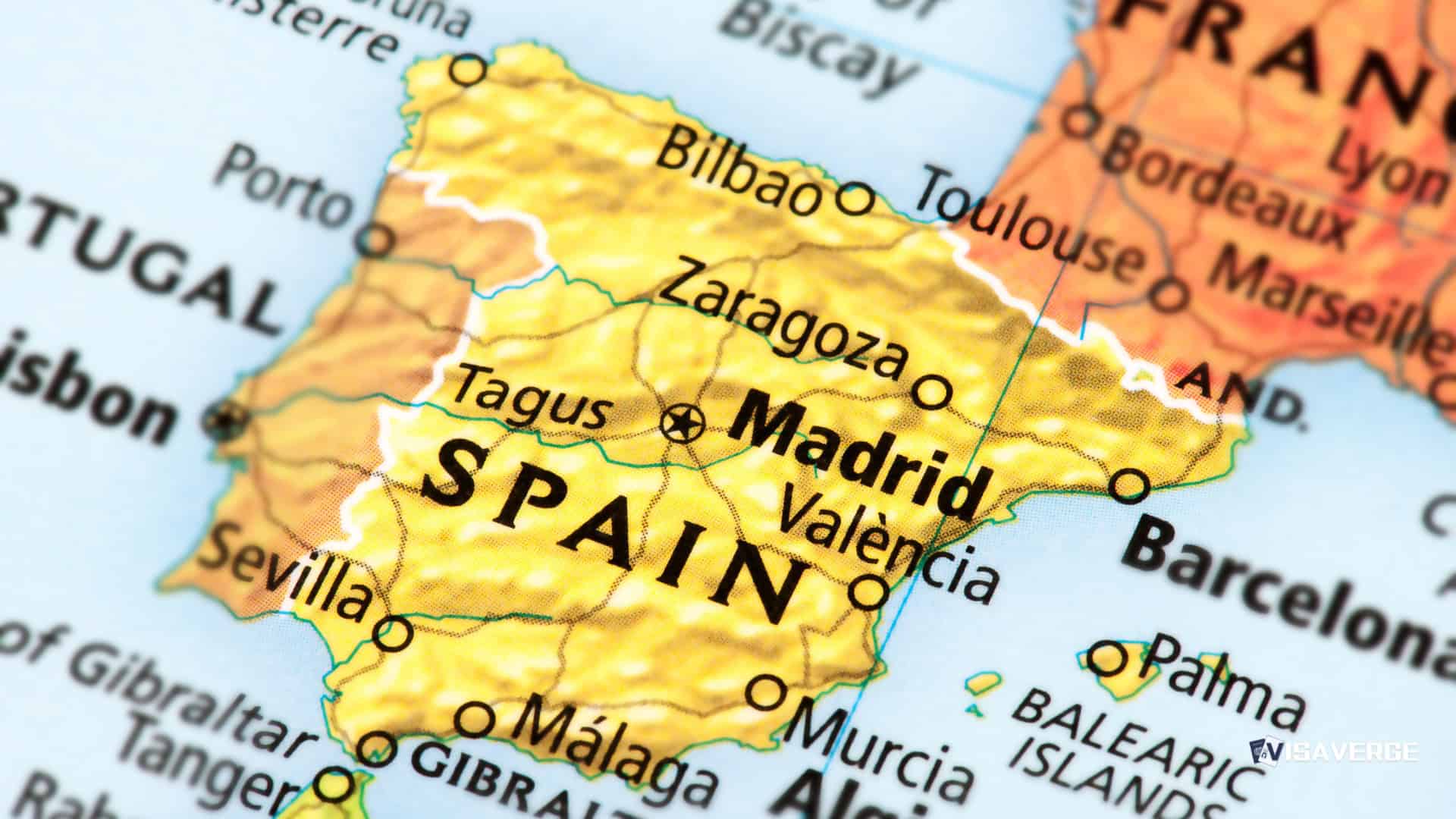
Ceuta’s location on the North African coast makes its land and maritime approaches central to Spain’s border policy. The latest response concentrates on the Tarajal breakwater, where the rush produced both the deaths and the physical congestion that overwhelmed local services.
The European Union’s emergency meeting request places the incident on the bloc’s agenda. Italy’s one-month suspension, meanwhile, shows that the consequences have already extended beyond the enclave itself.
The barrier’s installation began one day after 22 EU governments sought an extraordinary response. Spanish authorities will now have to operate the structure alongside patrols, returns and the legal limits imposed by the Supreme Court ruling.
This article provides general information and is not legal advice. Consult a qualified immigration attorney about your specific case.