Mahmoud Khalil returned to Columbia University on Tuesday, October 27, 2026, appearing at a memoir event for the first time since immigration authorities arrested him in 2025. The 31-year-old Palestinian activist described his return as a “victory.”
Background: Mahmoud Khalil Sues Columbia University as Deportation Looms Over Palestine Working Group
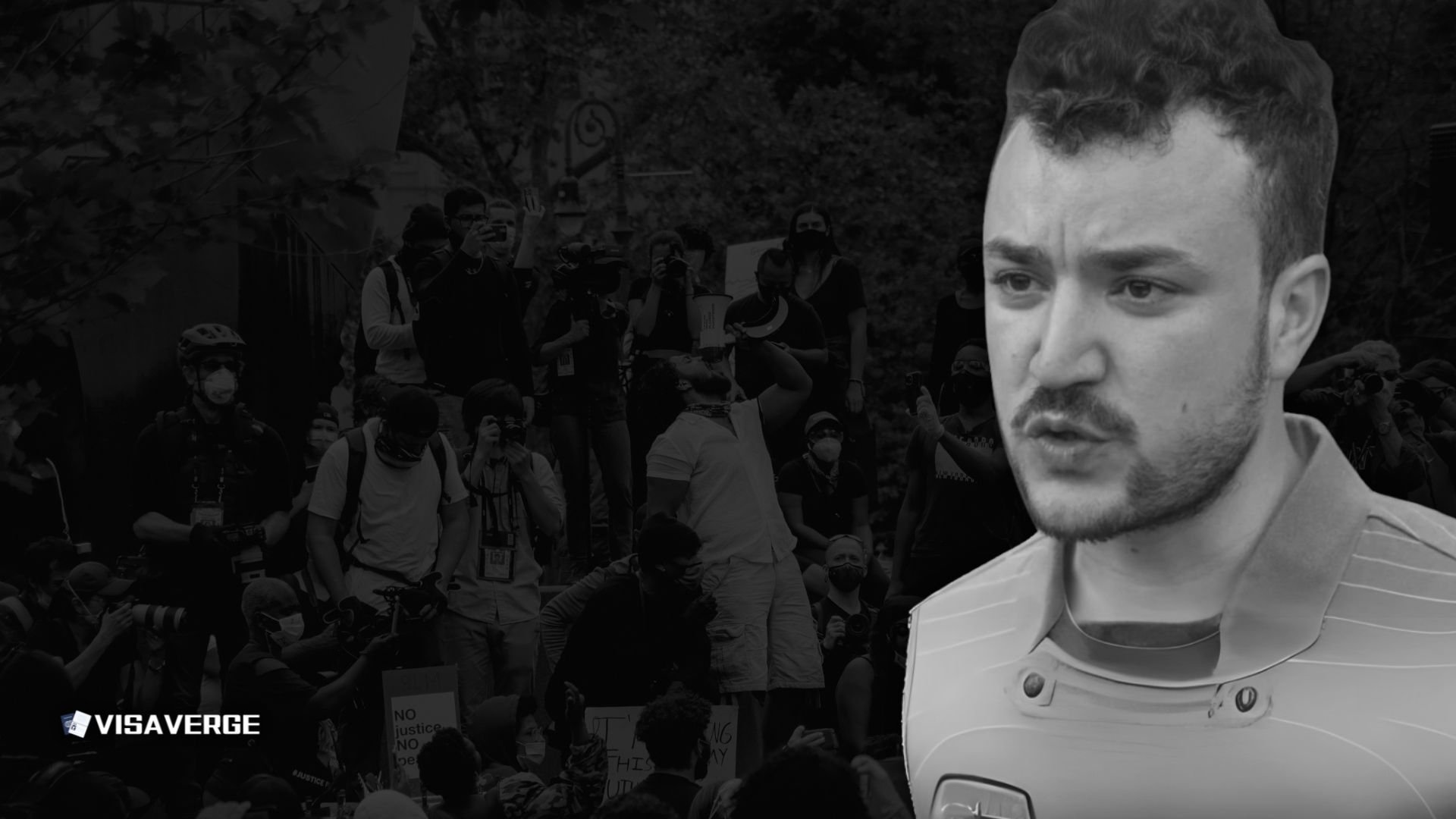
About 100 people attended the event, hosted by Columbia’s Center for Palestine Studies and the Simon and June Li Center for Global Journalism. It promoted his memoir, “No Land to Stand On,” about the 104 days he spent in a federal lockup.
Khalil said Columbia had tried to silence him. “to erase me, to erase any Palestinian voices on campus,” he said, accusing the university of seeking to erase him.
He also condemned the university’s handling of the 2024 demonstrations, including its decision to allow New York police to clear protesters from its Manhattan campus. Columbia said at the time that the protests posed a safety threat.
His arrest led to separate rulings on detention and deportation
Khalil was arrested during President Donald Trump’s crackdown on pro-Palestinian activists. He was a lawful permanent U.S. resident, born in Syria, and married to a U.S. citizen while studying at Columbia.
The government alleged that he had lied on his green card application and argued that his presence in the United States harmed the country’s foreign-policy interests. Khalil spent more than three months in detention without criminal charges before his release in June 2025.
A federal judge in New Jersey ordered him freed, finding that the federal government had acted unconstitutionally. A Louisiana judge later ordered his deportation, citing alleged omissions on his green card application. The rulings addressed different parts of the case.
Khalil has sued the U.S. government, arguing that his arrest violated rights including free speech. His legal challenge continues while he remains free.
Columbia defended the invitation as alumni groups objected
In an interview, Khalil said the university could have modeled how to handle hard campus debates and align its response with human rights and international law. Instead, he said, “They chose the total opposite. They chose brutality. They chose repression.”
He has also accused Columbia of failing to protect him from harassment before his arrest and detention. The university said it supports faculty members’ right to organize academic events, while stressing that inviting a speaker does not mean endorsing that person’s views.
Ari Shrage, president of the Columbia University Jewish Alumni Association, said the group was “appalled” that the journalism school invited Khalil back, citing what he called reputational damage caused by Khalil’s behavior. Shrage said the decision suggested the university had learned nothing while trying to restore public trust.
The alumni group’s criticism pointed to Khalil’s role as a negotiator for demonstrators who took over campus during 2023–2024 and his efforts to persuade the school to divest all its investments from Israel. The protests preceded the Trump administration’s withdrawal of $400 million in university funding over its response to antisemitism. Columbia later agreed to administration demands intended to prevent similar demonstrations.
This was Khalil’s second return to campus since his arrest. He first came back one day after his release in June 2025, a visit that also drew objections from Jewish groups.
Khalil has asked the Supreme Court to review detention rules
On Monday, October 19, 2026, Khalil asked the Supreme Court to let federal judges quickly review the legality of immigration detentions. His filing seeks to prevent people from being held for months or years without judicial oversight.
He asked the justices to overturn a ruling issued earlier this year by the 3rd U.S. Circuit Court of Appeals in Philadelphia. That court said federal judges could not review detention legality until immigration courts had fully considered each case.
The appeals court has put its ruling on hold while Khalil seeks Supreme Court review. He remains free. If the justices agree to hear the case, oral arguments would likely take place sometime next year.
The Department of Homeland Security said the administration acted within its statutory and constitutional authority. It accused Khalil of advocating violence, supporting terrorists, harassing Jews and damaging property, and urged him to “use the CBP Home app and self-deport.”