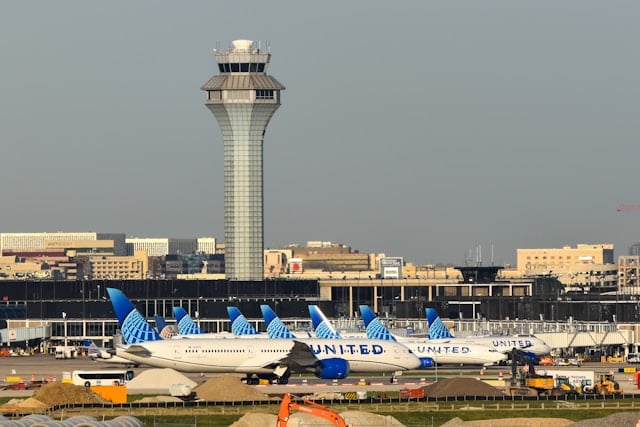
Pakistan barred Taiwan Airlines from its airspace over the One-China policy, forcing China Airlines and EVA Air to change some Asia-Europe routes. Islamabad’s aviation division said it followed that policy, Defence Minister Khawaja Asif said.
The restriction took effect in flight patterns from the morning of Oct. 25. The carriers had stopped crossing the airspace.
On Wednesday, Oct. 28, the Pakistan Civil Aviation Authority approved passenger and cargo flights by both airlines through March 27, 2027. The documents restore permission, though they do not describe an earlier ban.
The change leaves the carriers with approved access again. Its reason was not immediately clear.
Approvals cover passenger and cargo flights through March
Two official documents dated Wednesday authorized China Airlines and EVA Air to operate passenger and cargo flights over the country from Oct. 28 through March 27, 2027. The authorizations came hours after news of the restriction.
The documents do not explain whether the approvals amount to a reversal. Asif, who also oversees aviation, made no immediate comment after they appeared.
Asif had said the aviation division followed Beijing’s position and permitted only mainland Chinese airlines to fly over the country. His explanation was the stated basis for the restriction. Islamabad has not provided a separate reason for restoring the approvals.
Rerouted flights added distance and fuel costs
Flight-tracking data showed at least a dozen flights by the two Taiwanese carriers between Asia and Europe later used Russian airspace. Other aircraft took routes through parts of South Asia and the Middle East.
The shift followed a day when some flights still crossed the airspace. Data showed 14 flights by the two airlines crossed it on October 24.
A China Airlines flight from Taipei to Rome on October 24 took a different path through Russian airspace. It bypassed an earlier route through India, Pakistan and Turkmenistan, according to Flightradar24 data.
The longer paths added several hours to some journeys. They also increased fuel use and could raise crew and other operating costs, adding financial pressure for the carriers.
Taiwanese airlines had relied heavily on the airspace for Europe-bound flights. Russia became an option despite a long-standing avoidance pattern.
Most Taiwanese carriers had generally avoided Russian airspace since February 2022, after Russia invaded Ukraine. Russia had never formally prohibited their overflights.
Taipei condemned the restriction as airspace was restored
Taiwan’s foreign ministry condemned Islamabad for supporting Beijing’s position, saying the move undermined Taiwan’s sovereignty and “weaponizing airspace.” The ministry said it would coordinate with transport authorities.
It also said it would respect airlines’ route decisions, which it linked to safety, travel time and costs. The carriers declined to comment on the rerouting.
Taiwan’s Civil Aviation Administration did not comment on the flights’ new paths. It said, however, that Taiwan had never barred its carriers from using Russian airspace.
India discussed direct links but announced no new plan
India’s Ministry of External Affairs spokesperson Randhir Jaiswal addressed the possibility of direct flights between India and Taiwan on Wednesday. He announced no confirmed plans.
“My sense is, if there are direct flights, they will fly.”
EVA Air plans to start five weekly nonstop services between Taipei and Delhi from December 1. The route could expand connections in manufacturing, semiconductors, technology and business.
Beijing ties have shaped Islamabad’s Taiwan position for decades
Islamabad has repeatedly affirmed support for Beijing’s position on Taiwan. On Jan. 2, Foreign Office spokesperson Tahir Andrabi said the government would follow the One China principle and described Taiwan as an “inalienable part of China.”
Andrabi called the two countries “iron-clad friends and all-weather strategic cooperative partners.” His statement followed Chinese military exercises around Taiwan, including live-fire drills and simulated attacks on maritime targets.
Islamabad severed official relations with Taiwan in 1951 and was among the first countries to establish diplomatic ties with the People’s Republic of China. The two governments have since deepened economic and military links.
China has invested billions of dollars in the country under President Xi Jinping’s Belt and Road Initiative. The China-Pakistan Economic Corridor has channeled billions of dollars into the country, and China is a major supplier of military equipment as well as Islamabad’s largest weapons supplier.
China also launched the China-Pakistan Information Corridor on Tuesday. Beijing claims Taiwan as part of its territory; Taiwan rejects that claim and maintains its own elected government.
China and Taiwan have been governed separately since 1949, when Communist forces won the civil war and the defeated Nationalist government fled to the island. Beijing has not ruled out using force to take control, and requires countries with which it has diplomatic relations to forgo formal ties with Taipei.
Taiwan has faced other disputes over flight access
In April, President Lai Ching-te postponed a visit to Eswatini, Taiwan’s only diplomatic partner in Africa. Seychelles, Mauritius and Madagascar had withdrawn overflight permissions.
Taiwan’s government blamed pressure from Beijing, which denied applying pressure but praised the countries’ decisions. Lai ultimately reached Eswatini in May.