On August 27, 2026, ICE awarded Compliant Technologies LLC a $16.7 million no-bid contract for 6,000 pairs of electric-shock gloves. The award covers support equipment and services over the next six months, moving the procurement from a planned purchase to a specific contract.
- The gloves are being procured under the G.L.O.V.E. name, short for Generated Low Output Voltage Emitter.
- The devices are intended for Homeland Security Investigations and Enforcement and Removal Operations personnel.
- The gloves can deliver up to 380 volts and are meant to help officers gain compliance in close-contact encounters.
- The contract is expected to be completed by March 31, 2027.
- ICE plans to spend twenty million dollars on shock-delivering gloves to handle combative individuals during encounters.
- Civil liberties advocates warn the discreet electronic discharge could enable abuse that bystanders cannot easily detect.
- The rollout follows two fatal July twenty twenty-six shootings involving ICE agents who lacked mandatory body-camera equipment.
U.S. Immigration and Customs Enforcement (ICE) plans to spend up to $20 million on thousands of gloves that can deliver painful electric shocks during encounters with people officers consider combative. The agency expects the devices to reach officers by March 2027.
The gloves are described in procurement materials as “conductive distraction and de-escalation devices.” A no-bid contract solicitation could appear as early as Friday, August 14, 2026.
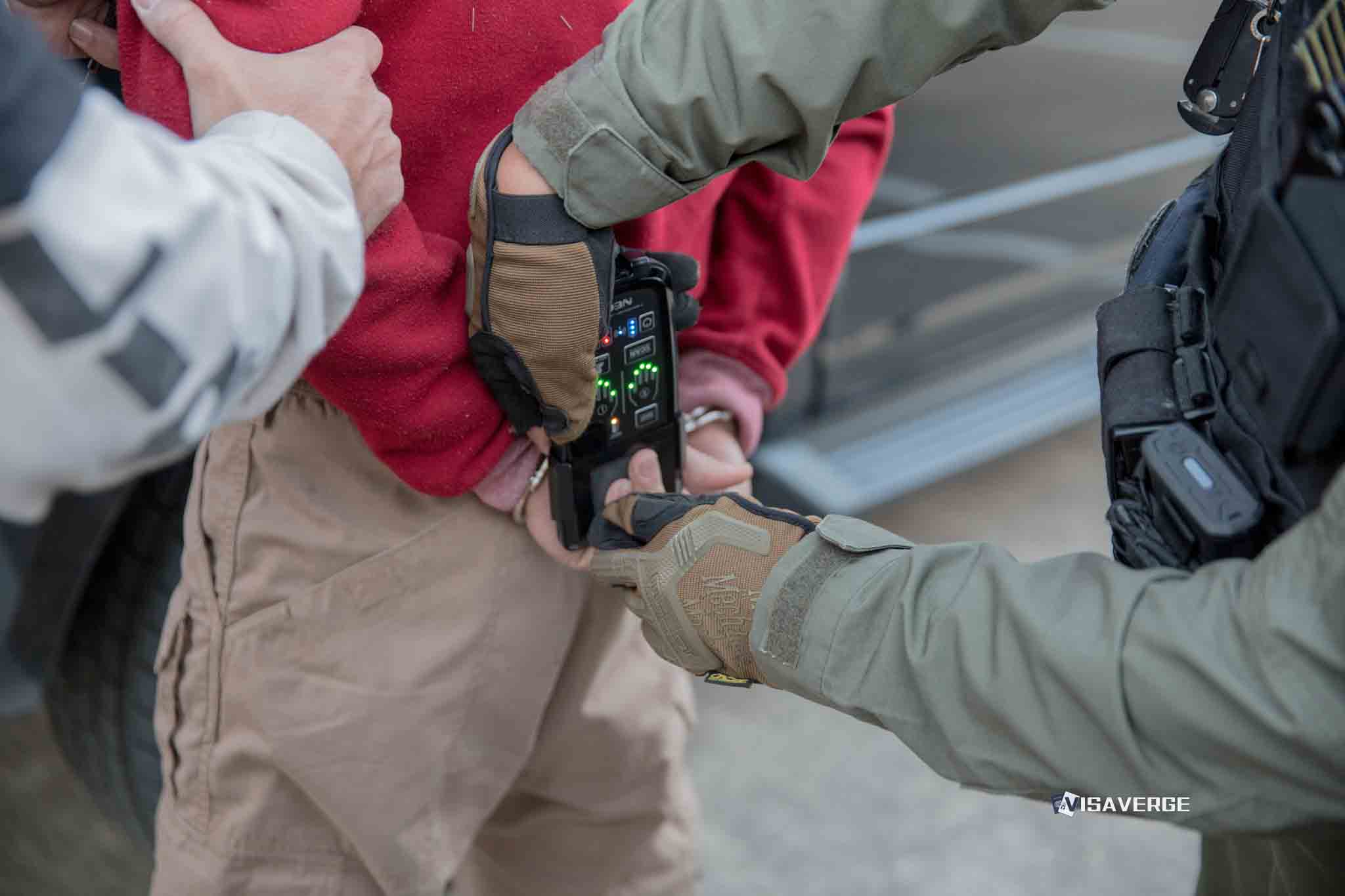
The device is called the G.L.O.V.E., short for Generated Low Output Voltage Emitter. Compliant Technologies LLC of Lexington, Kentucky, makes it. The glove functions like ordinary patrol equipment until an officer presses a switch and touches a person’s skin.
The discharge is designed to gain compliance within three seconds. Civil liberties advocates fear the switch could enable force that people nearby cannot see.
Jenn Rolnick Borchetta, deputy project director on policing at the American Civil Liberties Union, said the design creates a direct risk of abuse.
“Introducing gloves that can so easily be used to deliver terrible pain in encounters is a recipe for harm to the public.”
Borchetta also said officers could activate the device with “the slight push of a button that maybe nobody else can see them do.”
The purchase follows two fatal shootings without body-camera footage
The planned rollout follows two fatal shootings in July 2026 that brought renewed scrutiny to the agency’s use of force and recording practices. Both incidents occurred without body-camera footage.
In Houston, officers shot and killed Lorenzo Salgado Araujo on July 7, 2026, during a traffic stop. The Mexican citizen had lived in the United States for 35 years. The agency said he rammed its vehicle, while witnesses disputed that account.
In Biddeford, Maine, officers shot Joan Sebastian Guerrero on July 13, 2026. Guerrero, a 26-year-old Colombian national, was allegedly attempting to flee the scene. Officers in that incident also lacked body cameras.
The missing footage has become a separate source of dispute. Congress had provided a $20 million earmark for body cameras earlier in 2026.
Acting ICE Director David J. Venturella said the agency was “committed to transparency and accountability” and remained “on track to equip every officer and agent in the field with body-worn cameras by the end of August.”
Secretary of Homeland Security Kristi Noem promised in February 2026 to “rapidly acquire and deploy” body cameras nationwide. A Department of Homeland Security spokesperson later blamed “Democrat shutdowns” for delays.
The agency has also said it will release body-camera footage only when doing so is in the “best interests” of the agency.
Families and lawmakers are demanding clearer records of force
Hugo Balderas-Ibarra, an attorney for witnesses in the Houston shooting, said the families were “physically and emotionally scarred.” The lack of clear video, he said, makes achieving justice difficult.
Rep. Sylvia Garcia, D-Texas, called the absence of cameras in Houston a failure of leadership. She pointed to the money Congress had already provided specifically for the equipment, saying agents still did not have it.
Thirty-eight Democratic senators and Sen. Angus King, I-Maine, signed a letter dated July 22, 2026, demanding immediate accountability over the agency’s vetting of agents and the delayed camera rollout.
The Maine shooting also prompted a temporary suspension of vehicle stops in July. Internal directives later partially reversed that suspension.
That backdrop places the glove purchase alongside unresolved questions about documentation. A body camera may record an encounter, but the switch on the glove could be difficult for bystanders to detect.
The manufacturer limits when officers should use the glove
The manufacturer describes the device as a non-lethal compliance tool, not a punishment device. It warns officers not to use it against people showing only “verbal defiance or belligerence.”
The warnings also cover children, pregnant women, and elderly or disabled people. Officers must complete a course before using the device and undergo recertification every two years.
Training is mandatory. Recertification follows on a fixed cycle.
John Peters, president of the Institute for the Prevention of In-Custody Deaths, described the sensation as “immediate and sharp,” adding, “I call it like a bee sting.” He said the tool could shorten confrontations and be especially useful “for smaller officers or weaker officers or older officers.”
Peters also called the device an “effective tool” for overcoming resistance. His assessment contrasts with the warnings against punishment and use during mere verbal resistance.
Jeff Niklaus, the company’s chief executive, declined to provide specific comments by email on August 11, 2026.
“Unfortunately, we are unable to speak on this subject,” Niklaus said.
The Department of Homeland Security’s procurement description says the gloves would help agents gain compliance from “combative individuals.” The wording does not itself define how officers would determine that a person falls within the category.
A March deployment would precede the agency’s camera deadline
The planned purchase covers thousands of devices rather than a single pilot unit. The agency has not announced a narrower figure for how many gloves each field office would receive.
The procurement is expected to move through a no-bid solicitation. If published on August 14, the notice would begin the contracting process while the agency works toward its separate body-camera target at the end of August.
Human rights groups have described the gloves as a form of “invisible” force because an observer may not see the activation. They argue that the low-optics design could permit punishment without immediate detection by witnesses or cameras.
The agency’s stated timeline creates two deadlines: body cameras for every field officer by the end of August 2026, and shock-capable gloves for thousands of officers by March 2027. The first deadline concerns recording. The second concerns a new method of gaining physical compliance.
This article provides general information and is not legal advice. Consult a qualified immigration attorney about your specific case.