- ICE is preparing to buy up to $20 million in electrified shock gloves for field officers.
- The devices could reach officers by March 2027, with solicitation expected Friday, August 14, 2026.
- Civil rights advocates warn the gloves could enable hidden pain and make excessive force harder to prove.
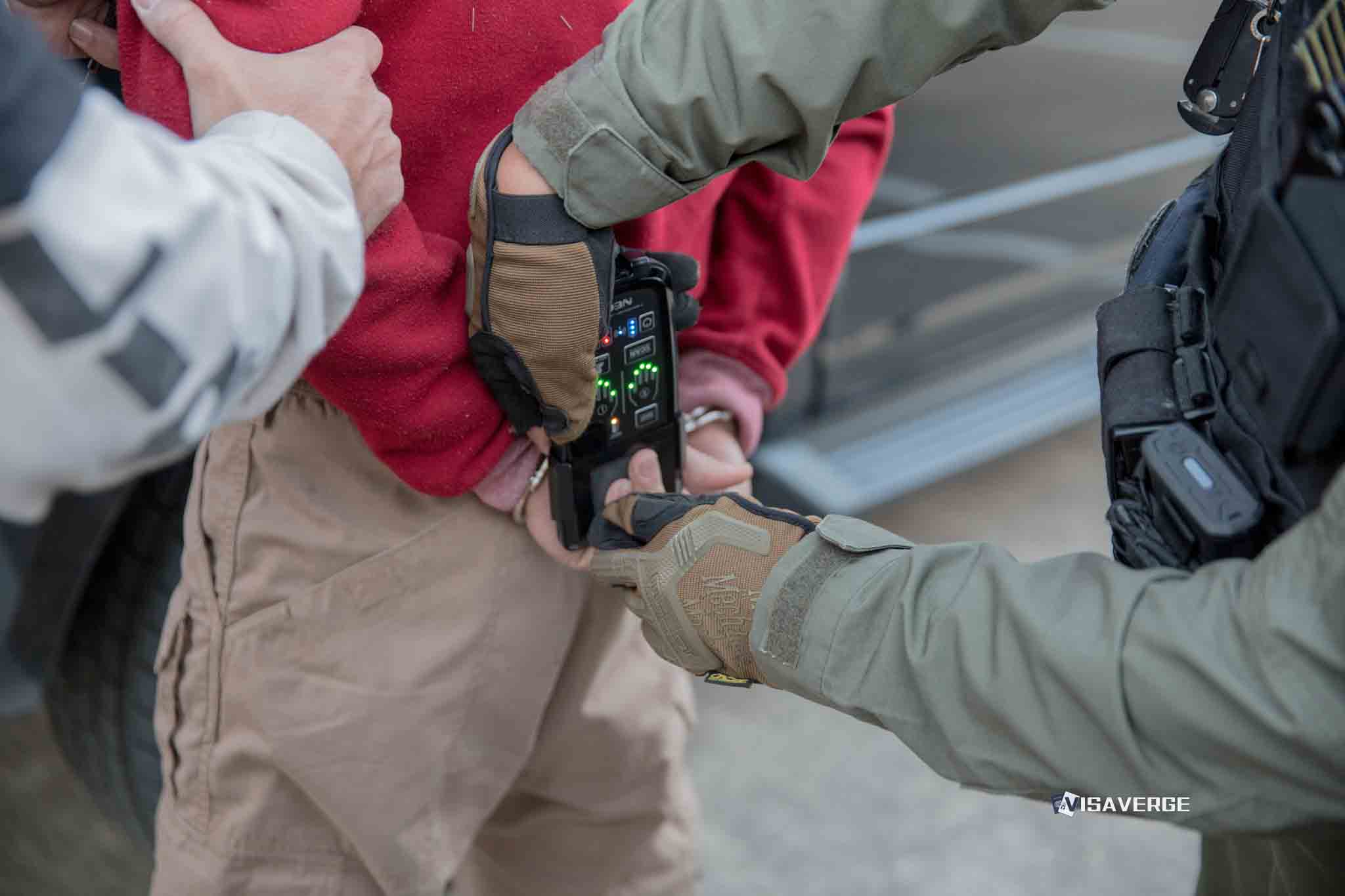
U.S. Immigration and Customs Enforcement is preparing to buy thousands of electrified shock gloves for Homeland Security Investigations and Enforcement Removal Operations officers and agents. A Department of Homeland Security planning notice puts the potential purchase at up to $20 million, with a solicitation expected Friday, August 14, 2026, and delivery targeted by March 2027.
Civil rights advocates say the wrist-activated devices could inflict pain without an obvious signal to bystanders or supervisors. Jenn Rolnick Borchetta, deputy project director on policing at the ACLU, said the public should have no confidence that officers will use them appropriately.
“Now they will be able to deploy electric shocks with the slight push of a button that maybe nobody else can see them do. Giving immigration agents a concealed means of delivering terrible pain is a recipe for more harm to the public.”
The planned deployment has drawn criticism from rights groups and elected officials. The manufacturer describes the glove as a tool for distraction and de-escalation, not punishment.
The G.L.O.V.E. delivers electricity through direct contact
Compliant Technologies LLC, based in Lexington, Kentucky, makes the product known as the G.L.O.V.E., short for Generated Low Output Voltage Emitter. The company says the glove can deliver up to 380 volts through direct skin contact.
A switch on the wrist activates the device. Otherwise, the product functions as a standard patrol glove.
The manufacturer’s guidance says the electrical current may work through thin, wet clothing. It also warns against using the glove around flammables or on medically compromised people.
The company says officers should not use it as punishment or against children, pregnant people, elderly people or disabled people. Its manual warns that use on vulnerable individuals can increase the risk of “sudden death.”
The product’s design raises an evidence problem. Compliant Technologies advertises that it leaves “no burns, marks or scars,” while critics say that feature could make physical proof of excessive force harder to establish.
John Peters, president of the Institute for the Prevention of In-Custody Deaths, has studied the device. He described its effect this way:
“It's immediate and sharp, and it will distract you. I call it like a bee sting.”
Unlike a Taser, the glove does not fire a projectile. The officer must make direct contact with the person before the device can work.
Training rules come from the manufacturer, not a public device-specific policy
Compliant Technologies says users must complete training and certification, then undergo recertification every two years. The company also restricts use against vulnerable groups and says the device is intended to distract a person and support de-escalation.
The procurement materials describe a purchase ranging between $10 million and $20 million. Thousands of units could equip most of the agency’s enforcement and removal officers, according to the additional research about the planned rollout.
DHS defended the acquisition by saying it is “constantly assessing” the needs of officers in the field. A spokesperson also said every technology decision receives review for consistency with “all applicable law enforcement policies and standards.”
The department’s response describes a general review process. It does not identify public rules specific to the glove, including device-level reporting requirements, real-time supervision standards or additional use-of-force safeguards.
Naureen Shah, the ACLU’s director of policy and government affairs for immigration, questioned whether the device should go to officers with limited training and a recent record of misusing force.
“The idea of arming ICE agents with limited training and a recent track record of misusing force. to hand them this kind of weapon is reckless and surprising.”
Kica Matos, president of the National Immigration Law Center, condemned the planned purchase and criticized the agency’s funding.
“Arming poorly trained agents with electric shock gloves to inflict pain on our neighbors is disgusting and barbaric. ICE is a rogue agency with an $80 billion slush fund that allows them to concoct and fund new ways to visit cruelty upon our communities.”
John Sandweg, a former acting director of the agency, warned that the tool could be used against people who pose no threat.
“It's too easy for this to get misused, against a population that doesn't pose a threat.”
New York officials and senators are seeking action before deployment
New York Attorney General Letitia James said officers who misuse the gloves in the state could face criminal and civil consequences. She and Gov. Kathy Hochul announced August 12 that they were exploring legal challenges to block their use in New York.
James said the state was outraged by the planned acquisition. Her warning could set up a state-level legal fight before the federal government fields the equipment.
U.S. Representative Pramila Jayapal, Democrat of Washington, said the plan would not improve public safety.
“This won't make anyone safer and in fact just gives ICE another dangerous tool to target citizens and immigrants alike.”
Senators Chris Van Hollen, Elizabeth Warren and Cory Booker called for a formal investigation into the procurement process. They cited the lack of a public explanation and published safety guidelines from DHS.
The procurement record includes two dates. The planning notice identifies Friday, August 14, 2026, as the expected solicitation date, while another account says a no-bid solicitation was published August 10, 2026. The purchase is expected to be completed by early 2027.
The planned federal rollout follows earlier force complaints
Rights organizations have documented at least 10 deaths involving the agency’s use of force since the start of 2025 and more than 50 allegations of excessive force, according to the research materials. One cited incident involved a 37-year-old woman who died; another left a person permanently blind.
The gloves have previously been used mainly in jails and by some local police departments. The planned purchase would be the largest federal deployment to date.
Critics say a concealed mechanism that delivers pain without visible marks could encourage immediate physical compliance instead of verbal de-escalation. The manufacturer presents that same electrical effect as a distraction intended to help officers regain control.
The timeline leaves several months between the expected solicitation and the target fielding date. DHS expects the devices to reach officers by March 2027, while New York officials and lawmakers seek legal and congressional scrutiny before then.
This article provides general information and is not legal advice. Consult a qualified immigration attorney about your specific case.