- ICE and TSA have expanded airport enforcement checks to domestic terminals as of August 2026.
- Non-citizen travelers must carry physical paper proof of status rather than relying on digital copies.
- Over 31,000 travelers were referred to ICE, resulting in 800 arrests this year alone.
ICE Airport Enforcement has widened airport checks across the country, and non-citizen travelers are being told to keep paper proof of status before they board. As of August 4, 2026, the Department of Homeland Security and ICE are treating terminals as enforcement sites. The old airport routine is gone.
A data-sharing agreement with the Transportation Security Administration now sends passenger names, dates of birth and itineraries toward the agency. Leavitt said TSA is using Secure Flight to cross-check passenger lists multiple times each week. The change also reaches domestic air travel.

On August 1, 2026, the department said the new line plainly:
Free toolREAL ID Requirements Checker tool"This administration works diligently to ensure that foreigners who are in our country illegally can no longer fly, unless it is to leave the country and self-deport."
The department called the old practice harmful. It tied the change to a broader strategy.
Mullin, sworn in on March 24, 2026, said on July 17, 2026, "We're turning up the heat on the streets. the ICE crackdown will intensify." Leavitt, speaking on July 22, 2026, said the White House was using Secure Flight as part of a broader strategy to enforce immigration laws. Passenger lists, she said, are cross-referenced multiple times each week.
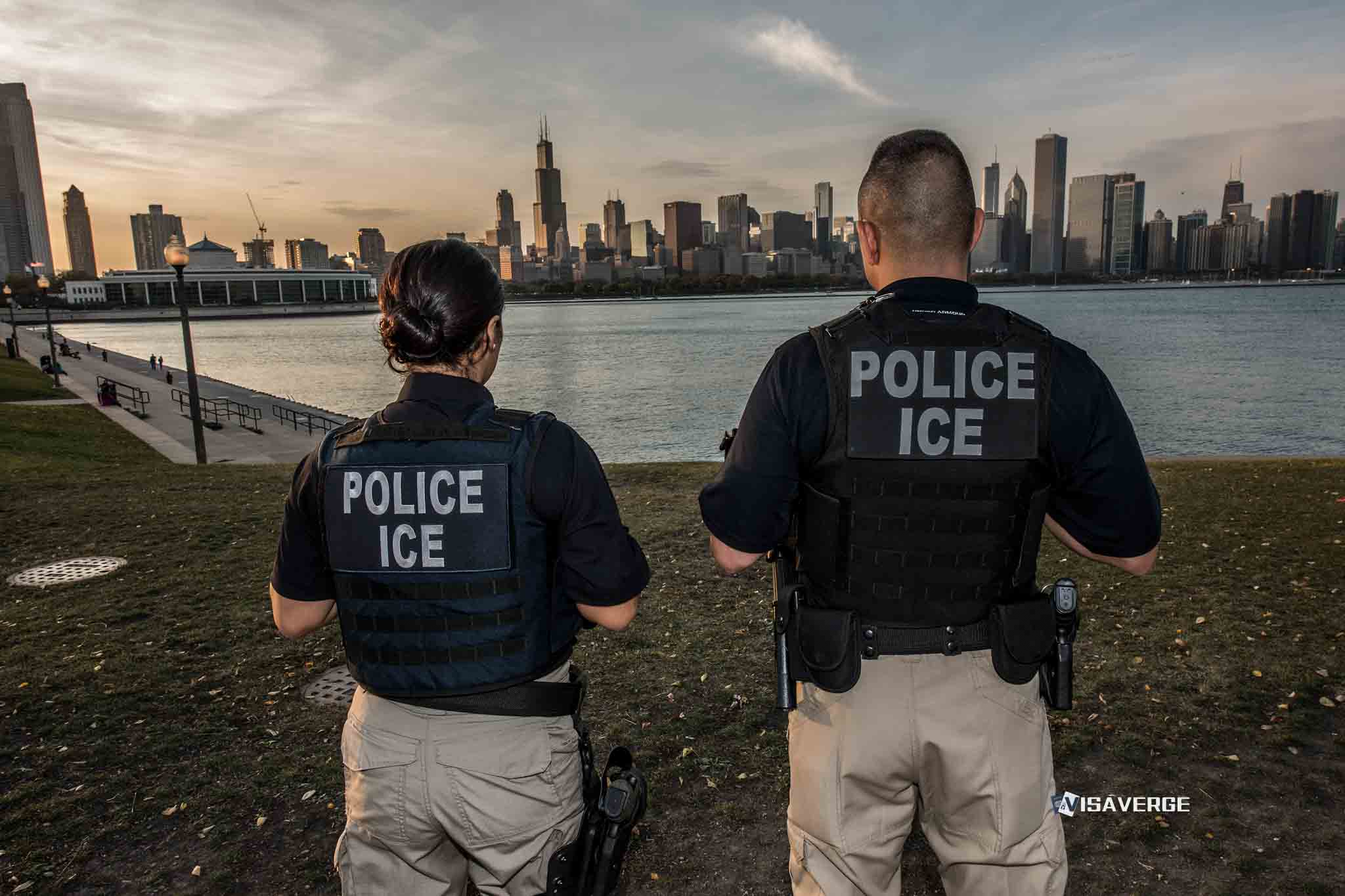
Plainclothes ICE agents have questioned travelers at check-in counters, boarding gates and jet bridges at San Francisco (SFO), Dulles (IAD) and Houston (IAH). The stops are happening in public. Since the start of 2026, TSA has reportedly referred over 31,000 travelers to ICE, and those referrals have led to more than 800 arrests.
The checklist starts with what TSA still accepts and ICE still asks for. TSA still accepts standard REAL ID-compliant identification for security screening. ICE agents in the terminal can ask for proof of legal status. That puts a premium on paper. People in a period of authorized stay should not rely on a digital copy alone, and many advisers tell travelers to memorize their Alien Registration Number (A-Number) as backup.
Paper proof sits above the boarding pass
| Document | Why it matters |
|---|---|
| Valid Passport | It should include any unexpired or expired visa stamps. |
| Form I-94 (Arrival/Departure Record) | This is the controlling record of lawful entry and authorized duration of stay. |
USCIS Receipt Notices, Form I-797 | Carry this if you have a pending application, including Extension of Status, Adjustment of Status/Green Card, or Asylum, to show a period of authorized stay. |
| Employment Authorization Document (EAD) | This is a valid work permit card. |
| Advance Parole Documents | These are essential for people with pending green card applications traveling domestically or internationally. |
I-20 or DS-2019 Forms | F-1 and J-1 students and exchange visitors use these to show active status. |
A pending case no longer guarantees a quiet trip
The sharpest break lands on people in a period of authorized stay who do not hold a current physical visa. Historically, timely filed pending applications kept many travelers out of airport enforcement. That is no longer true. ICE detentions reached a record high of over 46,000 individuals in July 2026.