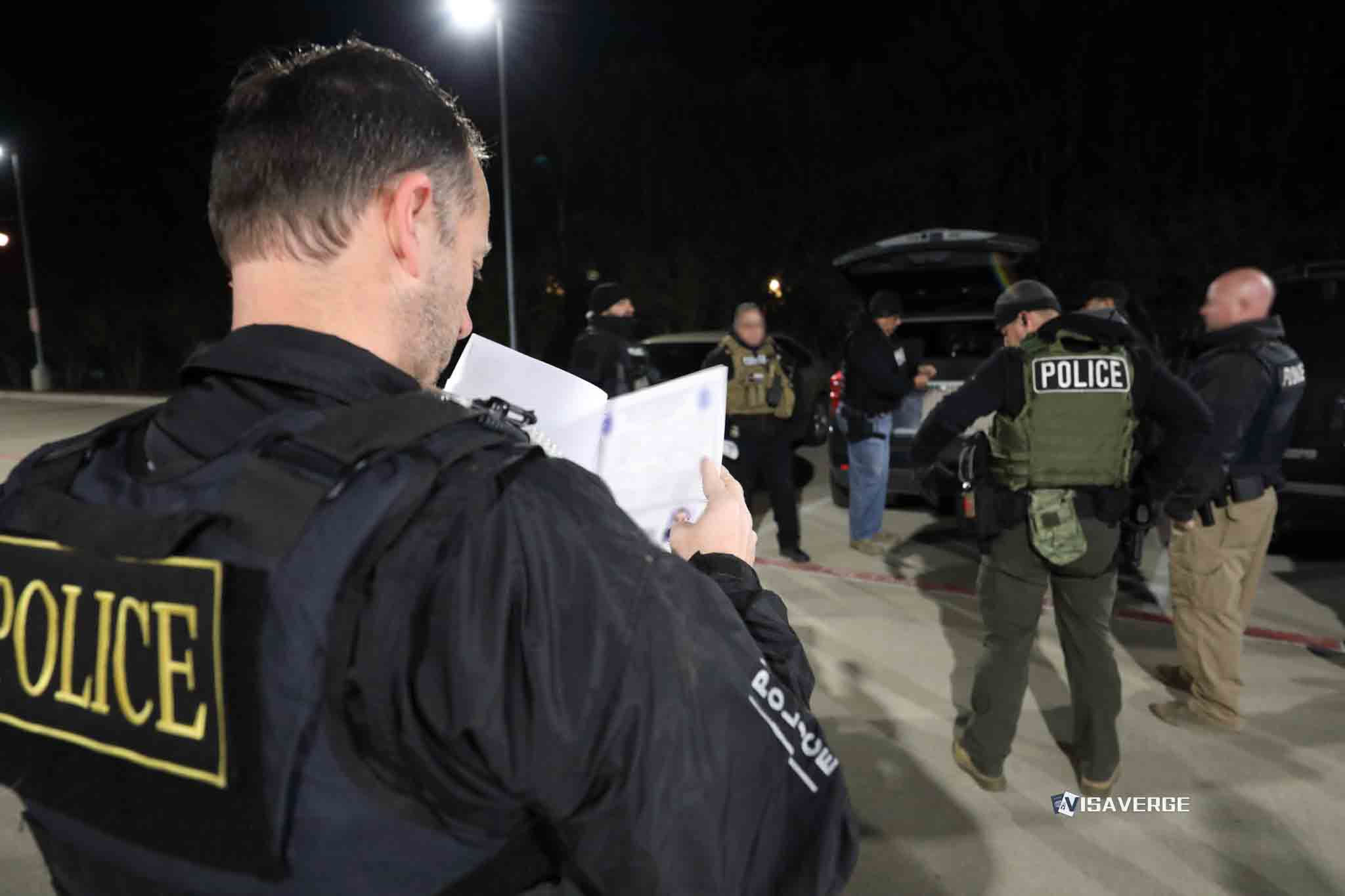
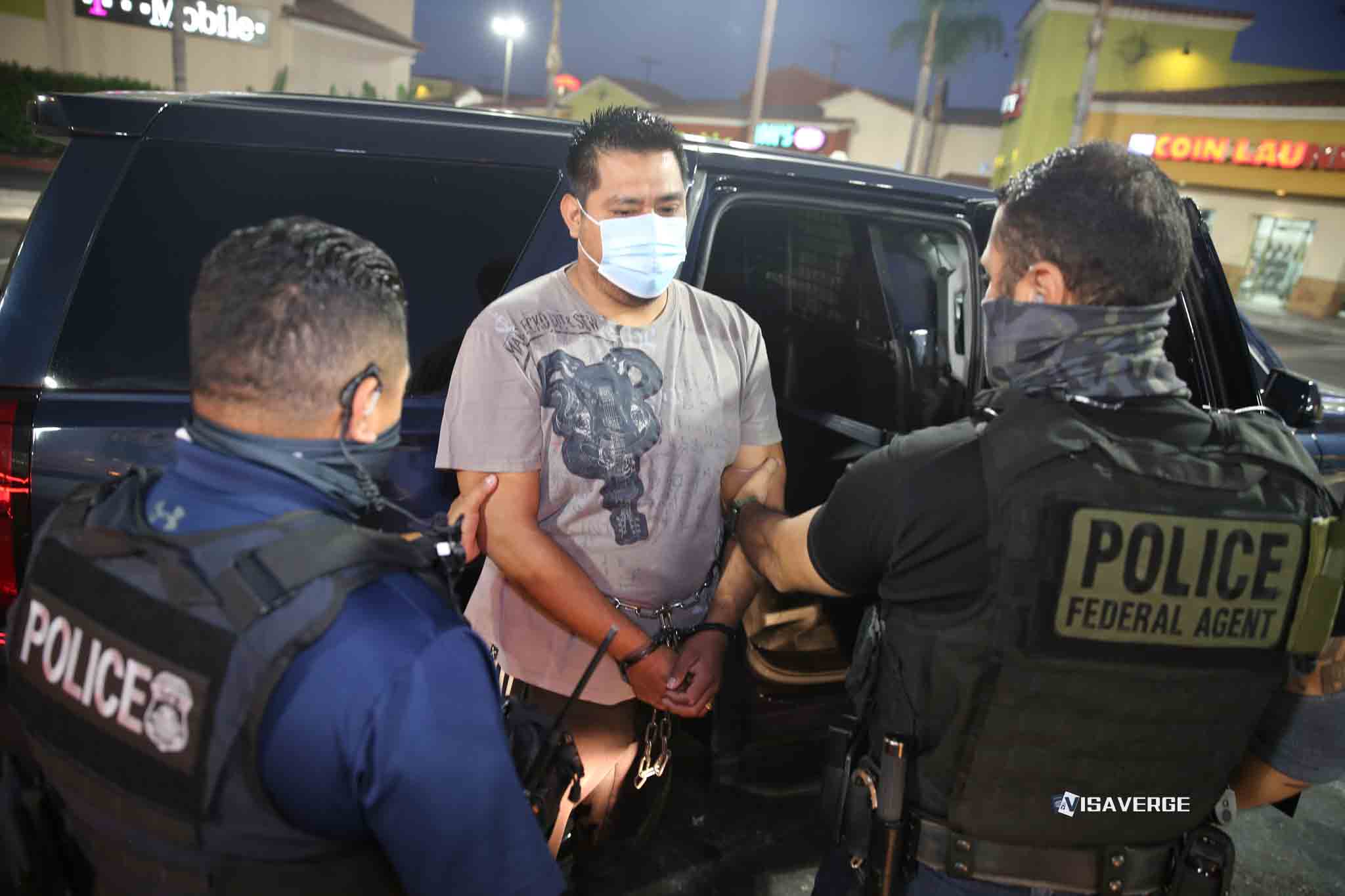
- TSA and ICE share passenger data to identify and arrest individuals with immigration issues at U.S. airports.
- Over eight hundred confirmed arrests have occurred through February twenty-six based on thirty-one thousand traveler referrals.
- Pending asylum or green card cases do not prevent detention by plainclothes agents at security checkpoints.
- New funding provides thirty-eight point five billion dollars for ICE personnel and interior enforcement through twenty-twenty-nine.
Travelers stopped by U.S. Immigration and Customs Enforcement agents at airport security checkpoints should remain calm, avoid assuming that a pending immigration case protects them from detention, and seek qualified immigration counsel as soon as possible. The Transportation Security Administration and ICE now use passenger information to identify people the agency considers immigration-enforcement targets.
The arrangement operates under a May 2025 Memorandum of Agreement between TSA and ICE. The agreement covers Secure Flight Passenger Data, including full legal names, dates of birth, and passport information.

TSA checks that information against ICE records. The process can begin before boarding.
Free toolUSCIS Receipt Number DecoderICE has placed plainclothes agents at at least 15 major airports, including SFO, LaGuardia, and Bradley International. Agents have made arrests at check-in counters and jetways, according to the policy details described in the agreement.
Travelers should not treat the checkpoint as only a screening issue. ICE stops can involve immigration enforcement after TSA has completed its security work.
TSA Acting Administrator Ha Nguyen McNeill described the agency’s role during a House Homeland Security Committee hearing on January 21, 2026.
"We are supporting the mission of our colleagues at the Department of Homeland Security, and that includes enforcement of immigration laws. We don't send the information to ICE; we help ICE check against information."
The arrangement has since been described in internal documents released in July 2026 as a formal agreement to share specific passenger data elements for enforcement purposes. The agreement cites the Secure Flight Final Rule as authority for sharing traveler information within the Department of Homeland Security to “further the national security mission.”
Passenger data can trigger an immigration review before departure
The data used in the process is Secure Flight Passenger Data, or SFPD. TSA provides the information to ICE, which compares it with agency repositories to identify “individuals of interest.”
That comparison may occur before a traveler boards or after the traveler deplanes. Plainclothes officers can therefore appear away from a traditional immigration office.
The government’s recorded activity has grown. Through February 2026, TSA made more than 31,000 traveler referrals to ICE. Those referrals produced more than 800 confirmed arrests directly linked to flight data.
ICE also recorded 43,138 arrests in June 2026, its highest monthly total in years. Tom Homan, the administration’s Border Czar, linked increased enforcement to new funding on June 9, 2026.
"You're going to see targeting increase, you're going to see arrests increase. [The funding] ensures critical law enforcement agencies have the necessary resources to do their jobs."
A pending immigration case does not eliminate detention risk
Airport arrests have involved people with final orders of removal. They have also included people with pending asylum applications, expired work authorizations, or pending green card adjustments.
The categories can overlap. A traveler may have an application or adjustment pending while ICE considers another immigration issue.
Travelers should avoid making decisions based only on the existence of a pending filing. A pending asylum application or green card adjustment does not, by itself, establish that ICE will not detain the person under the enforcement practices described here.
The same caution applies to employment authorization. An expired work authorization can become part of the circumstances surrounding an arrest, even when the traveler has another immigration matter underway.
What to do during an airport encounter
A traveler who encounters immigration officers should focus first on identifying the situation and obtaining legal assistance.
- Ask which agency is involved. TSA handles transportation security, while ICE handles immigration enforcement. Agents may be operating in plain clothes.
- Do not assume the encounter is routine screening. A stop at a check-in counter, jetway, or security area may involve a review of passenger information against ICE records.
- State the immigration facts accurately. Pending asylum applications, expired work authorizations, and green card adjustments have appeared among the situations involved in airport arrests.
- Contact a qualified immigration attorney promptly. The effect of a final removal order, pending filing, expired authorization, or other case-specific fact depends on the individual record and applicable law.
- Keep track of the encounter and custody location. People detained at airports enter ICE custody and must be managed under the 2026 National Detention Standards.
These steps do not guarantee release or prevent an arrest. They help separate transportation screening from immigration enforcement and preserve accurate information for counsel.
New funding is expanding airport enforcement capacity
President Trump signed the Secure America Act, S. 2, on June 10, 2026. The law provides $69.5 billion in supplemental immigration-enforcement funding through 2029.
Of that amount, $38.5 billion goes specifically to ICE personnel, removal operations, and interior enforcement. A portion also supports expanded biometric screening and more ICE personnel at transportation hubs.
The administration has set a goal of roughly 3,000 arrests per day. The funding gives the agency resources to expand the airport operations already described in the TSA-ICE agreement.
A Department of Homeland Security spokesperson said on July 28, 2026: "working diligently to ensure that aliens in our country illegally can no longer fly unless it is out of our country to self-deport."
Airport enforcement therefore rests on two connected systems: TSA passenger screening data and ICE immigration records. A traveler’s next step after a stop should turn on the specific facts of the encounter and immigration case, not on assumptions about airport security alone.
This article provides general information and is not legal advice. Consult a qualified immigration attorney about your specific case.