At 9:54 on the morning of 11 September 2001, Tom Burnett called his wife for the fourth time in 24 minutes and told her the plan. The passengers of United Airlines Flight 93 were going to wait until the aircraft was over a rural area, and then they were going to take it back. Deena asked what she should do. By her account he said: “Pray, Deena. Just pray.” Then: “Don’t worry, we’re going to do something.” Three minutes later the cockpit voice recorder picked up the sound of them moving.
Burnett was 38 years old, six foot two, the chief operating officer of a company that built artificial hearts, and he was not supposed to be on that aircraft. He had switched to an earlier flight out of Newark so he could get home to San Ramon, California, for his twin daughters’ first day of kindergarten. The switch put him in seat 4B of a Boeing 757 carrying 33 other passengers, seven crew and four men with knives and red bandanas.
What happened in the 81 minutes between takeoff and impact is among the most heavily documented hours in American history. The FBI logged 37 phone calls from the aircraft. The cockpit voice recorder survived. The 9/11 Commission built a second-by-second reconstruction from both. Because of that it is possible to say, with a precision almost nothing else about that morning allows, what Tom Burnett knew, when he knew it, and what he decided to do about it.
The flight he was not supposed to be on
Thomas Edward Burnett Jr. was born in Bloomington, Minnesota, on 29 May 1963, and spent his childhood inside about a two mile radius of it. Ridgeview Elementary, then Olson Middle School, then Thomas Jefferson Senior High, where he played quarterback and took the Jaguars to the 1980 state final. People who knew him then describe someone loud and certain, the kind of teenager who ran the huddle. He graduated in 1981.
He went to Saint John’s University in Collegeville to study economics and to keep playing, until an injury ended the football. What he found there instead was a Benedictine abbey and a community of monks, and by his family’s account the conversations he had with them pulled him back toward a faith he had drifted from as a teenager. He finished a finance degree at the University of Minnesota’s Carlson School of Management, where he ran the Alpha Kappa Psi chapter, and took an MBA at Pepperdine.
The company he ended up running made a specific and unusual thing. Thoratec, based in Pleasanton, California, built ventricular assist devices: mechanical pumps implanted in people whose hearts are failing, to move blood for them while they wait for a transplant that may not arrive. Burnett joined in 1996 to run sales and marketing and was promoted to senior vice president and chief operating officer in November 1999. It is worth sitting with the shape of that job for a second. He spent his working life on the machinery that buys dying people more time.
He had married Deena Burchfield in 1992. She had grown up on a cotton farm in Halley, Arkansas, and they named one of their twin daughters after the town. Halley and Madison were five that September. Their younger sister Anna Clare was three. Burnett travelled constantly and had started talking about retiring early.
That week he was on the East Coast for business. The twins were starting kindergarten, and he wanted to be there, so he moved his booking forward to United 93, Newark to San Francisco, scheduled out at 8:00. Newark’s ordinary morning congestion held it on the ground. It lifted off at 8:42, more than 25 minutes late, and that delay turned out to be the single most consequential fact of the flight.
The other three hijacked aircraft were already airborne or close to it. By the time the four men aboard 93 moved at 9:28, both towers of the World Trade Center had been struck and the Pentagon was minutes from it. The passengers of Flight 93 were the only ones with enough time to find out what was actually happening. They were also the only ones who did.
The thing he told his wife in 1998
There is a part of this story that cannot be checked, and it should be labelled clearly before it is told. Everything above comes from records: school files, company filings, an FBI call log. What follows comes from Deena Burnett alone, recounted after the fact, and she has told it consistently in interviews and in her book for twenty-five years. Take it as testimony rather than evidence.
Around 1998 Tom started going to Mass every day. Deena asked him why. This is her account of his answer.
I feel like God is calling me to do something, and I don’t know what it is. But I know it’s going to have a great impact on a lot of people.
Tom Burnett to his wife, c. 1998, as she recounts it
She asked what he thought it was. She says he told her he did not know, only that it would affect a great many people, and that it had something to do with the White House. They were both practical people, and they reached for a practical reading. He was thinking about leaving the medical device business. Politics seemed like the obvious door.
Deena has also said she had a conviction of her own, after their third daughter was born, that her husband would die young and that it would happen in an aircraft. She told her mother. She describes feeling not frightened by it but strangely settled. In the year before he died the two of them talked about the possibility that they would not grow old together.
Readers will do what they want with that, and should. What is not in dispute is the destination. The 9/11 Commission concluded that the hijacker flying United 93 was aiming at one of two buildings in Washington, and that one of them was the White House.
Four calls in twenty-four minutes
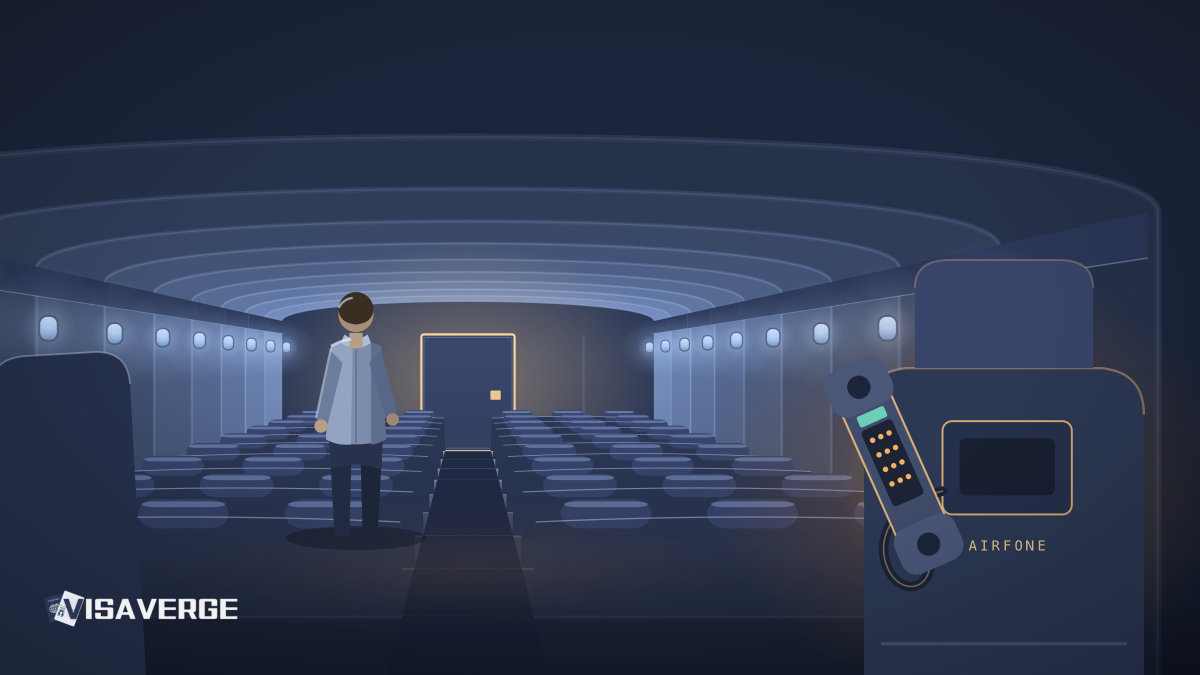
The reconstruction of the calls from Flight 93 is unusually complete because of how the passengers made them. Thirty-five of the 37 calls went out on seat-back Airfones, which were activated with a credit card and therefore left a billing record: the time, the number dialled, the duration, and the row the handset sat in. Only two came from mobile phones. Thirteen passengers and crew reached someone on the ground.
Burnett’s four calls were logged from rows 24 and 25. His assigned seat was in row 4. He had already moved to the back of the cabin with everyone else, and the log shows him working the problem from there: taking information in on the first two calls, giving it out on the last two.
He reports the hijacking
The flight has been hijacked. They knifed a man. They say they have a bomb. Call the authorities.
She is getting three small daughters ready for school. The television is on in the next room.
She tells him about the towers
The stabbed passenger is dead. He does not think the bomb is real. Then, turning from the phone to the people around him: "They're talking about crashing this plane. Oh my God. It's a suicide mission."
She tells him two aircraft have hit the World Trade Center. It is the moment the hijacking stops being a hostage situation.
He starts building a plan
"We have to do something. We can't wait for the authorities . . . It's up to us. I think we can do it." A group of them are getting ready.
She tells him the Pentagon has been hit. She has already called the FBI, who have told her to stay on the line.
He tells her what they are going to do
They are waiting until the aircraft is over a rural area, and then they are going to take it back. His last words to her: "Don't worry, we're going to do something."
She asks what she should do. By her account he tells her to pray. She never hears from him again.
Deena was in the kitchen in San Ramon getting three small children ready. It was 6:27 on the West Coast when the first call came. She thought at first he was telling her he would be late. Between calls she rang the emergency services and then the FBI, who told her to stay by the phone, and she began writing down what he said as he said it. Those notes are part of the reason the sequence is as exact as it is.
The turn comes in the second call. She tells him two aircraft have hit the World Trade Center, and the whole character of the thing changes for him. He stops treating it as a hijacking, which in 2001 still meant a landing somewhere and a negotiation. The people around him heard him say it out loud: “They’re talking about crashing this plane. Oh my God. It’s a suicide mission.”
By the third call, at 9:44, he had stopped asking for help.
We have to do something. We can’t wait for the authorities . . . It’s up to us. I think we can do it.
Tom Burnett, third call, 9:44 a.m.
That is the National Park Service’s record of his words. He named three of the men working with him: Mark Bingham, Todd Beamer and Jeremy Glick. All four would later share the same award.
He was not the only one on the phone
It would be wrong to tell this as one man’s story, and Burnett’s own words make the point for him. Thirteen people aboard got through to someone, and what they collectively assembled in about twenty minutes was an accurate intelligence picture that the government did not have.
Jeremy Glick, calling his wife, described the knives and what the hijackers looked like. Mark Bingham, a rugby player who had run with the bulls in Pamplona, called his mother and told her he loved her. Todd Beamer, unable to reach his family, stayed on a long open line with a GTE supervisor and asked her to pray with him. Flight attendant Sandy Bradshaw called her husband to say she was in the galley filling coffee pots with boiling water to throw. CeeCee Lyles, another flight attendant and a former police officer, left her husband a message.
Several of the callers said the passengers had voted on whether to rush the cockpit. That detail has been repeated so often it has worn smooth, and it is worth roughening again: a group of strangers on a commercial flight, with roughly twenty minutes of information, took a vote on whether to attack four armed men, and then did it.
What the cockpit recorder heard
Ziad Jarrah, the hijacker flying the aircraft, had made two announcements to the cabin. The first, at 9:32, told the passengers to sit down because there was a bomb on board. The second, at 9:39, told them the flight was returning to the airport. Neither was true, and the people in the back already knew it. At 9:57 one caller broke off mid-sentence: “Everyone’s running up to first class. I’ve got to go. Bye.”
What the recorder captured over the next six minutes is a fight for a door. At 9:58:57 Jarrah told the man beside him to block it. At 9:59:52 he started pitching the nose up and down to throw the passengers off their feet, and the tape fills with thumps, shouts and breaking glassware. It did not work. Eleven seconds later he levelled the aircraft again, which is what a pilot does when the thing he tried has failed.
- Flying the aircraft
- Captain Jason Dahl and First Officer LeRoy Homer
- Tom Burnett
- Seat 4B, first class
- The cabin
- A quiet, two-thirds empty aircraft
- Deena Burnett
- At home in San Ramon, 05:42 on the West Coast, getting three daughters up
At 10:00:26 a passenger’s voice comes through the door clearly enough to transcribe.
In the cockpit. If we don’t we’ll die!
Unidentified passenger, cockpit voice recorder, 10:00:26
Sixteen seconds later, “Roll it!” Around 10:01 Jarrah asked the other hijacker in the cockpit whether they should put the aircraft down. The answer was yes. At 10:02:23 came the order, “Pull it down! Pull it down!”, and underneath it the counterattack is still audible. United 93 hit a field in Stonycreek Township, Pennsylvania, at 10:03:11, inverted, at 580 miles per hour. All 44 people aboard were killed.
Twenty minutes from Washington
The crash site is roughly 20 minutes’ flying time from Washington, D.C. The 9/11 Commission concluded that Jarrah’s target was the Capitol or the White House, and wrote that he “was defeated by the alerted, unarmed passengers of United 93.”
The alternative to those passengers was supposed to be the United States military, and the Commission’s account of what the military was doing is the part of this story that gets least attention. Air defence was never told that United 93 had been hijacked. The order authorising fighters to shoot down a civilian airliner did not reach the military until 10:31, 28 minutes after the aircraft was already in the ground. It never reached the pilots in the air at all: the officers directing them chose not to pass it down, unsure how it should be acted on. The fighters that were airborne over Washington had not been armed for it. At least one pilot expected to bring an airliner down by flying into it.
So the honest arithmetic is this. Between the hijacking at 9:28 and the impact at 10:03, there was no mechanism of the American state in a position to stop that aircraft. The only people who could were the ones sitting in the back of it, and what they had was a 25 minute departure delay, thirteen telephone calls, and about twenty minutes to decide.
Everything that came afterwards for American aviation and American borders, the subject of our 25-year account of how 9/11 rebuilt the immigration system, was designed by people with the benefit of hindsight and an unlimited budget. The passengers of Flight 93 had neither.
What was left in the field
The aircraft went into soft reclaimed strip-mine ground at close to the speed of sound, and most of it went underground. Investigators eventually opened an excavation about 85 feet square and sifted it. The largest recognisable pieces recovered were parts of the two engines and a section of fuselage found near the treeline. Most of the rest was the size of a notebook or smaller, and lighter debris was carried as far as eight miles.
Both recorders were recovered, which is why the last six minutes can be described at all. So, eventually, was enough of everyone aboard to identify all 40 passengers and crew by dental records, fingerprints or DNA. The families got that much. It is not nothing, and on that particular morning it was more than most families got.
The twenty-five years since
Three days after the attacks, Jefferson High’s football team took the field with their old quarterback’s number on their helmets. That was the beginning of a long accumulation. His parents and his two sisters, Martha and Mary, started the Tom Burnett Family Foundation in 2002 and pointed it at youth leadership and citizenship, which is where it still points.
- 2001 Number 10 on every helmet 14 September Three days after the attacks, Jefferson High School's football team plays with their old quarterback's number on their helmets.
- 2002 Tom Burnett Lane March Pleasanton, California, where Thoratec had its offices, names a street for him.
- 2002 Fort Snelling National Cemetery 24 May He is buried in Minnesota, a few miles from the high school. Visitors still come to the grave every 11 September.
- 2002 Arthur Ashe Courage Award July Shared with Todd Beamer, Mark Bingham and Jeremy Glick, the four men he named to Deena on the phone.
- 2002 The jersey is retired 5 September Jefferson High retires the number he wore leading the Jaguars to the 1980 state final.
- 2002 Tom Burnett Family Foundation Founded His parents and two sisters start a foundation for youth leadership and citizenship a year after his death. It still funds scholarships at Bloomington Jefferson and Kennedy, Saint John's University and Pepperdine.
- 2003 Thomas E. Burnett Jr. Memorial Bridge February San Ramon, California, the town he was trying to get home to, names a bridge for him.
- 2006 Tom Burnett Advanced Leadership Program Ongoing Eight weeks of leadership and mentoring for University of Minnesota seniors. More than 200 students have come through it.
- 2008 Burnett House, Huntingdon Opened Thoratec names its European headquarters in England after its former chief operating officer.
- 2011 Hero's Garden, Pepperdine 10 September The university where he took his MBA dedicates a garden on the tenth anniversary.
- 2011 Hometown Heroes Celebration Annual Bloomington starts an annual event in his name honouring local service.
- 2011 National September 11 Memorial Panel S-68 His name is cut into the bronze parapet around the South Pool in Manhattan, with the other 2,976.
- 2026 A stadium, possibly 15 October Jefferson High dedicates a new stadium this autumn. His Class of 1981 is pushing to put his name on it. No decision yet.
The pattern in that list is worth noticing. Almost none of it is a monument. It is scholarships at two Bloomington high schools, at Saint John’s and at Pepperdine, an eight-week leadership programme at the University of Minnesota that more than 200 students have now been through, an annual celebration of local service, a street and a bridge in the two California towns that had a claim on him. The family chose to spend the memory on other people’s education rather than on stone.
The stone exists too, and it is unusual. At the Flight 93 National Memorial in Shanksville there is a 93 foot concrete tower hung with 40 aluminium wind chimes, one for each person aboard, tuned so that no two are alike and the wind never plays the same thing twice. It is called the Tower of Voices. It was finished in 2020, nineteen years after the fact, for a group of people whose last act was making phone calls.
There is also a daughter he never raised. Mariah Mills was born in 1985 and placed for adoption; in 2004 she worked out who her biological father had been, and went looking. His widow and his sisters took her in.
Deena
Deena Burnett left California in 2002 and took the three girls home to Arkansas, to Little Rock, near where she had grown up. She has said plainly that it was the place and the people around her there that made the difference. She wrote a book, Fighting Back: Living Life Beyond Ourselves, partly so that her daughters would have their father’s last morning written down by someone who was on the other end of it. She remarried. She is Deena Burnett Bailey now.
The girls who were five and three are in their twenties. Halley, the one named after the Arkansas town, went to Pepperdine, where her father took his MBA. Madison went to Texas Christian. Deena still speaks about that morning in public, which after twenty-five years is its own kind of endurance, and she is still asked the same question at the end of every telling, which is what the last call was like.
A stadium in Bloomington
On the 25th anniversary this year, people drove out again to Fort Snelling National Cemetery, where Burnett was buried on 24 May 2002. Patricia Boyd has gone every 11 September since. She told FOX 9 what she promised at that grave.
It changed my life. And I made a promise that I would always be as courageous as they were.
Patricia Boyd, Fort Snelling National Cemetery, 11 September 2026
Others left flowers. A flag carrying the names of all 2,977 victims was displayed.
At the high school, his Class of 1981 gathered at the rock memorial on campus. Bloomington Public Schools has just finished a new stadium at Jefferson, with a dedication set for 15 October 2026, and his classmates are pushing to put his name on it. No decision has been announced. It is a strange, small, entirely appropriate argument to still be having: whether to write a quarterback’s name on a field in the town he never really left.
Why this story sits here
VisaVerge spends most of its time on rules: fee schedules, filing windows, the exact wording of a proclamation. Those rules did not come from nowhere. A great deal of the apparatus we write about every week, from the biometric screen at the border to the interview requirement at the consulate, traces back to 11 September 2001 and to the finding that nineteen men had walked through an open system. We have covered what that rebuild did to the responders who cleared the site and now fear deportation, to Guantanamo’s slow conversion into immigration detention, and to something as ordinary as the licence in your wallet.
This is the first piece in Beyond the Headlines, where we go the other direction now and then: away from the rule and back toward the people it came from. Tom Burnett never filed a form or argued a case. He got on the wrong aircraft to make a school day, worked out what was happening faster than his government did, and spent the last 24 minutes of his life organising strangers. Twenty-five years on, the only argument left in Bloomington is whether to put his name on a stadium. The rest was settled in about twenty minutes, somewhere over Ohio.