- ICE and CBP have intensified airport immigration checks at both international and domestic terminals using real-time manifest sharing.
- A new rule replaces duration of status with fixed admission periods for F and J visa holders starting September 2026.
- Over eight hundred immigration arrests have occurred at domestic security checkpoints following a 2025 data-sharing agreement.
ICE and Customs and Border Protection have intensified immigration checks at international and domestic airports, targeting travelers whose applications remain pending or whose admission records have expired. The changes include domestic boarding-gate checks and real-time passenger information sharing.
A May 2025 agreement allows the Transportation Security Administration to share passenger manifests with the agency in real time. The records include names, birth dates and travel itineraries. More than 800 immigration-related arrests have followed at domestic security checkpoints as of August 2026.
Free toolOPT Timeline Calculator Online
The department has also introduced domestic status checks at boarding gates in at least 15 major airports, including SFO, DEN and BOS. Officers may ask travelers to show proof of immigration status before boarding.
The checks can expose a gap between a pending filing and an unexpired admission record. A timely application may show that a person sought an extension or adjustment, but it does not necessarily replace an expired I-94 or visa during questioning.
A DHS spokesperson said July 30:
"This administration is working diligently to ensure that aliens in our country illegally can no longer fly unless it is out of our country to self-deport."
An official agency statement issued July 31 separately said:
"A 'work permit' and/or a pending asylum case does NOT confer any type of legal status in the United States or prevent ICE from arresting or deporting an illegal alien from the country."
The government distinguishes between “lawful stay” and “lawful status.” Travelers with expired documents may face scrutiny even when U.S. Citizenship and Immigration Services has accepted a timely application.
Pending filings do not remove every airport risk
Travelers with a pending Form I-129 extension or Form I-485 adjustment application may still face detention if their visa stamp has expired. The risk is especially acute when the person cannot show a valid I-94 or explain the current basis for remaining in the United States.
The documents to carry depend on the immigration category. Keep originals or accessible copies organized before leaving for the airport.
| Immigration category | Risk identified | Documents to carry |
|---|---|---|
| H-1B | An expired visa stamp alongside a pending extension | Valid passport, I-94, I-797 receipt or approval, and recent pay stubs |
| F-1 | The coming end of duration-of-status admission and delays involving OPT or STEM OPT | Valid passport, I-20 with a recent travel signature, and an EAD if on OPT |
| Pending Green Card case | Reliance on an EAD or Advance Parole instead of continued nonimmigrant status | Advance Parole, Form I-512, and proof of underlying valid status when possible |
The document list cannot guarantee admission or prevent questioning. It gives an officer records to review the traveler’s current situation.
Students face a fixed-admission change in September
On July 17, 2026, DHS published a final rule replacing duration of status, or D/S, for F and J visa holders with fixed periods of admission. The rule takes effect September 15, 2026.
The agency is already using the upcoming change to justify heightened scrutiny of students. Students traveling before the effective date should check that their passports, I-20s and travel signatures remain current.
Students on OPT or STEM OPT also face document delays. An EAD, when required, belongs with the passport and I-20 during travel.
Officers can search devices at the border
CBP’s updated Directive 3340-049B, issued in January 2026, expands the listed scope of warrantless electronic-device searches at ports of entry. The covered devices include smartphones, laptops, smartwatches, SIM cards and vehicle infotainment systems.
The border-search exception allows CBP to search devices without a warrant. Refusing to provide a passcode can lead to device seizure for 5+ days and denial of entry for noncitizens.
Domestic travelers should distinguish security checkpoints from international ports of entry, even as the data-sharing agreement increases immigration scrutiny at domestic airports. An expired I-94 remains a particular concern.
Ask for a supervisor before signing immigration forms
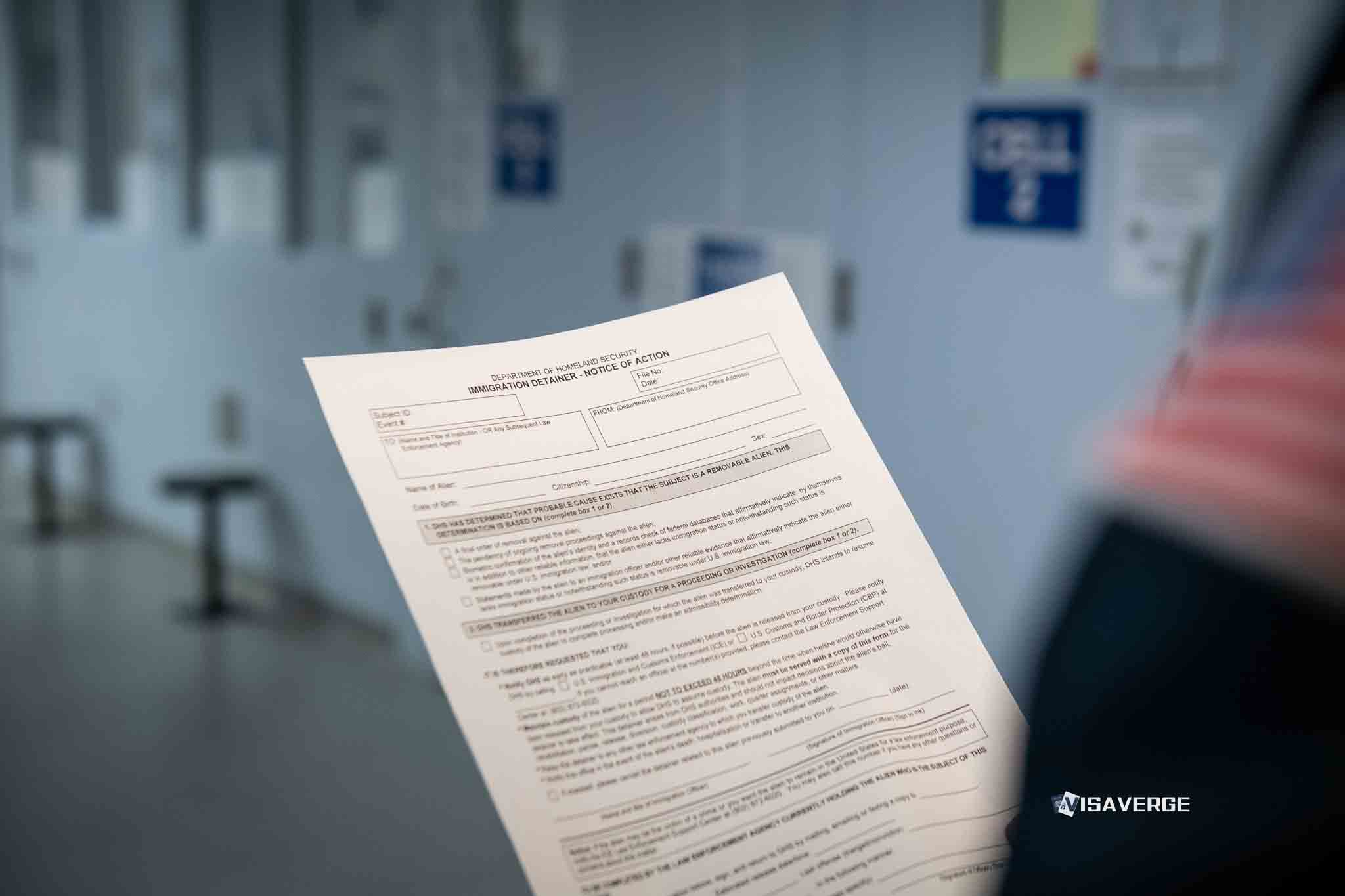
A traveler generally does not have a right to an attorney during primary or secondary airport inspection unless criminal charges are involved. The traveler can ask to speak with a supervisor if an officer pressures them to sign a document.
That request is especially important for lawful permanent residents presented with Form I-407, the Record of Abandonment of Lawful Permanent Resident Status. Voluntarily signing the form terminates residency.
Travelers should read every document before signing it. They should also keep a “Know Your Rights” card and an immigration attorney’s contact information accessible.
Carry records that match the status you claim
A worker seeking an extension should carry the I-797 receipt or approval, recent pay records, passport and I-94. The employer’s filing does not eliminate the worker’s need to verify that the admission record and supporting documents remain consistent.
A student should confirm the I-20 travel signature, passport validity and any required EAD before departure. A pending adjustment applicant relying on Advance Parole should carry the I-512 and evidence of underlying status when available.
Agency updates appear through the USCIS Newsroom, DHS Press Releases and CBP Travel Advisories. The fixed-admission rule for F and J visa holders takes effect on September 15, 2026.
This article provides general information and is not legal advice. Consult a qualified immigration attorney about your specific case.