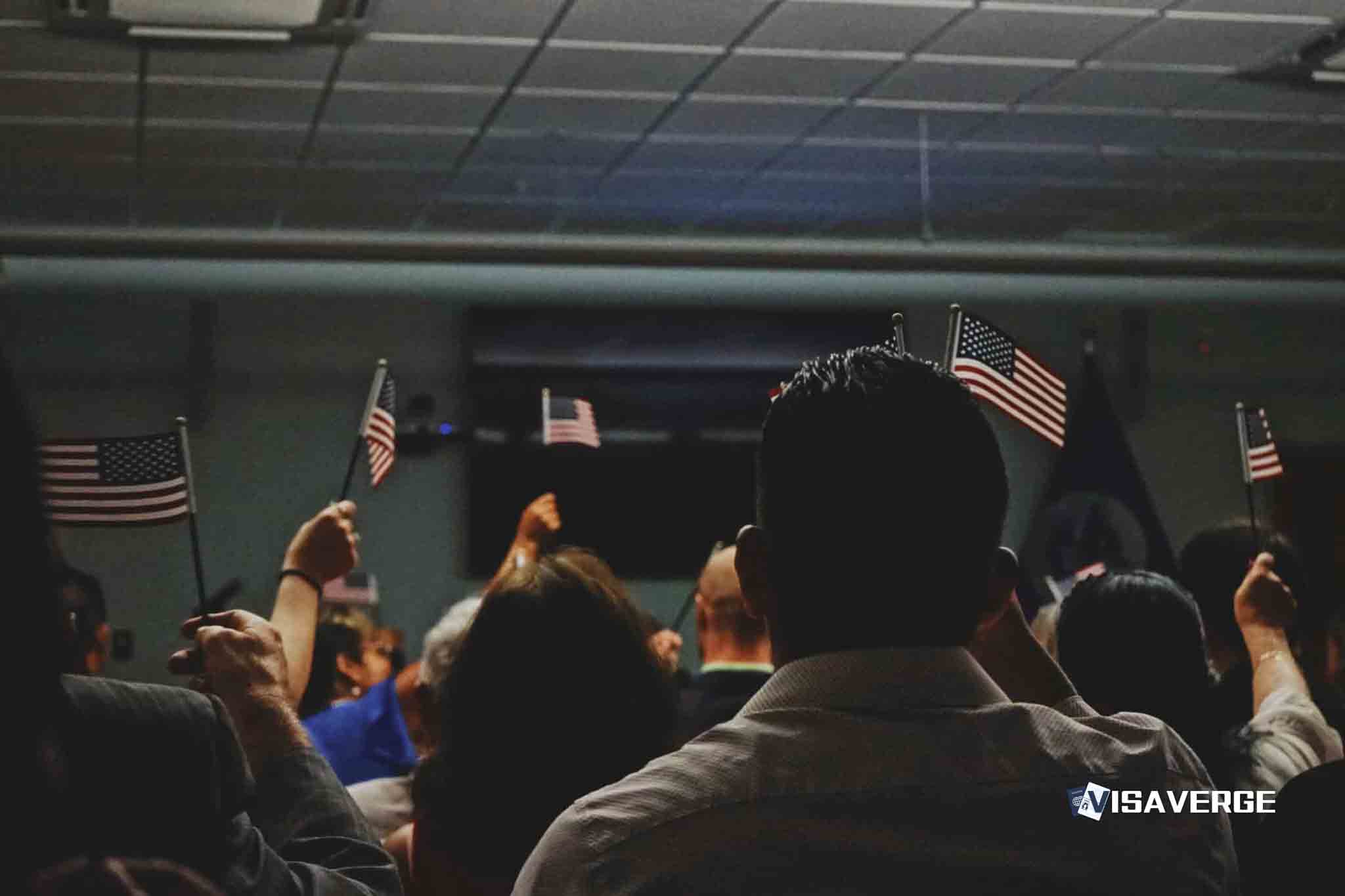
- JD Vance backed tighter H-1B enforcement on September 16, 2026, targeting employers that lay off U.S. workers.
- DHS proposed a $103,265 fee for cap-subject H-1B petitions, separate from the blocked 2025 payment rule.
- A tracker linked WARN layoffs to sponsors including Tyson Foods, Samsung Electronics America, and Jabil Inc.
Vice President JD Vance defended President Donald Trump’s effort to tighten the H-1B program on September 16, 2026, targeting employers that lay off U.S. workers while seeking foreign talent. He made the case during an appearance on the All-In Podcast.
The administration is tying the crackdown to a $100,000 fee on H-1B applications and closer scrutiny of companies that reduce their American workforce before recruiting abroad. Officials are still working out how to enforce the approach within legal limits.
Free toolH-1B Cost Calculator Online
Vance said the visa should bring “the best and brightest” to the United States. He argued that employers should not use it to replace domestic workers with cheaper foreign labor.
The proposal would put employers under a sharper test. Companies that say they cannot find workers could face scrutiny if their records also show large layoffs.
“If you’re laying off American workers, you shouldn’t be going to the market searching for foreign workers to replace them”
Vance said the program should serve the broader economy rather than substitute for domestic hiring. He also described what he sees as an employer obligation.
“The H-1B should not exist to replace American workers with low-wage foreigners. It should exist to enrich the American economy”
He added: “If an American corporation needs workers, it should hire and train Americans.”
A second proposal would put $103,265 on cap-subject petitions
The Department of Homeland Security has separately proposed a $103,265 fee for cap-subject H-1B petitions. The amount would also apply to petitions that otherwise qualify for the advanced-degree exemption.
The charge would be due at filing. DHS says it would come in addition to all other applicable fees.
The proposal was framed as a way to reduce incentives to select a foreign worker over a “qualified and highly-skilled American worker.” It would allow that choice when employers have “no alternative” for the specialized skills they need.
That proposal is separate from the earlier measure. In 2025, the Trump administration imposed a $100,000 payment requirement on certain new H-1B petitions, but a federal judge later blocked it.
DHS is now pursuing a formal fee through regulation. The administration’s stated policy goal is similar, but the two measures should not be treated as the same charge.
An analysis citing USCIS data said the agency received 91.2% fewer initial consular Form I-129 H-1B petitions from September 21, 2025 through May 24, 2026, compared with the same period a year earlier. The figure was presented as evidence of a sharp decline during the broader policy shift.
WARN records show the employers behind the administration’s layoff test
A 2026 tracker cross-referencing H-1B sponsors with WARN notices identified several employers with reported workforce reductions. The listed numbers are approximate where the tracker used a tilde.
| Employer | Workers listed in tracker |
|---|---|
| Tyson Foods, Inc. | ~2,495 workers |
| Samsung Electronics America, Inc. | ~739 |
| Grocery Delivery E-Services USA Inc. | ~628 |
| Heartland Human Care Services, Inc. | ~598 |
| Jabil Inc. | ~485 |
The broader 2026 WARN data also included General Dynamics Information Technology, Tyson Foods, Samsung Electronics America and Jabil. Those records form part of the factual backdrop for the administration’s focus on employers that announce layoffs while seeking H-1B labor.
Vance described that combination as evidence of a contradiction between claimed labor shortages and domestic job cuts.
“We can’t find the workers. And then you go and look at their history and they’ve laid off 5,000 people. Well, that’s ridiculous”
The final enforcement method has not been set out. Employers could face additional scrutiny if the administration adopts a rule linking layoffs to H-1B sponsorship decisions.
The fee would distinguish cap-subject companies from exempt institutions
The proposed charge is aimed primarily at employers using cap-subject filings. Commentary on the proposal says cap-exempt employers, including nonprofits and universities, would not face the same filing fee structure.
That split could produce different costs across the H-1B system. A company seeking workers through cap-subject petitions could encounter the new charge, while an eligible institution outside the cap would operate under a different framework.
The proposal also sits alongside a separate effort at the U.S. Department of Labor. Officials there have pushed wage-calculation changes for H-1B and related visas, addressing hiring incentives connected to below-market pay.
Immigration analysts have characterized the broader rulemaking as an effort to sharply reduce H-1B use, rather than simply impose tighter oversight. The proposed fee would likely hit employers making lower-paid or high-volume filings hardest if DHS finalizes it.
The administration’s stated standard is narrow. A company would need specialized skills and “no alternative” to hiring a foreign worker over a qualified American candidate.
A separate DHS agenda item could remove work authorization for some H-4 spouses
DHS has also placed a proposal on its regulatory agenda that would remove some H-4 dependent spouses from EAD eligibility. The change could affect work authorization for certain H-1B families if finalized.
The proposal would reach the H-4 EAD pathway separately from the employer fee and layoff review. It would concern dependent-spouse employment rather than the company’s decision to file an H-1B petition.
Families using that authorization could therefore face a separate policy change. DHS has not combined the dependent-spouse proposal with the cap-subject fee in the material released about the two measures.
The administration is continuing to develop the layoff-screening policy and the fee proposal. Any final action would need to establish how employers’ workforce reductions are evaluated and how the new charge operates alongside existing filing costs.