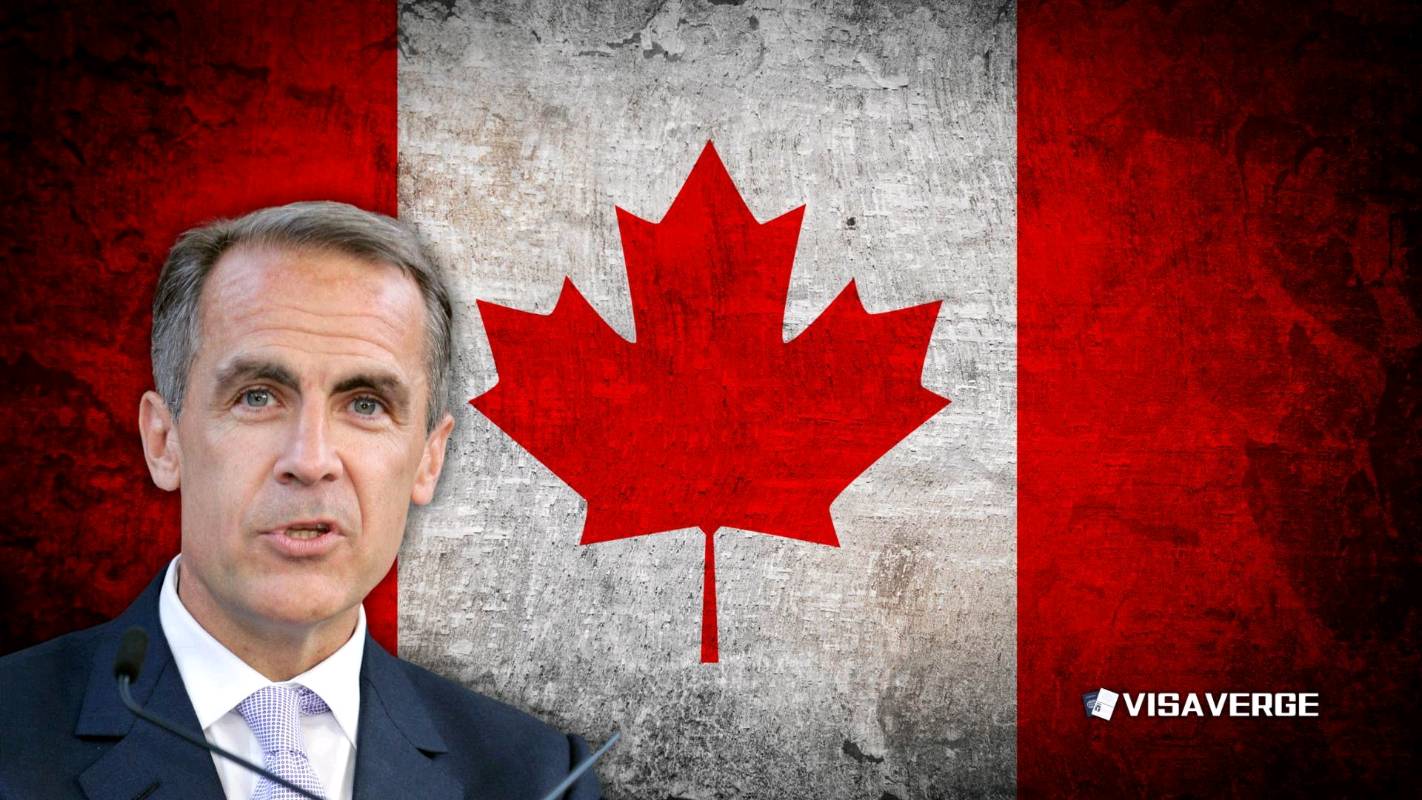
- Carney said Canada is not seeking EU membership, but wants a unique alliance instead.
- Canadians already get 90 days in Schengen for short visits, not work or long stays.
- A Canada-EU summit in Montreal is set for end of October 2026, with no major reveal expected.
Mark Carney said Canada is not looking to join the European Union as talks widen beyond trade. Canadians already have short-stay access to Schengen. Separate lanes.
Carney was blunt.
Free toolCanada Express Entry Points Calculator
“We’re not looking to become a member of the European Union.”
“What we are looking and will begin discussion for is a unique alliance between Canada and the European Union.”
Canada already has visa-free access for visits. That part is old.
Canadian passport holders can enter the Schengen Area for up to 90 days in any 180-day period. It covers visits only. It does not let them settle, take a job or stay long term. Each country still controls long-stay visas and residence permits. One country at a time.
The newer idea is associate membership, but that status does not exist now. The talks also point to easier movement for work, study and business, plus freer rules for workers in strategic sectors. None of that is in force. Yet.
Europe is talking about mobility, not one blank visa
Carney has spoken regularly with EU leaders, most notably Emmanuel Macron, about allowing Canadians to live and work visa-free in the EU. He is dealing with the 27-member bloc, not a single capital, and the visa question sits inside a broader conversation. Carney said visa rules are “one aspect of the discussion.” Macron is part of it.
Canada and the EU announced the EU-Canada Strategic Partnership of the Future in June 2025. Since then, the agenda has expanded into energy, critical minerals, defence, space, artificial intelligence and related strategic supply chains. Travel is only one thread.
Montreal now sets the next marker
The next major checkpoint is a Canada-EU summit in Montreal at the end of October 2026. Carney said no "big reveal" should be expected there. The schedule matters.
Charlie Maggi, founder and CEO of The Open World, called the development carefully.
“politically significant, but still highly speculative”
“full access for all Canadians seems unlikely in the short term.”
Any durable mobility deal would still need negotiations across Canadian and EU governments. France alone cannot write it. Montreal comes next.