- ICE agents are arresting asylum seekers at U.S. airports despite pending cases and valid work permits.
- A formal TSA-ICE agreement allows sharing of passenger records for enforcement against status violations.
- Advance parole does not guarantee reentry, as Customs and Border Protection makes the final admission decision.
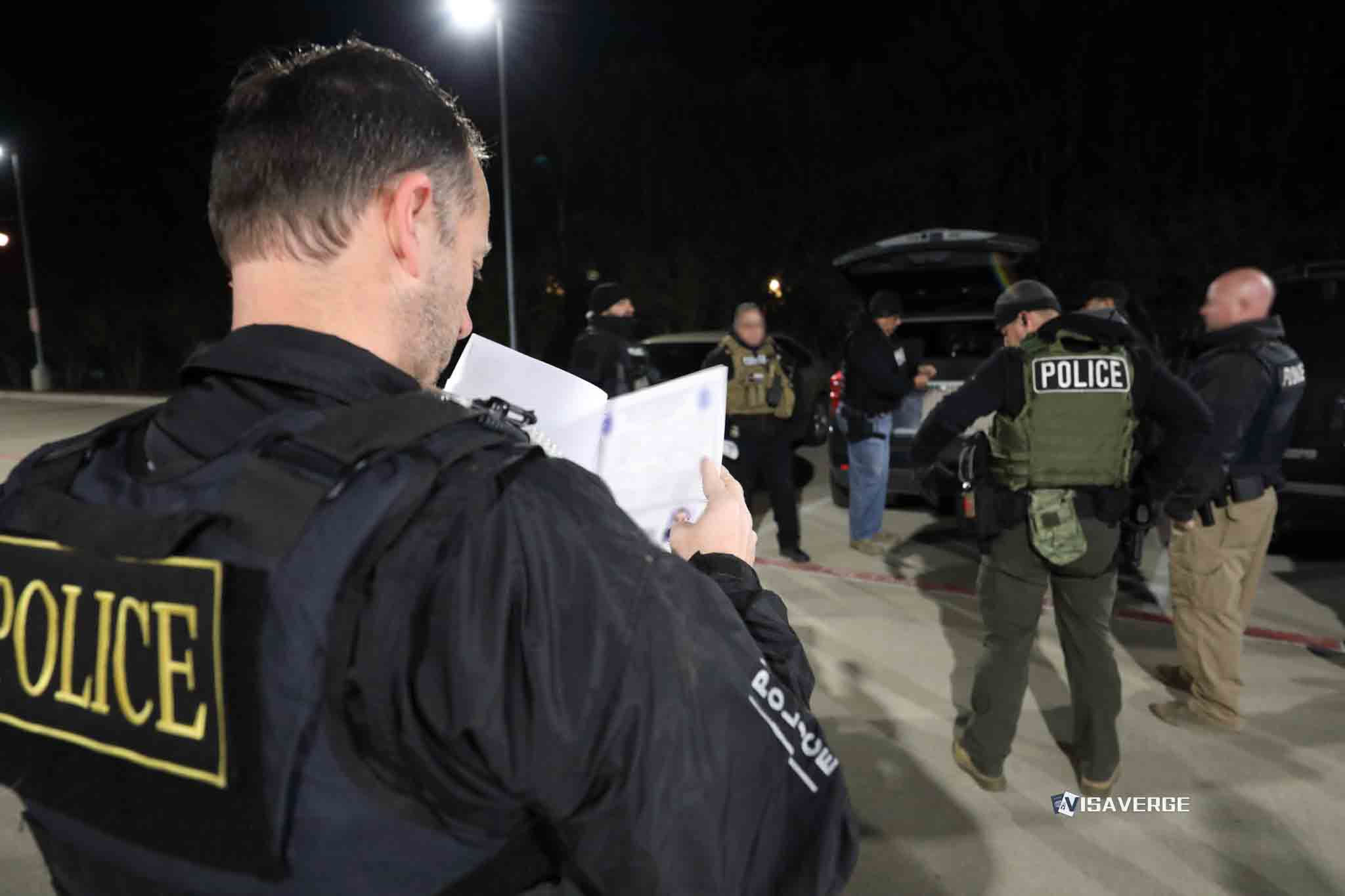
Federal immigration officers have arrested people at U.S. airports despite pending protection claims and valid employment authorization, creating detention risks for travelers whose only basis for remaining in the country is an unresolved asylum case.
A pending asylum application does not itself create lawful immigration status. A work permit also does not provide immunity from ICE enforcement. Officers may review identity and immigration records before departure or after a traveler returns.

The risk rises when a person has an expired visa, a prior removal order, immigration court history or another status violation. Travelers with a separate lawful status may face a different assessment from those relying only on an asylum filing.
Airport encounters can happen on either side of a flight. Leaving the United States can also create separate inadmissibility consequences, even when the traveler has an asylum-related travel document.
Advance parole is not a guarantee of admission. Customs and Border Protection makes the final decision when a person seeks to return.
The safest course may be to avoid air travel when the asylum filing is the only basis for remaining in the United States. Anyone considering a trip should obtain individualized legal advice before buying a ticket or going to the airport.
Recent airport arrests involved overstays and valid documents
Recent reported arrests show how immigration history can outweigh a pending protection application or employment document during an airport encounter. The cases involve different travelers and airports.
| Person | Airport and date | Immigration history | Reported action |
|---|---|---|---|
| Alim Garipov, 18-year-old Russian asylum seeker | Houston’s Hobby Airport, July 17, 2026 | ICE cited his 2022 visa expiration | Arrested despite a pending case |
| Chantal Alejandra Morales Rojas, Ecuadorian national | Denver International Airport, July 20, 2026 | Her attorney said she had a timely filed application and valid employment authorization | Arrested on a jetway |
| Lorenzo Thompson, Southwest Airlines flight attendant | Nashville International Airport | 2021 visa overstay, despite a valid work permit | Detained |
Together, the cases show that a pending filing or employment authorization may not resolve concerns tied to an earlier overstay, expired visa or other immigration history.
A person with no separate nonimmigrant or permanent status may remain exposed to removal action while the asylum request is pending. A prior removal order can add another layer of risk.
TSA referrals have expanded the airport enforcement footprint
A reported tally showed more than 800 airport arrests based on referrals from the Transportation Security Administration as of February 2026. The activity has reached at least 15 airports, including Newark, Houston’s Hobby Airport, Denver International Airport, Nashville and Chicago O’Hare.
| Reported measure | Figure | What it describes |
|---|---|---|
| Airport arrests as of February 2026 | More than 800 | Arrests based on TSA data referrals |
| Airports identified in enforcement reports | At least 15 | Locations including Newark, Houston’s Hobby Airport, Denver International Airport, Nashville and Chicago O’Hare |
| Affirmative asylum applications pending at the end of FY 2025 | Approximately 1.5 million | Applications pending with USCIS |
The agencies signed a formal agreement in May 2025. Under the arrangement, TSA provides ICE with “Secure Flight” passenger records, including names and photos of travelers with pending or expired status.
The records can enter an airport encounter before boarding. Plainclothes officers have monitored check-in counters and jetways, according to descriptions of the enforcement activity.
Ha Nguyen McNeill, the acting TSA administrator, testified in January 2026 that TSA helps ICE “check against [TSA] information.” Internal documents later showed that the agency provides tens of thousands of records to ICE.
The administration has set a nationwide target of 2,000 to 3,000 immigration arrests per day. That figure covers enforcement nationwide, not only airports.
USCIS Director Joseph Edlow described the administration’s position in a statement released July 27, 2026:
“For far too long the asylum system has been exploited for purposes of delay and work authorization, not legitimate claims of protection. this rule will help ensure that resources are directed to the timely adjudication of those claims instead of to those seeking to use the system as a loophole.”
James Percival, the Department of Homeland Security’s general counsel, said July 27, 2026:
“One of the greatest barriers to effective immigration enforcement is intentional delay by illegal aliens and the open borders attorneys who represent them.”
A DHS spokesperson said July 28, 2026:
“This administration is working diligently to ensure that aliens in our country illegally can no longer fly unless it is out of our country to self-deport.”
Those statements frame the broader enforcement policy as reaching status violations, not only people accused of criminal conduct.
A travel document does not guarantee reentry
A traveler may need a separate document before leaving the United States, depending on the person’s immigration posture. Advance parole can authorize travel in some circumstances, but it does not guarantee that CBP will permit the traveler to return.
The agency makes the final admission decision at the port of entry. A travel document also does not erase prior immigration violations or prevent officials from examining possible inadmissibility grounds.
Departure can create additional complications. Depending on the person’s history, leaving the country may lead to inadmissibility consequences even if an asylum-related travel document exists.
A lawyer reviewing a proposed international trip would typically need to examine any visa overstay, prior removal order, unlawful-presence concerns, court history and other pending applications. The same record can affect both the airport encounter and a later attempt to return.
Travelers should not treat advance parole as a shield from detention or as an assurance of admission. The document addresses travel permission, while CBP retains authority over admission.
New asylum rules and fees add pressure to unresolved cases
USCIS implemented an interim final rule on July 28, 2026. The rule allows asylum officers to skip interviews and refer affirmative cases directly to immigration judges for defensive proceedings when the cases appear barred or unlikely to succeed.
A new $102 annual fee applies to asylum seekers whose cases have been pending for more than a year. Failure to pay can trigger termination of employment authorization and the initiation of removal proceedings.
A federal judge in Massachusetts issued an administrative stay on July 21, 2026. The order in Venez. Ass'n of Mass. v. USCIS temporarily blocks the government from deporting people solely for failing to pay the fee, while collection of the fee continues.
The backlog remains large. Approximately 1.5 million affirmative asylum applications remained pending with USCIS at the end of fiscal year 2025.
A freeze on asylum adjudications followed a shooting involving an asylee in Washington, D.C., in November 2025. The freeze was partially lifted in March 2026.
A “High-Risk List” covering 39–40 countries remains subject to extreme vetting and processing delays. Those developments affect the timing of unresolved cases, while the airport arrests concern how officials assess travelers during transit.
The CBP Home mobile app launched in mid-2026 and encourages “voluntary self-deportation.” It offers a $2,600 exit bonus and forgiveness of civil fines to people who agree to leave the United States normally rather than risk airport arrest.
Legal advice should come before an unavoidable trip
Anyone who must travel should seek individualized advice from a qualified immigration lawyer before purchasing a ticket or appearing at an airport. The review should address the person’s filing history, visa record, court history, removal orders and proposed itinerary.
Travelers should carry:
- Proof of the pending application;
- Identity documents;
- Employment authorization and other immigration paperwork; and
- Any travel document issued for the trip.
Documents can help establish identity, filing history and current paperwork during an encounter. They do not guarantee release or admission.
Jeff Joseph, president of the American Immigration Lawyers Association, described the enforcement pattern as a “mousetrap.” He said:
“If the new expectation is that if you have a pending application, you can't travel… that would be very, very new.”
The practical legal question is whether the traveler has another status, an expired visa, a removal order, unlawful-presence concerns or another fact that could prompt detention or complicate reentry. This article provides general information and is not legal advice. Consult a qualified immigration attorney about your specific case.