ICE airport enforcement expanded sharply in March through July 2026, with reporting that ICE agents began appearing at over a dozen airports and that TSA-linked passenger data is now being used to flag some travelers. The newest reports say people with an expired I-94 are being targeted even when they have pending immigration filings, including H-1B, F-1, and I-485 cases.
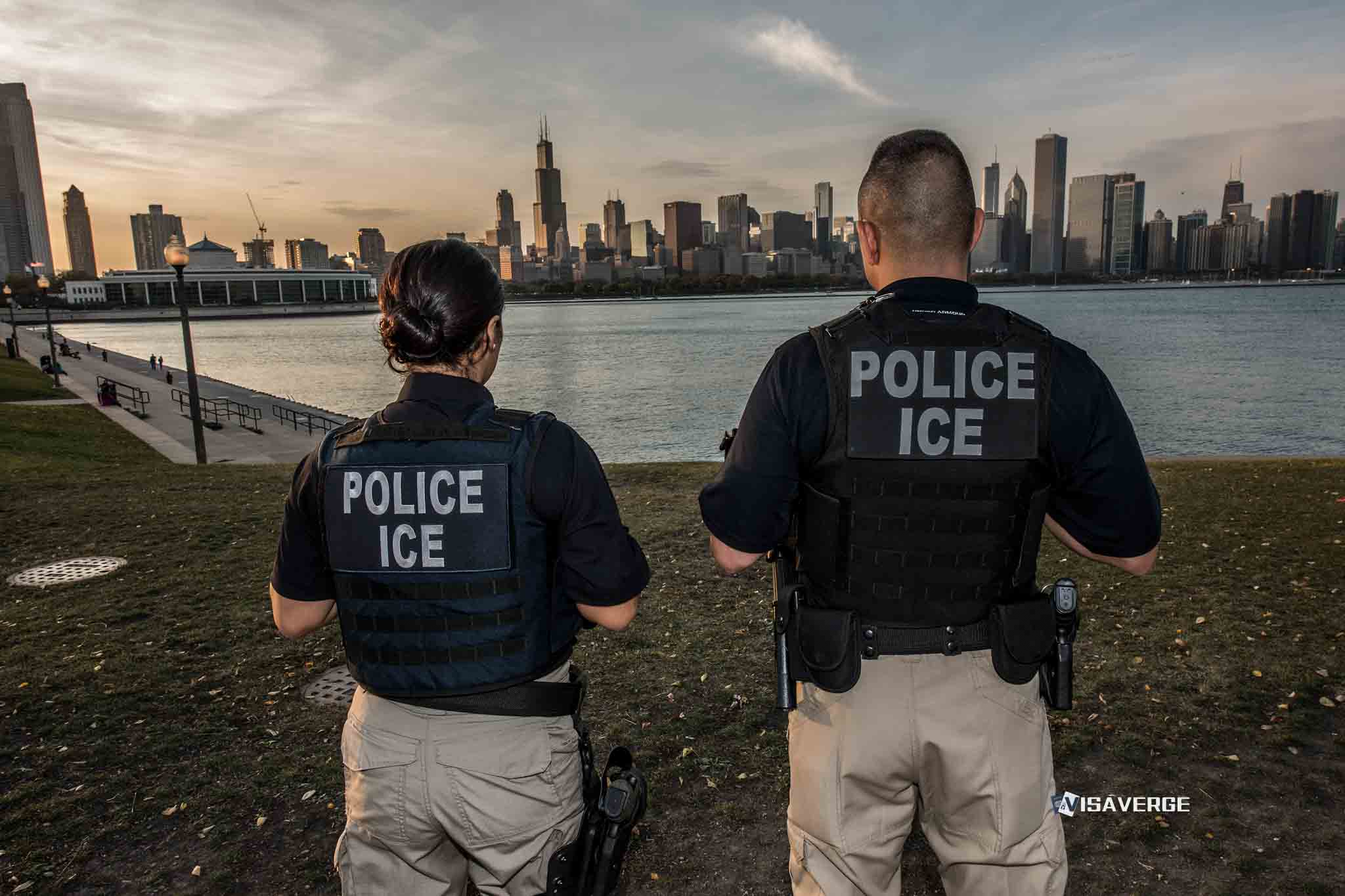
- March 23, 2026: Reuters reported that ICE agents began deploying at over a dozen airports to support airport operations, with DHS linking the move to TSA staffing shortages.
- July 2026 reporting says ICE is using TSA-linked data to flag travelers whose authorized stay has expired on their I-94, including people with pending H-1B extensions, F-1 status changes/extensions, and I-485 adjustment filings.
- New reporting says pending immigration benefits do not shield travelers from questioning, including those with pending H-1B, F-1, or green card-related filings and some people with valid employment authorization.
- Current rights guidance still advises travelers to ask whether they are free to leave, remain silent, avoid false statements, and carry key documents such as a passport, visa stamp, most recent I-94, and USCIS approval notices.
- As of July 30, 2026, domestic flying carries moderate-to-high risk for H-1B holders with expired stamps or unresolved records.
- The TSA-ICE agreement lets TSA share manifests and personal data, while ICE now operates at 15 major U.S. airports.
- ICE arrests surged to 1,593 per day in early July, and June topped 43,000 arrests under the current administration.
As of July 30, 2026, domestic flying carries a moderate-to-high risk for H-1B visa holders with expired visa stamps, pending extensions, or unresolved status records. TSA and ICE have expanded information sharing, while airport enforcement has moved beyond cases involving criminal warrants.
The TSA-ICE Data Sharing Agreement, signed in May 2025 and publicly confirmed in late July 2026, allows TSA to share passenger manifests and personal data with ICE. The arrangement gives immigration officers access to information about people attempting to travel within the United States.
Free toolH-1B Cost Calculator Online
ICE has deployed plain-clothes and masked agents at check-in counters and arrival gates at least 15 major U.S. airports. The airport presence comes as the agency broadens enforcement to civil immigration violations, including visa overstays and pending status transitions.
Arrests have risen sharply. ICE arrests reached 1,593 per day in early July 2026, and June produced more than 43,000 total arrests, the highest monthly figure in the current administration.
The airport can become the contact point. TSA shares passenger lists with ICE a few times each week, and agents may meet travelers whose records show an expired visa or another immigration concern.
Expired stamps and pending filings create the clearest domestic risks
A valid petition approval does not eliminate every travel concern. Travelers with an expired physical visa stamp may face secondary inspection even when their underlying U.S. status remains valid.
Pending H-1B extensions are one risk factor. A change of status, such as an F-1 to H-1B transition, can also prompt additional review. Prior contact with law enforcement, including dismissed charges, may increase scrutiny.
A July 14 incident brought that concern into public view. A Southwest Airlines flight attendant was detained in Nashville over a visa expiration issue, showing that airport enforcement can reach people previously viewed as low-priority cases.
The incident does not mean every traveler with an expired stamp will be detained. Individual records remain central.
| Travel situation | Risk identified in the current enforcement environment | Records to review |
|---|---|---|
| Domestic trip with a current visa stamp | Airport questioning remains possible | Passport and status records |
| Domestic trip with an expired stamp | Secondary inspection or detention may occur | Form I-797, employment records, and I-94 |
| Pending extension or change of status | The transition may receive additional review | Approval or pending-filing documents |
| Prior law-enforcement contact | Even dismissed charges may draw scrutiny | Immigration and court records |
A physical Form I-797 Notice of Approval can document an approved petition, but it does not remove concerns created by an expired stamp or an inaccurate government record. Holders should compare the notice with their employment documents and online immigration records before departure.
International trips add reentry and consular exposure
International travel presents a different and generally higher risk. Leaving the United States can require a new consular process and successful reentry, rather than only an airport security screening.
A Presidential Proclamation effective January 1, 2026, restricts entry for nationals of 39 countries identified as having inadequate vetting. Since January 21, 2026, the State Department has also paused visa issuance for people from certain countries based on public-charge concerns.
Consular delays add another obstacle. Heightened social-media vetting and 221(g) administrative processing have produced waits of weeks or months at consulates in India and other major H-1B hubs.
The risk is especially acute when a worker leaves during a pending extension or change of status. The traveler may need consular processing before returning, and country-specific restrictions can affect that process.
Domestic and international travel therefore create different problems. A domestic trip may expose an immigration record to airport enforcement. An international trip can add visa issuance, administrative processing, and reentry risks.
Check the travel documents against the I-94 record
Travelers who must fly should carry original documents. The recommended set includes a valid passport, a physical Form I-797 Notice of Approval, and recent pay stubs.
The I-94 deserves particular attention. It should show a current authorized period of stay and should not record an overstay caused by an administrative error.
Form I-797, I-94, and employment records. Anyone with an expired stamp and a valid or pending status filing should consult an immigration attorney before traveling.The National Immigration Law Center issued a community alert on July 29, 2026. It warned:
“Traveling through U.S. airports can be risky, even if you have active or pending legal immigration status.”
The alert does not create a travel ban. It underscores the difference between having an active or pending immigration filing and having records that will generate no questions at an airport.
If ICE officers approach a traveler, the person may remain silent and request an attorney. Officers may still detain the traveler for processing.
The H-1B cap and fee dispute are separate from airport screening
USCIS announced on July 17, 2026, that it had reached the congressionally mandated H-1B cap for Fiscal Year 2027. That announcement does not determine whether a particular worker may take a domestic flight or return after an overseas trip.
A separate court dispute concerns the petition fee. On July 24, 2026, the First Circuit Court denied a government stay, leaving the $100,000 H-1B petition fee vacated for now.
DHS strongly disagrees with that result and intends to pursue further appeals. The litigation does not replace the need to check an individual traveler’s immigration records.
The relevant records include current status, the I-94 end date, petition history, visa stamp, and any prior immigration or criminal issue. A domestic trip may still be possible, but unresolved discrepancies can bring an encounter with immigration officers at the airport.
This article provides general information and is not legal advice. Consult a qualified immigration attorney about your specific case.