- H-1B holders now face stricter interview waiver rules with eligibility limited to renewals within 12 months.
- Consular officers now conduct mandatory social media vetting for all H-1B visa applications and renewals.
- New travel bans and wage-weighted lottery systems have significantly altered the H-1B landscape for 2026.
H-1B approval is only the first step. It does not let a worker enter the United States on its own. For most travelers, visa stamping at a U.S. consulate still comes first, and that gap now creates delays, interviews, and extra checks.
That matters for employees, employers, and families planning work trips or returns after a visit home. A valid H-1B petition, by itself, does not guarantee entry to the United States. The current process now demands tighter preparation at every stage.
The journey starts with the USCIS approval notice, Form I-797. That paper proves the petition was approved, but it is not a visa. To travel, most H-1B holders still need a visa stamp in the passport from a U.S. Embassy or Consulate. Review the official USCIS H-1B page for the agency’s basic rules and filing framework.
Visa Stamping and Travel Rules
First-time H-1B entrants must get that stamp before boarding a flight to the United States. The same rule applies after a visa expires. Some workers use an old employer’s stamp with a new I-797, but many choose fresh stamping to avoid questions at the airport.
There is one narrow exception. Under automatic visa revalidation, some H-1B holders can return from Canada or Mexico after trips of 30 days or less with an expired visa stamp, as long as they carry a valid I-94 and remain admissible. That rule does not cover broader international travel.
Interview Waivers and Renewals
In 2025, the Department of State sharply reduced the interview waiver program, often called dropbox processing. H-1B renewals once qualified within 48 months of expiration. Now, only renewals within 12 months of visa expiration qualify for waivers. Most applicants now face in-person interviews.
The remaining waiver path is narrow. The applicant must seek the same visa classification, hold a valid I-797, have an active I-94, already have fingerprints on file, and avoid recent refusals or pending 221(g) processing. The most recent H-1B visa must have been issued in India or Canada under the current phase.
This change has pushed more people into regular consular lines. Wait times have grown, and appointment slots are tighter. VisaVerge.com reports that the new waiver limits have made H-1B renewal planning far less predictable for workers and employers alike.
Social Media Vetting and Consular Screening
A second major change arrived in mid-December 2025. U.S. consulates began requiring social media vetting for H-1B applications and renewals. Officers now conduct an online presence review to identify applicants who may be inadmissible or pose a security risk. Some confirmed appointments were rescheduled to make room for the new checks.
Before any interview, applicants should review their online activity carefully. Public posts, images, and affiliations now sit inside the visa review process. Applicants should also confirm that their appointment has not been cancelled or moved. Consulates have already rescheduled some cases to handle the new screening steps.
Administrative Processing and Form Review
Administrative processing remains another major delay point. If a consular officer wants more review, the case goes into 221(g) processing. That stage can last weeks or months. Some cases are sent back to USCIS for further action, which extends the wait even more.
The DS-160 form is now under a brighter spotlight. Errors, mismatched job details, or inconsistent travel history often trigger delays. Officers compare the form with the applicant’s visa file, employment records, and online presence. Accuracy matters on every line.
Documents for Visa Stamping
For visa stamping, the document file should be complete and easy to review. Bring a valid passport, the DS-160 confirmation page, appointment confirmation, fee receipt, photographs, previous passports, the original I-797, recent pay records, and an employer letter. USCIS form details, including Form I-129 for H-1B petitions, appear on the official Form I-129 page.
Applicants should carry hard copies of key papers. Digital copies are not enough for H-1B stamping approvals in 2026. Put the documents in a clear plastic folder. Sealed envelopes are not allowed inside the consulate.
At the interview, officers check the employment story closely. They ask about job duties, salary, worksite location, and employer relationship. After the interview, the decision usually comes quickly. An approval means the passport is kept for stamping, often within 3 to 10 business days.
A 221(g) refusal means more review is needed. A denial ends the case with a refusal notice. If the visa is approved, the traveler still faces one more checkpoint: Customs and Border Protection at the port of entry.
Port of Entry Checks
CBP officers now ask more detailed questions than before. They often focus on the job, the employer, and the travel history. After inspection, travelers should check the entry stamp immediately. If the end date is wrong, the officer should correct it on the spot. In some cases, officers add a 10-day grace period.
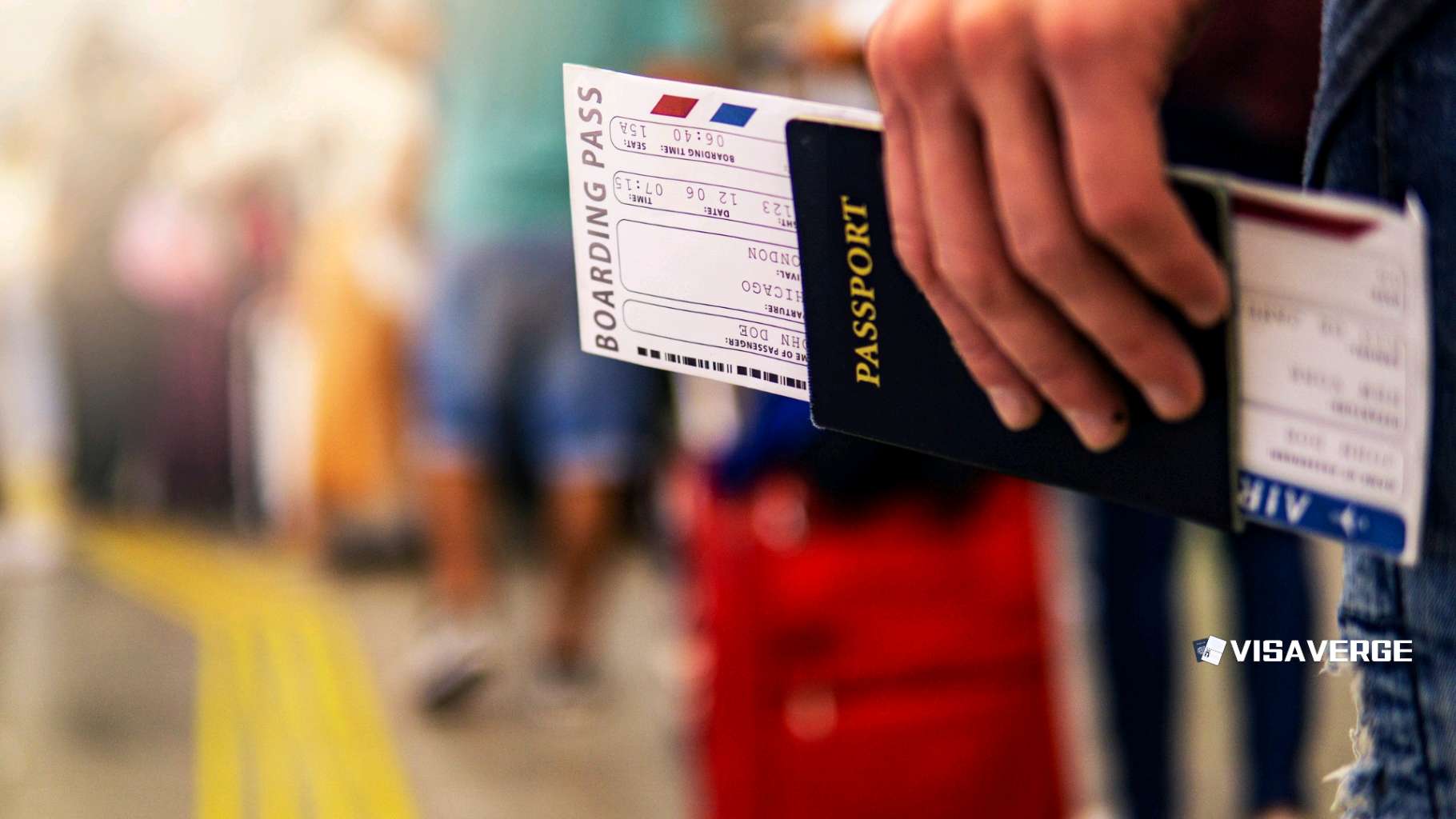
The documents at the border matter just as much as the visa stamp. Travelers should carry the passport, visa stamp, original I-797, valid I-94, employment letter, and recent pay stubs. Enter as an H-1B worker, even if your home country is in the visa waiver program.
Travel Bans and Program Changes
Travel restrictions now add another layer of risk. A travel ban took effect on June 9, 2025, and expanded on January 1, 2026, to include 39 fully and partially restricted countries. Nationals of the 19 fully banned countries face a total suspension for immigrant and nonimmigrant visas.
USCIS also paused pending immigration benefits for people born in or citizens of travel ban countries. The agency is re-reviewing some already approved benefits for people who entered the United States on or after January 20, 2021. That pause affects work authorization, status changes, and adjustment cases.
The H-1B program itself has changed as well. Beginning with the March 2026 registration cycle, USCIS moved to a wage-weighted lottery. Higher salaries now get better odds. A $100,000 supplemental fee also applies to most overseas hires as of September 21, 2025. At the same time, third-country stamping was blocked, so renewals now need to be filed in the country of nationality or residence.
Planning Ahead
Practical planning now means building in more time. Workers should request the original approval notice from employers at least three weeks before departure. They should check passport validity, gather pay records, review the DS-160, and watch for appointment changes. Those steps do not remove the risk, but they reduce it and help protect travel plans.