- New federal rules require consular processing abroad for most Green Card applicants, ending routine domestic status adjustments.
- A mandatory $100,000 petition fee and salary-weighted selection have caused FY 2027 H-1B registrations to plummet by 38.5%.
- Texas has frozen state-level H-1B hiring until 2027, contributing to a housing market cooldown in tech hubs.
(TEXAS) – Federal and Texas officials tightened H-1B visa rules over the past year, hitting Indian workers who helped fuel a North Texas housing surge and cooling a real estate market that had drawn heavily from the tech workforce.
The H-1B crackdown has reshaped hiring, residency plans and home buying in one of the country’s fastest-growing regional markets. In Dallas and Collin County, visa holders have begun selling homes before leaving the United States, while some prospective buyers no longer qualify after employers face a new $100,000 cost tied to fresh petitions.

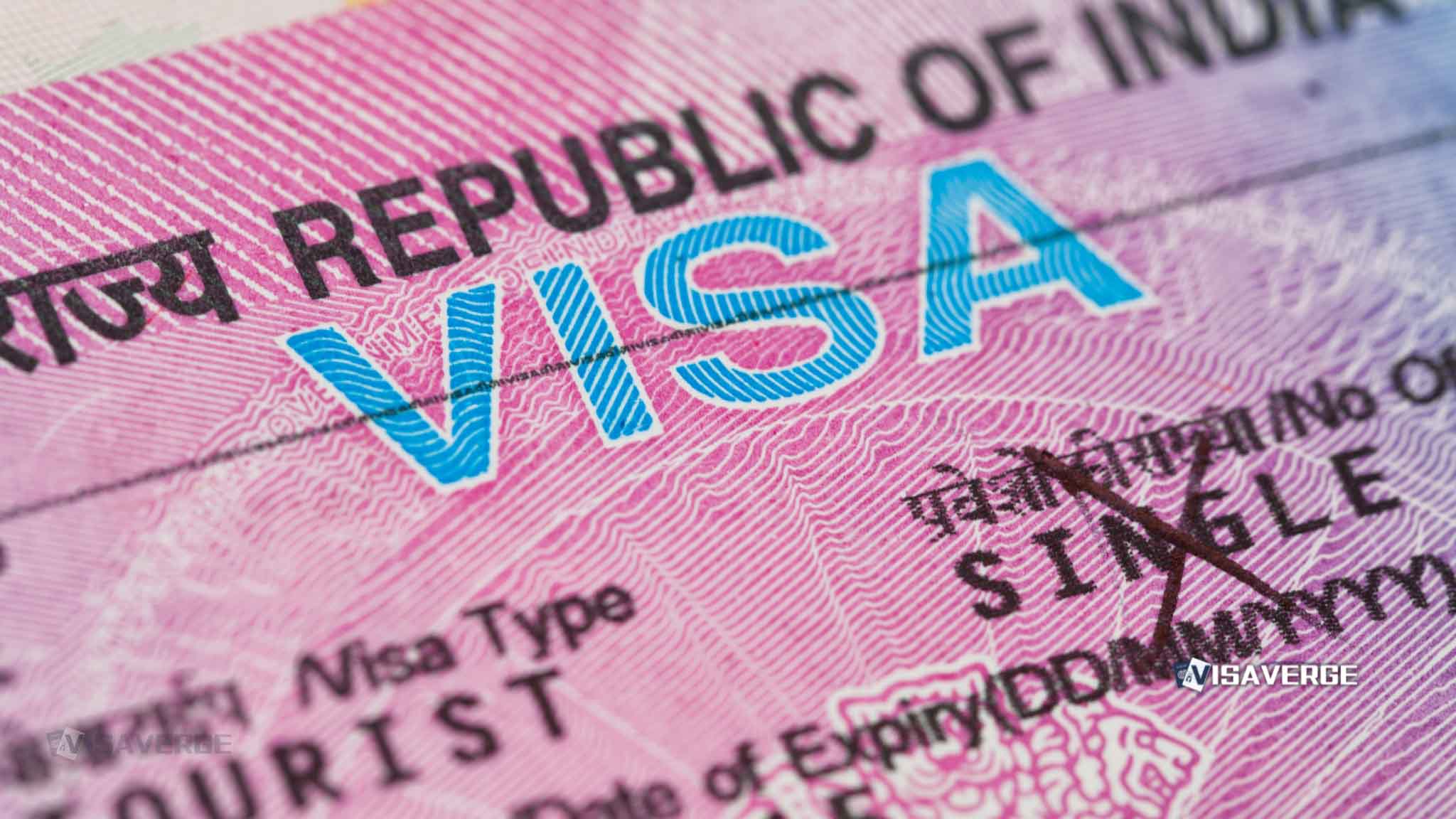
U.S. Citizenship and Immigration Services and the Department of Homeland Security cast the changes as an integrity drive aimed at high-skilled labor. USCIS said in a May 22, 2026 press release, “From now on, an alien who is in the U.S. temporarily and wants a Green Card must return to their home country to apply, except in extraordinary circumstances. Following the law allows the majority of these cases to be handled by the State Department at U.S. consular offices abroad.”
That statement followed Policy Memorandum PM-602-0199, issued on May 21, 2026, which reframed adjustment of status inside the United States as extraordinary relief rather than a routine path for people already in the country. The memo put new weight on consular processing abroad, a shift that raises the chance that workers must leave the United States to pursue permanent residence.
DHS had already replaced the random H-1B lottery with a weighted selection system that took effect on February 27, 2026. The rule favors higher salary levels over chance, changing the profile of who gets picked in the annual cap process.
Matthew Tragesser, a USCIS spokesman, said on Dec. 23, 2025: “The existing random selection process. was exploited and abused by U.S. employers who were primarily seeking to import foreign workers at lower wages. The new weighted selection will better serve Congress’ intent.”
A third change raised the cost of entry itself. After a presidential proclamation on September 19, 2025, new H-1B petitions had to carry a $100,000 fee, creating a barrier that falls on employers and, indirectly, on workers whose offers or transfers depend on a company’s willingness to absorb the expense.
Texas added its own restriction. Governor Greg Abbott issued a directive on January 27, 2026, freezing new H-1B petitions by state agencies and public universities until May 31, 2027, while ordering an investigation into what he called H-1B visa abuse and saying the state should prioritize Texas-born workers for high-paying roles.
The combined effect shows up in the latest cap data. USCIS newsroom updates released in late May 2026 showed total registrations for FY 2027 fell 38.5%, dropping from 343,981 in FY 2026 to 211,600.
The selected pool shifted sharply upward on wages and education. Only 17.7% of selected registrations landed in the lowest wage category, and 71.5% of selected applicants held a U.S. master’s degree or higher, up from 57% in the previous cycle.
Those numbers matter heavily for Indian workers because Indian nationals have historically accounted for about 71% of all H-1B approvals. A lower-volume system, a salary-weighted system and a far more restrictive path to permanent residence converge most directly on the nationality group that has long dominated the program.
In Texas real estate, that pressure runs through personal balance sheets as much as immigration law. The new filing fee can block a hire before it starts, and the consular-processing shift injects uncertainty into how long a worker can stay in the country while pursuing a Green Card, reducing the willingness of families to take on a mortgage in markets where Indian tech professionals had been active buyers.
North Texas had been one of the clearest examples of that link. Dallas and Collin County benefited from demand tied to Indian tech workers, and that period was described as a massive boom. Now inventory is rising as some visa holders put homes up for sale before departing the United States, while others pull back from purchases because the economics of sponsorship changed.
The pressure does not stop at first-time buyers. A legal framework that treats adjustment of status as reserved for extraordinary circumstances makes long-term homeownership harder for new H-1B arrivals, whose status is now treated as strictly temporary while they seek a more permanent footing through overseas processing.
That creates a different kind of housing signal than a standard market slowdown. Homes come onto the market not because owners are trading up or moving across town, but because immigration status, employer costs and state policy all shifted within months, altering whether workers can remain in Texas at all.
Public employers face a separate constraint under Abbott’s order. State agencies and public universities, two large gateways for specialized hiring, cannot file new H-1B petitions until May 31, 2027, narrowing options for foreign-born professionals who might once have moved into research, academic or technical jobs tied to the public sector.
The federal government’s own language makes clear that the redesign is intentional. USCIS and DHS have framed the new rules as measures to curb abuse and favor higher-skilled, higher-paid labor, and the weighted selection final rule sets out that preference in formal regulation.
The Green Card shift is set out separately in Policy Memorandum PM-602-0199, which recasts an application path that many temporary workers had treated as a normal next step. In practical terms, it moves more cases to U.S. consular offices abroad and narrows the circumstances for staying in the country while seeking permanent residence.
Texas documented its own approach in Abbott’s directive halting new H-1B petitions by state agencies and public universities. The order placed immigration policy and labor preference into the middle of a state economy that has relied on imported tech talent, especially in metro areas where housing demand tracked job growth.
The result is a layered disruption rather than a single policy shock. One rule prices out lower-margin sponsorships, another rewards higher wages and advanced U.S. degrees, a third pushes many Green Card seekers toward overseas processing, and Texas has frozen part of its own pipeline. In a market where Indian workers had become a visible force in Texas real estate, that stack of changes has started to unwind the conditions that produced the boom in the first place.