- U.S. officials separate children from detained parents at airports, prioritizing transfer to relatives or approved caregivers.
- Citizen children remain U.S. citizens following a June twenty twenty-six Supreme Court ruling despite parental deportation.
- Custody stays for noncitizen children reached 194 days in June twenty twenty-six during the vetting process.
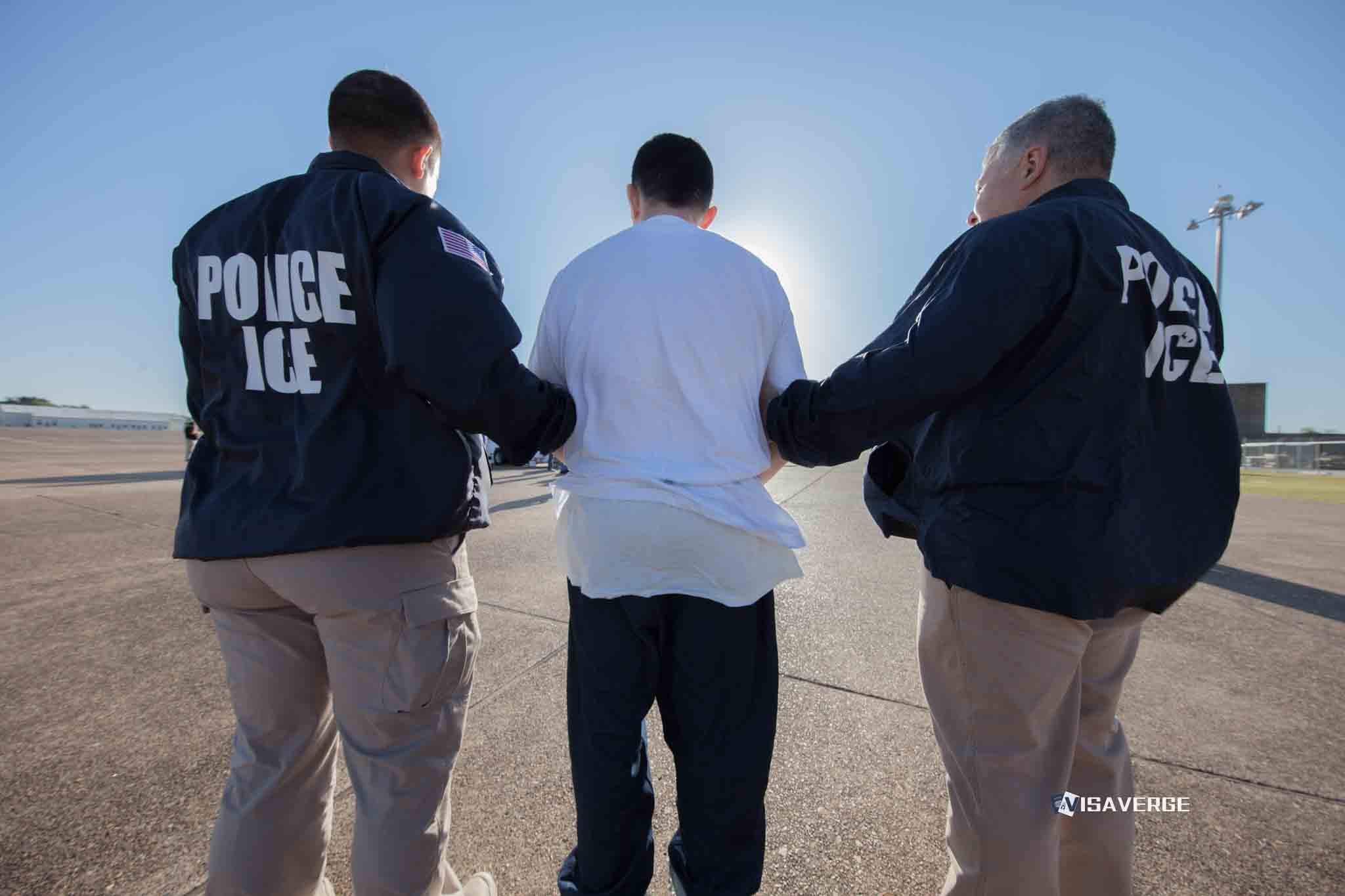
U.S. border officials generally separate an accompanying child from a parent detained at the airport, then look for the other parent, a relative, or another approved caregiver. The child does not automatically enter immigration detention with the parent.
The immediate split is between a private handoff and government care. A parent may ask officers to contact a trusted person, while state custody documents can help that adult handle school or medical matters.

An arrest alone does not terminate parental rights. But the child can enter government custody if no suitable caregiver is available quickly.
The route depends on the child’s status and the circumstances of the encounter. Three pathways cover the most common situations.
The child’s status and arrival circumstances shape the custody path
| Situation | Usual first step | Possible next placement |
|---|---|---|
| U.S. citizen child | Release to the other parent, relative, or designated caregiver | Family care or, if no adult is available, state child-welfare care |
| Noncitizen child arriving without a parent or legal guardian | Short-term CBP custody at a port of entry | Federal child-welfare placement with a vetted sponsor or licensed shelter |
| Child separated from a detained parent | Caregiver search and assessment of the child’s circumstances | Family care, state child-welfare care, or federal processing in some cases |
A U.S. citizen child is not placed in immigration detention or deported with the parent. The child may still need temporary state protection if no safe adult can take responsibility.
A noncitizen child encountered without a legal guardian follows a different process. CBP typically takes the child into short-term custody before transferring the case to the Office of Refugee Resettlement, which seeks a vetted sponsor or a licensed shelter.
A child separated from a parent can be treated as an “unaccompanied child.” That classification can move the child into federal processing even when the separation began during an encounter involving a parent.
U.S. citizen children usually go to family or state care
The government cannot legally detain or deport a U.S. citizen child with a detained parent. Officials generally seek release to the other parent, a relative, or a person the parent has named.
That handoff may not happen immediately. Oregon reported in April 2026 that children had entered foster care because ICE detained their parents and no other guardians were available. State officials said such cases had not occurred before fall 2025.
The Supreme Court addressed citizenship on June 30, 2026. In a 6-3 decision in Trump v. Barbara, it struck down an executive order that sought to end birthright citizenship. U.S.-born children of detained parents therefore remain citizens, although the decision does not bar a parent’s deportation.
Parental rights also remain in place after the detention. State courts or child-welfare agencies may still make temporary care decisions when no trusted adult can assume responsibility.
Noncitizen children can move into federal child-welfare custody
A noncitizen child arriving at a port of entry without a parent or legal guardian typically enters CBP custody first. The agency then transfers the child for sponsor or shelter placement.
The average custody period rose from 30 days in 2024 to 194 days in June 2026 for an unaccompanied or separated child. Longer stays can occur while officials review placement options.
A July 28, 2026, report described ICE arrests involving sponsors of migrant children after tips to the child-welfare agency. The account adds an enforcement concern to the sponsor process, but it does not establish that every sponsor faces that outcome.
Recent reporting also described children spending longer periods in custody while sponsor screening takes place. The child’s classification can affect both the agency involved and the time required for placement.
ICE policy gives parents a chance to name a caregiver
ICE Directive 11064.4, titled “Detention and Removal of Alien Parents and Legal Guardians of Minor Children,” took effect on July 2, 2025. It says a detained parent may arrange care during the arrest and that officers should allow a call to a trusted person who can collect the child.
The policy also indicates that officers should wait for a designated caregiver. The National Immigration Law Center has said children may instead go to federal or local child-welfare authorities when no adult is immediately available.
Airport enforcement has expanded under the “Make America Safe Again” initiative. Markwayne Mullin, sworn in as DHS secretary on March 24, 2026, has overseen that effort, which includes increased ICE presence at airports.
A December 18, 2025, alert from the National Immigration Law Center said TSA passenger manifests are shared with ICE. The alert said the agency uses the data to identify people at terminal gates.
ICE also began using staging areas near major travel hubs in 2026. Alexandria International Airport was among the locations identified in the planning material.
A written family plan can speed a temporary handoff
Parents can prepare a trusted adult before travel by arranging written caregiver authorization or standby guardianship documents when state law permits. The exact form and legal effect vary by state.
Schools and pediatricians should have current emergency contacts. A trusted person should keep copies of birth certificates, passports, and immigration paperwork.
The caregiver should also have the parent’s lawyer’s contact information and clear instructions about where the child should go if detention occurs. Those preparations give officials and relatives a documented point of contact.
The family plan should identify an adult who can respond quickly. It should also explain the child’s school and medical arrangements.
Detention figures show how many families may face the problem
ICE recorded 320,000 book-ins to detention through March 31, 2026. Approximately 17,900, or 6%, involved parents of U.S.-citizen children, nearly twice the FY 2024 figure.
Brookings estimated that 205,000 children had a parent detained by immigration officials as of May 2026. U.S. citizens made up 71% of that estimate.
Individual cases show how separation can unfold. On January 20, 2026, ICE detained 5-year-old Liam Conejo Ramos in a Minneapolis suburb after his father fled an arrest attempt. A neighbor offered to take the child, but officials placed him in custody.
In March 2026, 2-year-old Kaleth and his mother, Joani, were detained at a check-in. Kaleth’s father was handcuffed and sent to a separate adult facility.
At the Dilley facility in Texas, Kaleth refused food for nearly two weeks. He repeatedly tried to use a wall-mounted phone to call his father.
Officials describe an enforcement system under expansion
Rodney S. Scott, a CBP official, told an oversight hearing on February 10, 2026, that the agency had “fundamentally reversed years of open-border policies.” He called earlier failures to track unaccompanied children a “humanitarian catastrophe.”
Greg Bovino, a senior tactical commander with Border Patrol, said at a January 23, 2026, press conference that his agents are “experts” in dealing with children. He also described officers “playing soccer with locked-up kids.”
Tom Homan, the border czar, has defended detaining parents as a deterrent. Meanwhile, a federal contract for legal services for migrant children expired on July 31, 2026.
The Acacia Center for Justice reported that the government owed it $65 million, leaving roughly 20,000 children without guaranteed legal representation in court. That gap may affect children whose cases move into federal proceedings.
A parent facing detention should request contact with the designated caregiver and a lawyer immediately. If the child enters state or federal custody, those contacts can begin the process of seeking information and release through the applicable system.
This article provides general information and is not legal advice. Consult a qualified immigration attorney about your specific case.