The investigation into the Ryanair window incident has shifted to the U.S. National Transportation Safety Board, which is now leading the probe after determining the event occurred in Greek airspace with Greece participating. New reporting also identified the passenger as Ljubisa Karović, 61, a Serbian national, who remains hospitalized in Thessaloniki with neck and shoulder injuries and friction burns.
- On July 10, 2026, Reuters reported that the passenger was partially sucked through a dislodged window on the Ryanair flight from Thessaloniki to Memmingen, forcing an emergency return to Thessaloniki.
- The Serbian consulate said Ljubisa Karović, 61 did not face life-threatening injuries, even as he remained hospitalized after the incident.
- Svetlana Grković, Karović’s wife, told reporters on July 14–15 that the incident left him in a “very bad psychological state,” and local outlets said she and nearby passengers held him in place until the aircraft returned to Thessaloniki.
- Ryanair said the aircraft “landed normally and passengers returned to the terminal,” and organized a replacement aircraft to continue the trip to Memmingen.
The National Transportation Safety Board released a preliminary report confirming that a fan blade failure on Ryanair flight FR1879 triggered engine debris that shattered a cabin window and partially pulled a passenger out of the aircraft on July 10, 2026. The board said it is leading the investigation after Greece delegated the probe under ICAO Annex 13, with the European Union Aviation Safety Agency appointing a technical advisor on July 13, 2026.
- The NTSB said broken engine parts from the fan blade failure not only shattered the window at row 11 but also damaged the fuselage in several other places.
- Fellow passengers pulled 61-year-old Ljubisa Karovic back into the cabin after he was partially sucked through the broken window while seated in 11F; Reuters reported he was a Serbian national taken to AHEPA University General Hospital in Thessaloniki and was not believed to have life-threatening injuries at that time.
- Michael O’Leary said Ryanair’s initial assessment pointed to “foreign object damage” to the engine on takeoff at Thessaloniki, while the NTSB said his public comments were not authorized under the ongoing accident investigation.
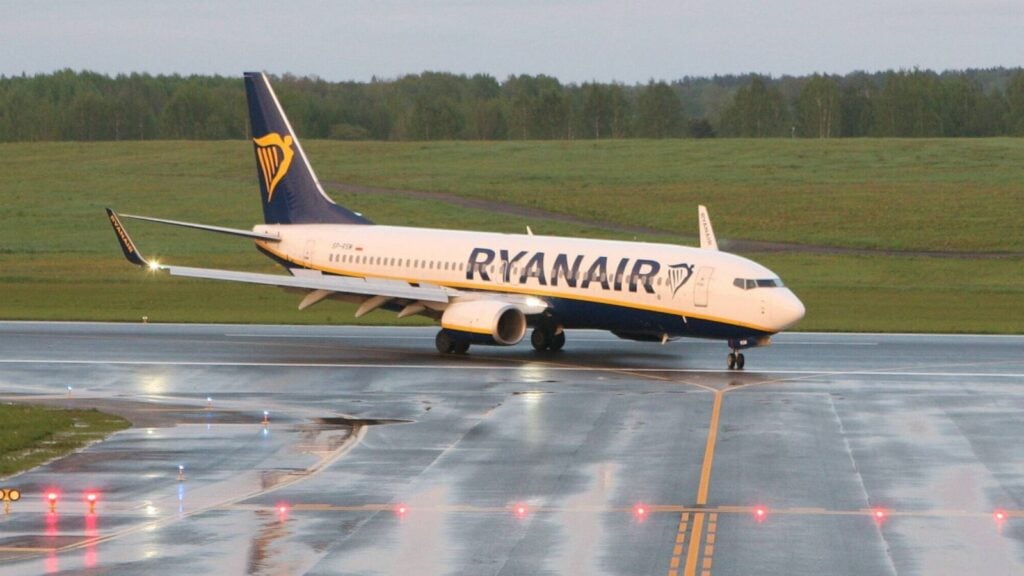
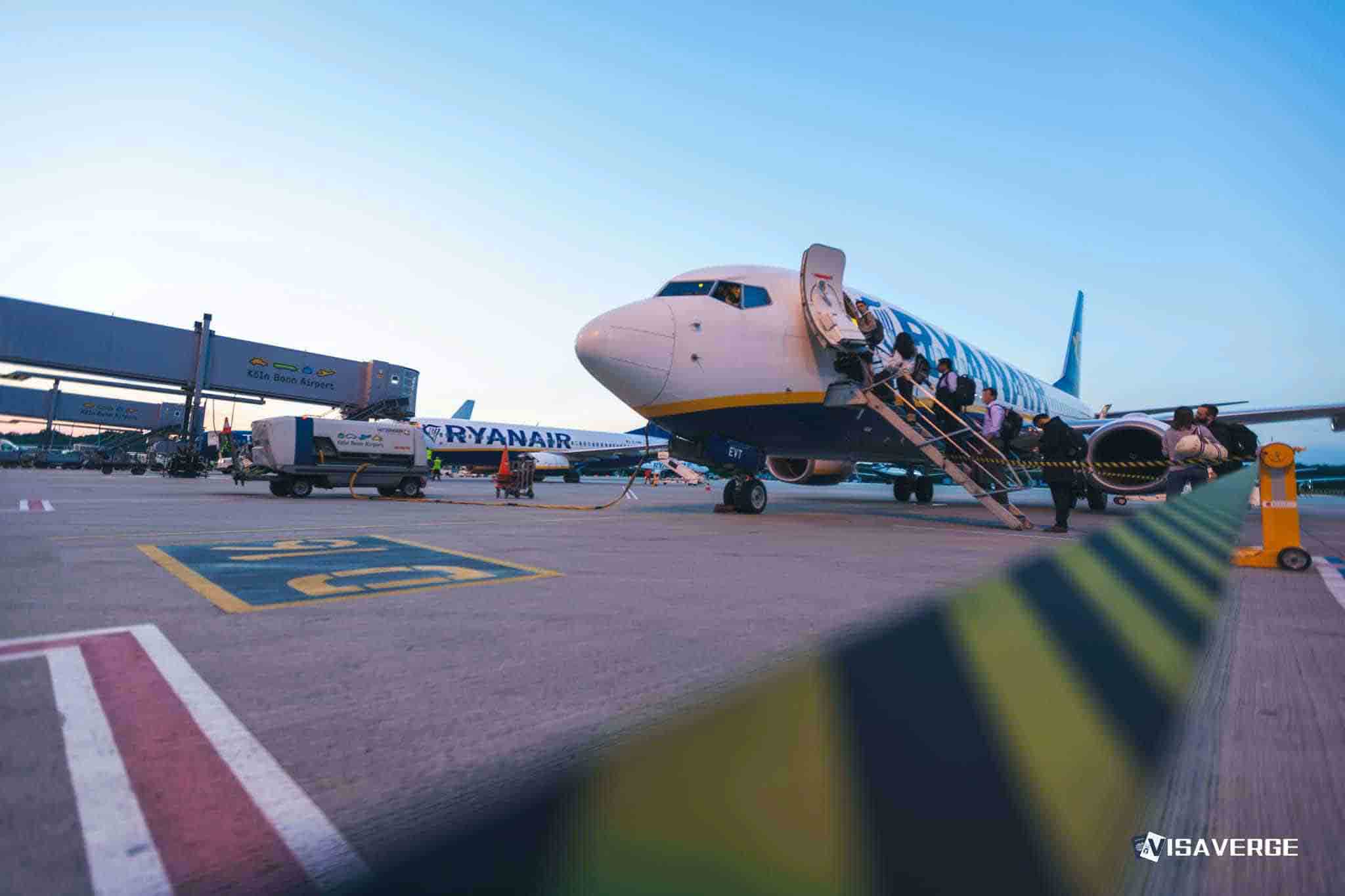
- The flight was a Malta Air Boeing 737-800 traveling from Thessaloniki, Greece, to Memmingen, Germany.
1 earlier update
The investigation into the Ryanair window incident has shifted to the U.S. National Transportation Safety Board, which is now leading the probe after determining the event occurred in Greek airspace with Greece participating. New reporting also identified the passenger as Ljubisa Karović, 61, a Serbian national, who remains hospitalized in Thessaloniki with neck and shoulder injuries and friction burns.
- On July 10, 2026, Reuters reported that the passenger was partially sucked through a dislodged window on the Ryanair flight from Thessaloniki to Memmingen, forcing an emergency return to Thessaloniki.
- The Serbian consulate said Ljubisa Karović, 61 did not face life-threatening injuries, even as he remained hospitalized after the incident.
- Svetlana Grković, Karović’s wife, told reporters on July 14–15 that the incident left him in a “very bad psychological state,” and local outlets said she and nearby passengers held him in place until the aircraft returned to Thessaloniki.
- Ryanair said the aircraft “landed normally and passengers returned to the terminal,” and organized a replacement aircraft to continue the trip to Memmingen.
Ryanair Group CEO Michael O’Leary said in Dublin on September 10, 2026, after the airline’s annual general meeting, that Ryanair is “disputing” claims that any part of passenger Ljubisa Karovic’s body was outside the window during the July 10, 2026 incident. He said Karovic was “certainly sucked towards the window” but also acknowledged the passenger suffered neck and shoulder injuries and is entitled to “some compensation.”
- Michael O’Leary said, “We don’t think any part of his body got out the window, but he was certainly sucked in very dramatic circumstances towards the window.”
- Ljubisa Karovic, 61, said he heard a loud “explosion” during the flight and claimed his head and right shoulder were partially sucked out of the cabin window.
- The National Transportation Safety Board issued a preliminary report on August 13, 2026, finding a “No. 2 (right) engine fan-blade-out (FBO) failure during climb out” and that engine debris struck and shattered the cabin window.
- O’Leary said Ryanair is in contact with Karovic’s lawyer and rejected the basis for “any class action.”
2 earlier updates
The National Transportation Safety Board released a preliminary report confirming that a fan blade failure on Ryanair flight FR1879 triggered engine debris that shattered a cabin window and partially pulled a passenger out of the aircraft on July 10, 2026. The board said it is leading the investigation after Greece delegated the probe under ICAO Annex 13, with the European Union Aviation Safety Agency appointing a technical advisor on July 13, 2026.
- The NTSB said broken engine parts from the fan blade failure not only shattered the window at row 11 but also damaged the fuselage in several other places.
- Fellow passengers pulled 61-year-old Ljubisa Karovic back into the cabin after he was partially sucked through the broken window while seated in 11F; Reuters reported he was a Serbian national taken to AHEPA University General Hospital in Thessaloniki and was not believed to have life-threatening injuries at that time.
- Michael O’Leary said Ryanair’s initial assessment pointed to “foreign object damage” to the engine on takeoff at Thessaloniki, while the NTSB said his public comments were not authorized under the ongoing accident investigation.
- The flight was a Malta Air Boeing 737-800 traveling from Thessaloniki, Greece, to Memmingen, Germany.
The investigation into the Ryanair window incident has shifted to the U.S. National Transportation Safety Board, which is now leading the probe after determining the event occurred in Greek airspace with Greece participating. New reporting also identified the passenger as Ljubisa Karović, 61, a Serbian national, who remains hospitalized in Thessaloniki with neck and shoulder injuries and friction burns.
- On July 10, 2026, Reuters reported that the passenger was partially sucked through a dislodged window on the Ryanair flight from Thessaloniki to Memmingen, forcing an emergency return to Thessaloniki.
- The Serbian consulate said Ljubisa Karović, 61 did not face life-threatening injuries, even as he remained hospitalized after the incident.
- Svetlana Grković, Karović’s wife, told reporters on July 14–15 that the incident left him in a “very bad psychological state,” and local outlets said she and nearby passengers held him in place until the aircraft returned to Thessaloniki.
- Ryanair said the aircraft “landed normally and passengers returned to the terminal,” and organized a replacement aircraft to continue the trip to Memmingen.
- Ryanair CEO Michael O’Leary indicates foreign object damage likely caused the engine failure.
- A passenger was partially ejected from the aircraft after engine debris shattered a cabin window.
- The eighteen-year-old Boeing 737-800 had recently undergone a full overhaul before the July 10 incident.
Michael O’Leary said Monday that an initial probe points to possible debris striking the engine during takeoff before a Ryanair Boeing 737 window shattered and partly ejected a passenger on July 10. The Ryanair CEO stopped short of declaring the cause settled.
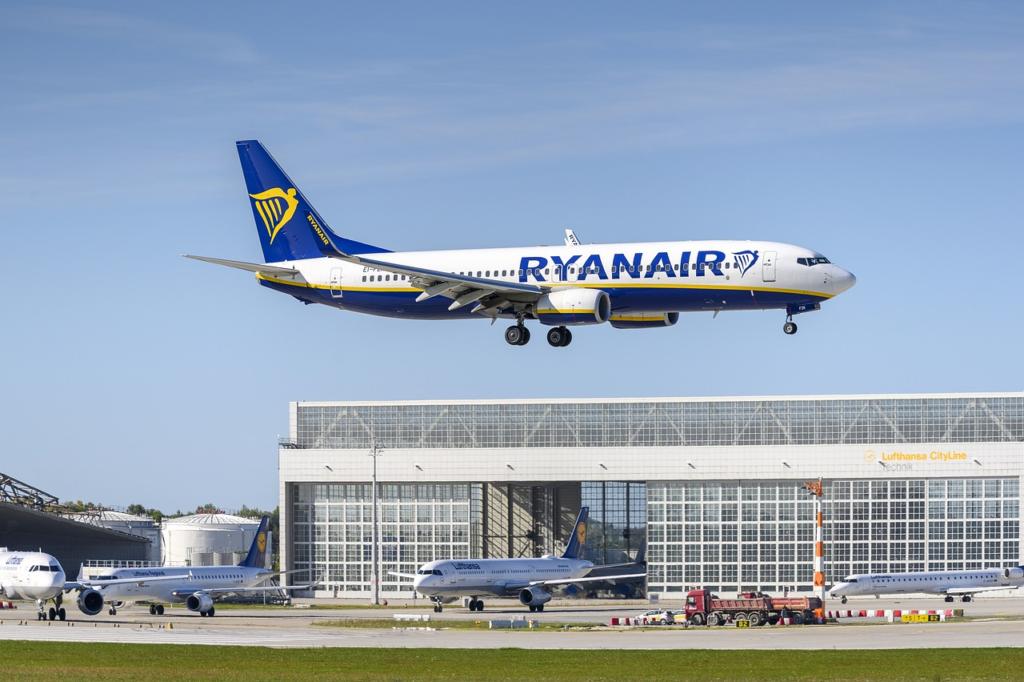
Flight FR1879, operated by Malta Air, was traveling from Thessaloniki, Greece, to Memmingen, Germany, when the window dislodged shortly after takeoff. The aircraft turned back to Thessaloniki in an emergency landing.
O’Leary described the early finding this way:
"Initial indication would suggest it looks like a foreign object damage to the engine on takeoff at Thessaloniki, but we don't have, we can't say that definitively."
Investigators say a piece of engine debris broke away, struck a cabin window and triggered rapid decompression. Oxygen masks deployed after the window failed.
Ljubisa Karovic, a 61-year-old Serbian national, was sitting beside the damaged window when the pressure loss pulled part of his body outside the aircraft. His wife and two other passengers pulled him back into the cabin.
He was hospitalized in Thessaloniki with severe neck and arm injuries, friction burns and severe shock. The injuries followed exposure to the airflow outside the aircraft.
A loud bang preceded the aircraft’s return to Thessaloniki
Passengers described hearing a bang immediately after takeoff. One passenger compared the sound to “like a tire bursting.”
The cabin then experienced rapid decompression, according to the investigation account. Oxygen masks dropped as the aircraft returned to the Greek airport.
Many passengers described the event as traumatic. Some also reported smoke and the smell of engine debris in the cabin.
A replacement flight left four hours later for passengers who wanted to continue to Germany. The damaged aircraft did not complete the original journey to Memmingen.
| Flight detail | Information |
|---|---|
| Flight | FR1879 |
| Operator | Malta Air, part of Ryanair Group |
| Route | Thessaloniki to Memmingen |
| Incident date | July 10, 2026 |
| Aircraft | 18-year-old Boeing 737-800 (NG) |
| Reported failure altitude | Approximately 15,000 to 16,000 feet |
| Engine under scrutiny | Right-hand CFM56-7B |
The Boeing 737-800 was 18 years old and had recently completed a full engine overhaul. Investigators are reviewing that maintenance history alongside the engine damage.
Investigators are separating runway debris from internal engine failure
The National Transportation Safety Board is leading the inquiry after jurisdiction transferred from Greek authorities. The Federal Aviation Administration is working with the board to establish why the engine component broke apart in flight.
Investigators are examining two possibilities. The damage may have resulted from an object striking the engine on the runway, or from an internal mechanical failure that produced the debris.
The suspected debris came from the right-hand CFM56-7B engine and hit an acrylic cabin window. The impact dislodged the window and caused the pressure loss inside the aircraft.
The event occurred at approximately 15,000 to 16,000 feet, according to the reported flight details. Investigators are also examining whether the failure involved an uncontained engine event, in which internal parts break through the engine housing.
That aircraft had reportedly returned to Thessaloniki on July 9 during an attempted flight to Sarajevo. The reason for that earlier return was not identified in the investigation details.
The European Union Aviation Safety Agency said it was in contact with the FAA and CFM International after the incident. The agencies are working on “continued airworthiness action” while investigators examine the CFM56 engine and the aircraft’s maintenance records.
Ryanair praised the crew while deferring compensation questions
Neil Sorahan, Ryanair Group’s chief financial officer, credited the crew with returning the aircraft safely.
"Our crew did a phenomenal job and got the aircraft back to Thessaloniki. Everyone bar none walked off the aircraft."
Eddie Wilson, chief executive of Ryanair DAC, described the event as a “serious incident” on July 15. He also said “things happen from time to time” in aviation.
Sorahan said it was “way too early” to discuss compensation for Karovic while the official investigation remains open. The airline’s compensation position will be considered as the inquiry proceeds.
The National Transportation Safety Board’s work is focused on why the engine component failed, while the FAA and EASA are reviewing the aircraft’s airworthiness and maintenance history. CFM International is involved in the safety review of the engine.
The aircraft had recently undergone a full engine overhaul, making its maintenance records part of the review. Investigators are expected to issue a draft report in about 28 days, followed by a more detailed report with their findings.