Austrian Airlines diverted its Tel Aviv-to-Vienna flight to Sofia on Sunday evening after the crew reported a suspected bomb threat. Authorities evacuated all 51 passengers and six crew members while specialists searched the aircraft.
Background: Azores Airlines Flight S4504 Diverted to Lisbon Over Bomb Threat
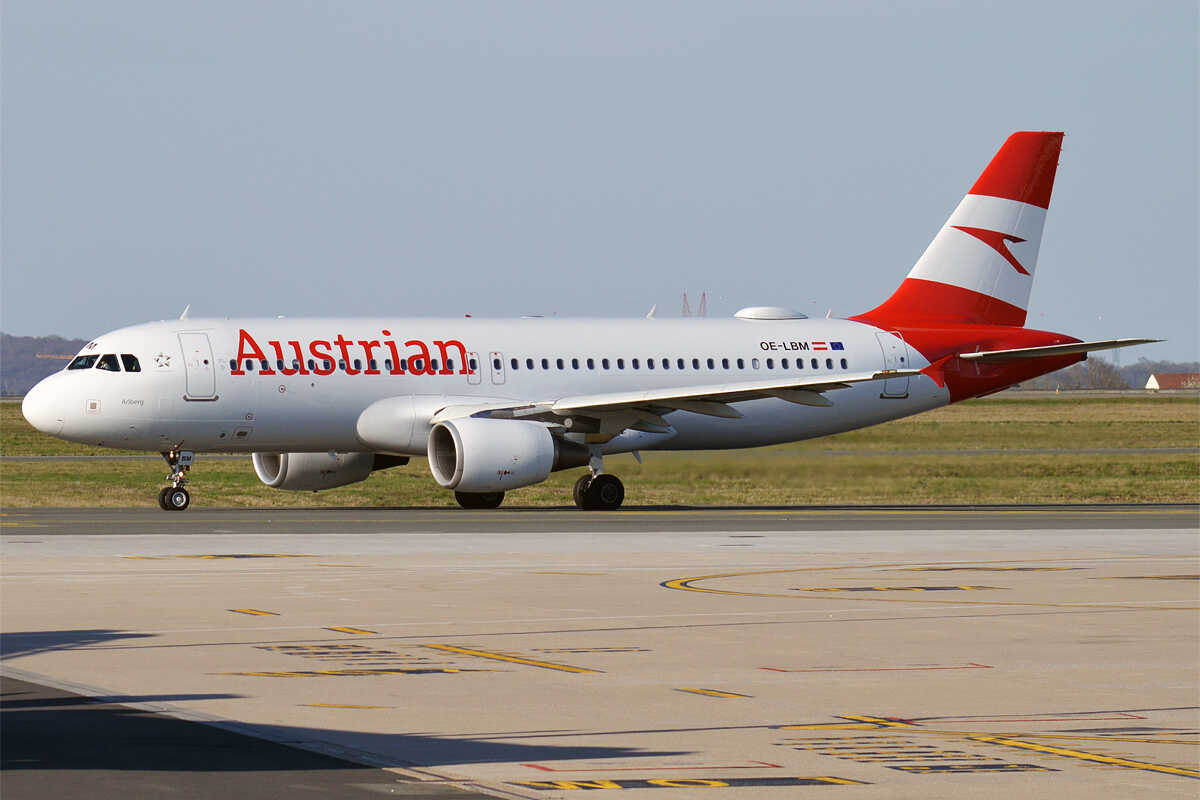
The Airbus A320 landed at Vasil Levski Airport in Bulgaria. No injuries were reported, and the passengers and crew were safe, according to an airport spokesperson.
The airline said passengers would move to alternative flights after the search. The aircraft remained under security inspection as Bulgarian authorities investigated.
The airline’s rebooking plan follows the security search
Austrian Airlines confirmed the alert involved flight OS82, which was travelling from Tel Aviv to Vienna. The airline did not give further details about the report that prompted the diversion.
“Once the search of the aircraft is complete, the passengers will be rebooked onto alternative flights as quickly as possible.”
The airline also said: “The safety of our passengers and crew is always our top priority.” Lufthansa Group, which owns the carrier, said passengers would be transferred to another flight as soon as possible.
The airline’s announcement ties the rebooking to completion of the security search. Passengers were taken off the aircraft, which was moved to an isolated area for examination by bomb-disposal teams and other security personnel. Officials had not reported finding an explosive device at that stage.
Passengers should follow local instructions. The immediate steps are:
- Follow directions from airport security while the inspection continues.
- Wait for the airline’s alternative-flight arrangements after the search is complete.
- Keep track of updates from the airline and airport authorities.
The crew’s report came as the plane flew near the Bulgaria-Romania border, according to Bulgaria’s transport ministry. Flight-tracking information showed the aircraft entered Romanian airspace before turning south toward Bulgaria. It transmitted Squawk 7700, the transponder code used to signal a general emergency.
The transport ministry described the decision this way:
“During the flight, on the border with Romania, the crew reported a bomb threat signal and decided to land in Sofia extraordinarily”
The emergency landing led to a search after the aircraft arrived. The ministry said a crisis response team had been formed and the responsible institutions had begun an inspection. Authorities also evacuated the passengers and crew.
Bulgarian fighters escorted the aircraft under NATO air-policing procedures
Bulgaria’s air force scrambled a MiG-29 fighter jet to accompany the plane, the transport ministry said. A ministry spokesperson said the fighter stayed with the aircraft until it reached Sofia.
The Ministry of Defence said the response was an airspace-protection mission under NATO’s Air Policing mission. The standby fighter jets operated in coordination with NATO’s Combined Air Operations Centre in Torrejón, Spain.
Bulgarian authorities handled the inspection after landing. Emergency crews and security personnel were waiting at the airport, and local security officials supervised the evacuation. The aircraft was then placed in an isolated area for the search.
The flight’s aircraft was an Airbus A320-214 registered as OE-LZE. Tracking information showed it left Ben Gurion Airport on Sunday evening; one account put its departure at about 7:04 p.m. The flight had been scheduled to depart at 6:40 pm, according to tracking data.
The Israel Air Force said the incident took place outside Israeli airspace and that it was not required to act. Its statement said the event was not in or near Israeli airspace, placing the response with authorities in Bulgaria.
The incident followed two anonymous reports last week alleging bombs aboard Delta Airlines flights from New York to Israel. Both reports proved false. The Bulgarian investigation into the OS82 alert was still underway, while passengers awaited the airline’s promised alternative flights.