- Flydubai flight FZ1073 landed safely at Tabuk after diverting from its Dubai-to-Tel Aviv route.
- Israeli officials ruled out a hijacking after the aircraft landed and fighter jets were stood down.
- Flydubai confirmed all passengers were safe; separate accounts estimated between 150 and 180 people aboard.
Israeli officials ruled out a hijacking after a Flydubai flight bound for Tel Aviv diverted to Saudi Arabia and landed safely at Tabuk Airport on September 30, 2026. The aircraft had sent distress signals that initially raised alarm. All passengers were safe, Flydubai said.
FZ1073 had departed Dubai International Airport for Ben Gurion Airport near Tel Aviv when it transmitted emergency codes and diverted over Jordanian airspace. It landed in northwestern Saudi Arabia. The flight did not continue to Israel.
Free toolB1/B2 Tourist Visa Stay Calculator online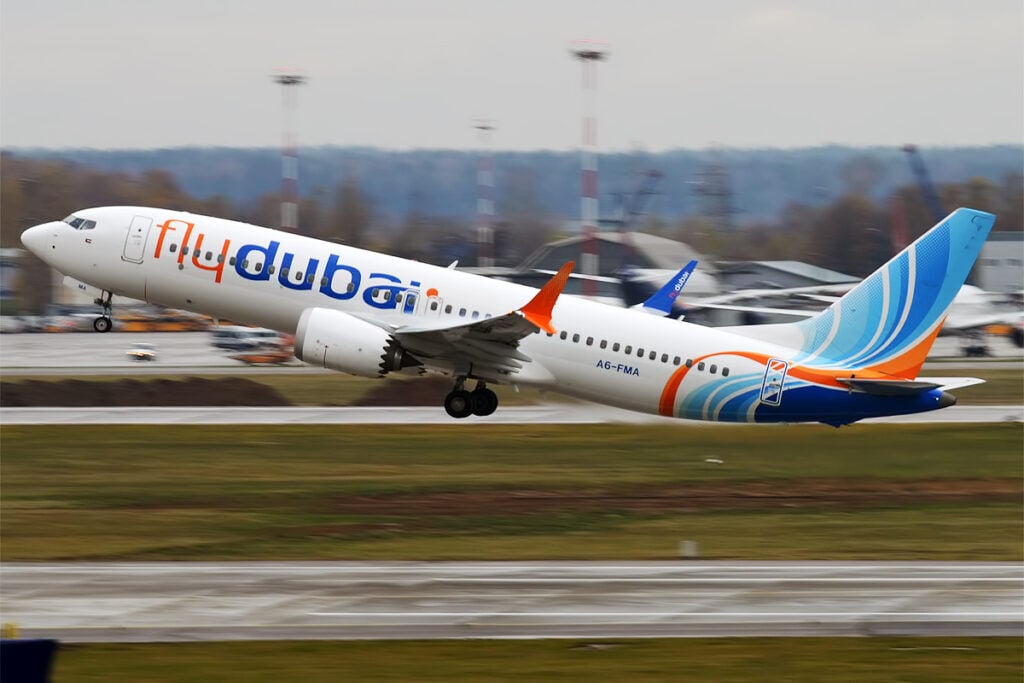
Flydubai said the aircraft “experienced an incident while en route” and “landed safely at Saudi Arabia’s Tabuk Airport (TUU) and all passengers are safe and accounted for.” The airline did not describe the incident in its statement.
Doron Spielman, speaking for the Israeli prime minister’s office, said the event was “not believed to be a hijacking incident.” He also described it as a “different incident.”
The response had begun before that assessment. Israeli authorities scrambled fighter jets after the signal, then stood them down once the plane landed safely and officials ruled out hijacking.
Prime Minister Benjamin Netanyahu’s office said, “The incident is under control, and all measures are currently being deployed in order to return the Israeli passengers safely to Israel.” The statement came as officials worked to bring the passengers back.
Passenger accounts put the number aboard between 150 and 180
Accounts gave different estimates for how many people were on the aircraft. One said about 150; another counted 174 passengers, while a third put the total at around 180. One account said 100 of those aboard were Israeli nationals.
| Reported account | Passengers described |
|---|---|
| One account | About 150 |
| Another account | 174 |
| A third account | Around 180 |
| Israeli nationals in one account | 100 |
The varying totals remain estimates from separate accounts, rather than a single passenger count. Flydubai confirmed only that everyone aboard was safe and accounted for.
Israeli security sources pointed to a cockpit altercation
Tracking data showed the aircraft first transmitted code 7700, the general emergency signal, then code 7500. The latter is associated with unlawful interference or a possible hijacking. Those signals explain why authorities treated the event as a potential threat.
An Israeli security official described the uncertainty as the response unfolded: “There is no definitive information about a hijacking. The pilot activated a distress signal,” the official said. The official added, “We are unable to establish contact with the pilot, and that is concerning.”
Later, Israeli security sources cited a possible “altercation between the pilots” as the apparent trigger, rather than an attempted hijacking. That remained the working explanation offered by those sources, not a confirmed account of what happened in the cockpit.
A passenger account described hearing shouts from the front of the aircraft and feeling it dip steeply before landing in Saudi Arabia. The account added a view from inside the cabin as the plane made its unexpected approach.
Tracking reports recorded a rapid descent before landing
Reports also differed on the aircraft’s descent. One said it fell from nearly 34,000 feet to less than 17,000 feet in about one minute. Another described a drop from 34,000 feet to around 16,600 feet over northwestern Saudi Arabia in just over two minutes.
Both accounts described a sharp loss of altitude before the landing. They did not give the same timing or final height.
The flight’s diversion ended at Tabuk, where the aircraft landed safely. Israeli authorities had initially treated the 7500 signal as a possible hijacking alert, then revised their assessment after the aircraft was on the ground.
The landing came amid daily Dubai-Tel Aviv service
Flydubai operates daily flights between Dubai and Tel Aviv. The aircraft had been expected to continue to Ben Gurion before the emergency response redirected it to Saudi Arabia.
Saudi Arabia and Israel do not have official diplomatic relations. The aircraft’s landing therefore put Israeli passengers in Saudi Arabia during an incident that officials were still assessing.
The immediate danger had passed by the time Israeli officials ruled out a hijacking. Flydubai’s statement that every passenger was safe and accounted for was the clearest public confirmation from the airline after the landing.