- Boston Logan Airport led U.S. flight cancellations for a second consecutive day following FAA ground stops.
- Major airlines implemented rebooking waivers for Northeast travel with deadlines ranging from July 25 to July 26.
- Federal officials emphasize that airline schedules must match the practical capacity of the air traffic system.
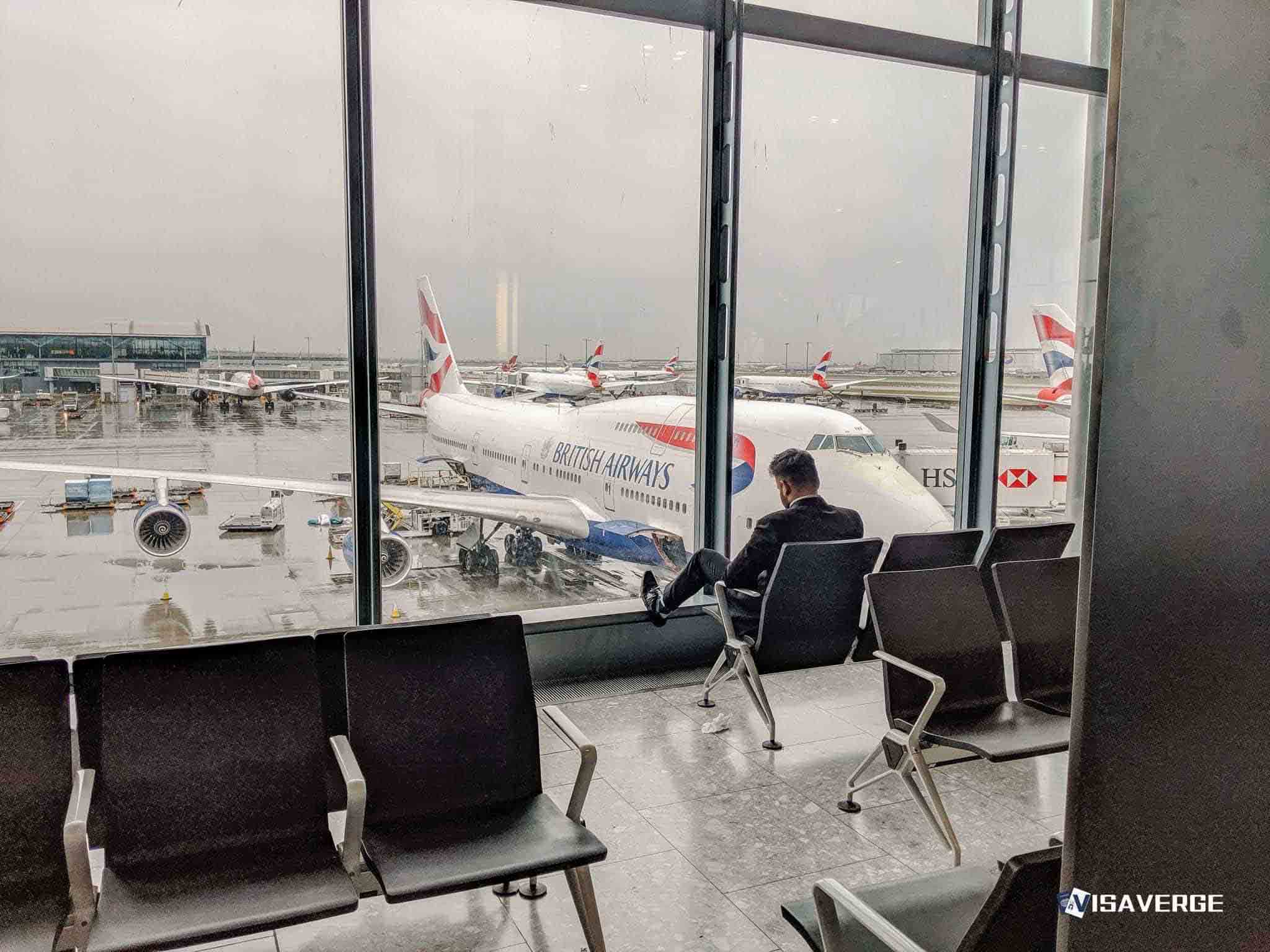
FAA Stops flights at Boston Logan again Thursday, leaving the hub with the most canceled U.S. departures for a second consecutive day. Boston Logan International Airport had already recorded hundreds of delays and cancellations on July 21 and July 22 as disruption spread across the Northeast.
The Federal Aviation Administration imposed another ground stop at the airport on July 23, after issuing the same restriction Wednesday. The agency’s National Airspace dashboard also showed traffic restrictions affecting several other major Northeast airports.
The disruption began before Thursday’s latest action. Boston recorded 336 cancellations and 449 delays on July 21. On July 22, cancellations fell to 109, while delays climbed to 479.
The airport also ranked second worldwide for cancellations on July 22. Thursday’s early figures placed it first among U.S. airports, followed by Chicago O’Hare and Newark Liberty.
The FAA’s traffic measures covered LaGuardia, Newark Liberty, Philadelphia International, Reagan National, Washington Dulles and Baltimore/Washington during the 48-hour period ending July 23. The restrictions affected a corridor that handles large volumes of connecting flights.
FAA Administrator Bryan Bedford tied the agency’s approach to the capacity airlines schedule and the system can safely handle. He issued the statement in July 2026.
“Our number one priority is the safety of the flying public, and that means ensuring airline schedules reflect what the system can safely handle.”
Boston’s cancellations remained high through three days
The available airport figures show cancellations and delays moving in different directions. Thursday’s status established Boston as the U.S. cancellation leader, although an exact Thursday total was not provided.
| Date | Boston Logan status |
|---|---|
| July 21 | 336 cancellations; 449 delays |
| July 22 | 109 cancellations; 479 delays; second worldwide in cancellations |
| July 23 | Most canceled departures among U.S. airports; early reports placed Chicago O’Hare and Newark Liberty behind it |
The lower cancellation count on July 22 did not end the disruption. More flights operated late, and the airport remained among the world’s most affected hubs.
Passengers at Boston Logan and JFK were left at gates as airlines worked through the backlog. Travelers described delays being extended repeatedly before some flights were canceled, while frequent flyers urged others to avoid Boston and Newark Liberty until the weekend.
Airlines opened temporary options for affected Northeast itineraries. The deadlines differ by carrier.
| Airline | Available change option | Deadline or travel window |
|---|---|---|
| JetBlue | Rebooking without change fees | Flights through July 22/23; rebooking through July 26 |
| Delta and American | One-time changes without fare differences | New travel must begin by July 25 |
The waivers cover major Northeast hubs. Travelers still need to check the status of a replacement flight before heading to the airport, because seats can be limited while aircraft and crews are repositioned.
Storms exposed capacity limits across the Northeast
A series of storm systems moved from the Midwest toward the Northeast, affecting routes where JetBlue and Delta maintain large operations. The weather-prone corridor links several hubs that depend on the same aircraft, crews and air-traffic capacity.
The weather disruption also brought renewed attention to airline scheduling. Pilots and industry observers have pointed to JetBlue’s “scheduling system failures, stranded crews, and slow recovery” after storms that began as early as July 18. Those descriptions are claims from industry participants, not an FAA finding.
Reports on July 23 also described the Boston backlog as involving “issues beyond weather.” That characterization prompted calls for a federal investigation into airline crew-positioning software. The agency has not announced such an investigation in the material provided.
When aircraft or crews remain away from their planned hubs, later flights can fall out of sequence. A weather disruption can therefore continue after conditions improve. That recovery problem affects the schedule beyond the first canceled flight.
Transportation Secretary Sean P. Duffy has previously argued that airlines need schedules matched to the system’s practical capacity. His statement, issued April 16, 2026, was reaffirmed during the July disruptions.
“If you book a ticket, we want you and your family to have the certainty that you'll fly without endless delays and cancellations. We successfully turned Newark Liberty into the most on-time airport in the Tri-State Area. Applying that same strategy at O’Hare [and other hubs] will reduce delays.”
O’Hare offers a recent example of schedule limits
Earlier in 2026, Duffy ordered a scheduling reduction at Chicago O’Hare. The airport’s daily operations were capped at 2,708 flights, down from over 3,080, to reduce the risk of cascading delays.
That earlier measure provides a comparison for the Boston disruption. O’Hare appeared among the airports following Boston in early Thursday cancellation reports, while Newark Liberty also ranked near the top.
A separate fueling failure caused a total traffic stoppage on July 5. The July 23 reports instead connected Boston’s continuing backlog with problems described as beyond weather. The two events are separate.
The immediate operational picture remained fluid across the Northeast. LaGuardia, Philadelphia International, Reagan National, Washington Dulles and Baltimore/Washington were among the airports affected alongside Boston and Newark Liberty.
Rebooking windows close before the network fully resets
JetBlue’s option extends rebooking through July 26 for eligible flights through July 22/23. Delta and American set an earlier travel deadline, requiring new trips to begin by July 25 for one-time changes without fare differences.
Those dates give affected passengers a limited path around canceled flights. They do not add aircraft or crews to the network.
Boston’s three-day record shows why recovery may take longer than a single weather event. The airport moved from 336 cancellations and 449 delays on July 21 to 109 cancellations and 479 delays on July 22. A schedule with fewer cancellations can still carry a large pool of late flights.
The FAA’s stated standard is that airline schedules should reflect what the air-traffic system can safely handle. Travelers with Northeast itineraries should check their flight status and use the applicable airline window before July 25 or July 26, depending on the carrier.