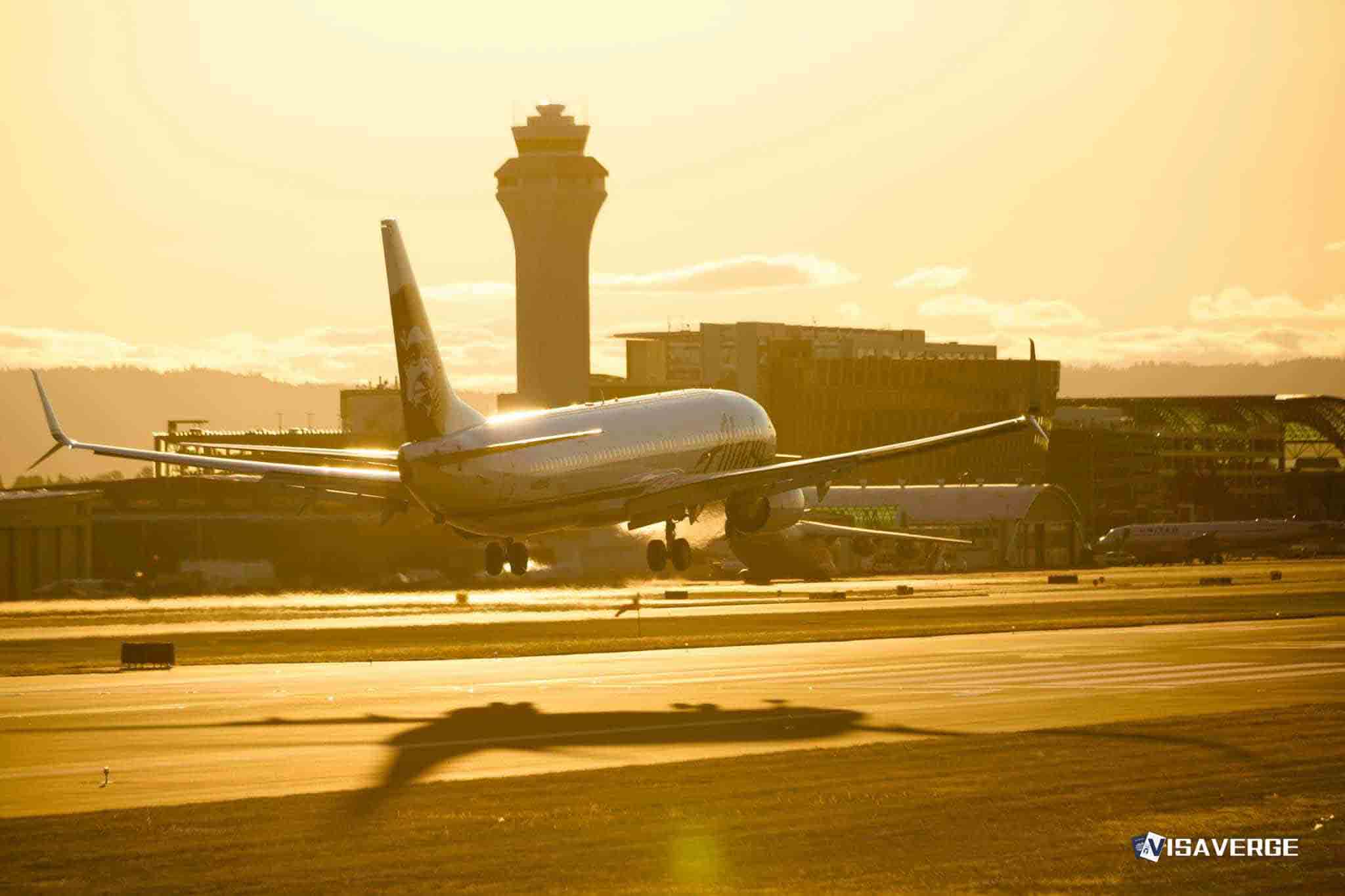
- Major U.S. hubs faced over one thousand cancellations and nearly ten thousand delays between July 5 and 6.
- LaGuardia logged two hundred eighty total cancellations following weather-related FAA ground stops that disrupted short-haul networks.
- Boston Logan struggled with fuel system technical issues and lingering cancellations across more than one hundred fifty flights.
(UNITED STATES) — If your summer trip runs through LaGuardia or Boston Logan, LaGuardia looks worse on cancellations, while Boston’s BOSFUEL issue adds another layer of risk. On the latest disruption stretch, both airports sat inside a broader wave of FAA ground stops, and the safer choice is the one with fewer connections and the strongest rebooking options.
Airline operations across the U.S. have been rough enough to push cancellations above 1,000 in a single day. Flight-tracking data showed 1,286 cancellations and 9,783 delays across flights within, into, or out of the United States over the July 5-6 period. Major hubs were hit at the same time, which made recovery slower than a normal weather hiccup.
Free toolB1/B2 Tourist Visa Stay Calculator online
LaGuardia took the hardest hit in that stretch. The airport logged 134 departure cancellations and 146 arrival cancellations after a weather-related FAA ground stop. That kind of shutdown ripples fast through short-haul networks, where planes and crews are tightly packed into the day.
Boston Logan faced a different problem. A fuel issue tied to BOSFUEL led to cancellations that continued even after the issue was resolved. The airport recorded 82 departing flights canceled and 75 arrivals canceled. That is the kind of disruption that can linger after the operational problem itself is fixed.
Other big airports were caught in the same storm pattern. JFK, Newark, Reagan National, and San Francisco International all saw weather-driven ground stops or delay programs. Chicago O’Hare also had a severe day earlier in the summer, with thunderstorms and ground stops producing over 600 cancellations and more than 1,000 delays.
That is the practical comparison: LaGuardia has been the more cancellation-prone of the two recent trouble spots, while Boston’s issue was narrower but still disruptive enough to strand passengers across departures and arrivals. A nonstop flight out of either airport is easier to protect than a connection through them.
| Airport | Recent disruption pattern | Cancellations | Delays | Traveler risk |
|---|---|---|---|---|
| LaGuardia | FAA ground stop tied to weather | 134 departures, 146 arrivals | Not fully specified | Very high for short-haul schedules and same-day connections |
| Boston Logan | BOSFUEL issue, then lingering cancellations | 82 departures, 75 arrivals | Not fully specified | High, especially if your itinerary depends on a tight connection |
| Chicago O’Hare | Thunderstorms and ground stops | Over 600 | Over 1,000 | Severe network-wide spillover |
| Reagan National | July 4 closure for America250 events | Not specified | Not specified | Heavy schedule impact across roughly 900 flights |
LaGuardia’s numbers stand out because the airport is built for a dense, tightly timed schedule. Once the FAA imposes a ground stop, even a brief pause can turn into a long list of misconnects. That matters most if your trip depends on a same-day meeting, a cruise departure, or a family event with no margin for delay.
Boston’s BOSFUEL problem is different, but the effect can feel similar at the gate. Fuel-system trouble does not just delay one airplane. It can force airlines to reshuffle aircraft, crews, and departure banks, which is how cancellations continue after the technical issue itself is cleared.
The route structure also matters. LaGuardia and Boston both feed large volumes of short and medium-haul flying. Those markets are easier to rebook than long-haul trips, but they also collapse faster when weather or infrastructure issues hit. One delayed outbound can knock out a return, then a connection, then the next day’s aircraft rotation.
Miles and status travelers have another layer to consider. A canceled flight usually means a rebooking on the same carrier if seats exist, which can protect elite benefits. But when inventory is thin, airlines often reroute passengers through other hubs, and that can change cabin availability, connection times, and the chance of an upgrade clearing.
If you booked award travel, the value hit can be real even when the airline gets you there. Saver awards on the original route may disappear on the reaccommodation, and a new itinerary can require more points if the airline prices the replacement seat at a higher level. That is especially frustrating on high-demand Northeast routes where award space is already tight.
Competitive context matters here. Delta, American, and United all face the same weather system, but the airline with the strongest hub alternatives and the widest seat inventory usually has the easier recovery. A traveler stuck at LaGuardia on a major disruption day has more options on an airline with multiple nearby departures than on one with a thin schedule.
Heads Up: If your itinerary touches LaGuardia, Boston Logan, JFK, Newark, Reagan National, or O’Hare during storm season, keep your airline app open and check rebooking options before leaving home.
Choose LaGuardia if your trip is simple, nonstop, and fully refundable or easily changed. That airport can work fine when weather cooperates, but the recent cancellation totals show how quickly it can unravel.
Choose Boston Logan if your route is strong on schedule and your airline has multiple daily departures. BOSFUEL was a separate operational problem, but the cancellation count shows the airport can still turn messy fast.
Choose Chicago O’Hare only if you have enough buffer time. The airport’s recent 600-plus cancellations and 1,000-plus delays show how hard a severe weather day can hit a giant hub. Connections there need extra padding.
Choose Reagan National carefully if your trip falls around special events or holiday closures. The July 4 shutdown tied to America250 affected roughly 900 flights, which is the kind of schedule hit that can spread beyond one day.
If your flight is still ahead, the best move is simple. Book the earliest nonstop you can find, avoid tight connections through the Northeast corridor, and keep a backup plan ready before the FAA starts issuing ground stops.