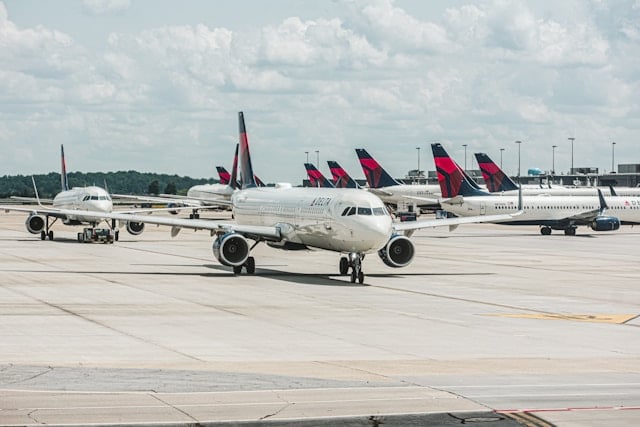
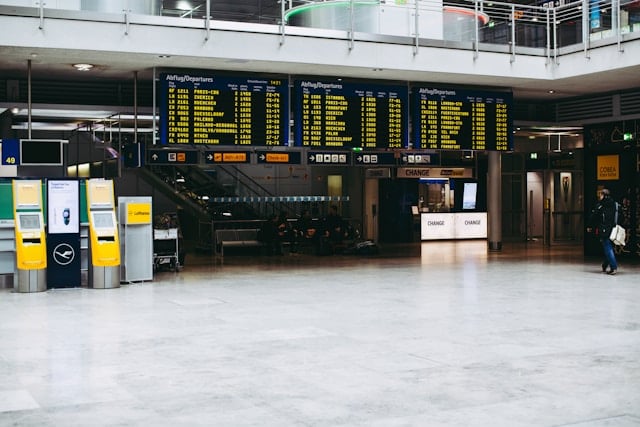
- The F-A-A imposed ground stops at nine major United States airports due to severe weather and network issues.
- Atlanta’s airport recorded five hundred ninety-seven delayed departures, affecting over half of its scheduled flights.
- Delta Air Lines offered travel waivers through August fifteenth following widespread cancellations and logistical challenges across its network.
The FAA halted flights at Hartsfield-Jackson Atlanta International Airport until 8:00 p.m. ET on August 11, stranding travelers as storms and network disruptions rippled across the United States. The airport did not stop every flight, and the figures do not establish that Delta Air Lines led cancellations worldwide.
FlightAware recorded 8,363 delays and 874 cancellations within, into or out of the United States on August 11. Atlanta logged 597 delayed departures, affecting 53% of its total departing flights.
Free toolB1/B2 Tourist Visa Stay Calculator online
The disruption continued into August 12. Delta had 45 cancellations by that morning in the cited airline tally. That figure placed the carrier at the top of that count, but not in a verified worldwide ranking.
Passengers described sleeping on airport floors and waiting in 6-to-8-hour customer service lines. The disruption left travelers trying to find seats, aircraft and crews after weather restrictions disturbed schedules across the country.
The agency imposed ground stops at nine U.S. airports on August 6, 2026. Atlanta, Boston, Baltimore, Washington-Reagan, Washington-Dulles, Las Vegas, LaGuardia, Orlando and Minneapolis-Saint Paul were included.
That earlier disruption produced more than 1,000 canceled flights nationwide on August 6, with delays continuing into August 7. Delta and United canceled dozens of flights and recorded more than 1,000 combined delays.
Weather drove much of the disruption. Severe thunderstorms and flash-flood warnings affected metro Atlanta and the Northeast, while equipment problems also contributed, including a three-day ground stop at Chicago O'Hare.
Atlanta’s stop created a wider rebooking problem
A ground stop restricts departures for affected flights during a period set by air-traffic authorities. It does not automatically close an airport or cancel every scheduled movement.
That distinction shaped the Atlanta operation. Some flights continued, but restrictions left aircraft, crews and passengers out of position. The resulting delays then spread through later departures and connecting itineraries.
Delta had already announced plans to cut 100 daily flights through early August 2026 to stabilize its operation. The cuts represented approximately 700,000 monthly passenger displacements, according to the figures cited for the announcement.
Delta CEO Ed Bastian acknowledged the airline’s performance during communications about the 2026 summer disruptions.
“operation isn’t consistently up to the standards Delta has set for the industry in recent years.”
The carrier’s pilots also criticized its management. Eric Criswell, chairman of the Air Line Pilots Association’s Delta Master Executive Council, said on August 6, 2026, that the problems had accumulated over time.
“These problems did not appear overnight. They have developed over time through the compounding mismanagement of a long-standing system.”
The pilots’ public warning site, deltapilotscare.com, says pilots are working record numbers of overtime days. It also criticizes what the union describes as an “attack” on scheduling rules.
Different disruption days produced different cancellation counts
The cancellation figures refer to different dates, weather events or tracking snapshots. One tally put Delta’s Thursday cancellations at 104, followed by 93 cancellations the next day. Another recorded 10 cancellations nationwide for Delta on Thursday during a broader weather event.
Those figures cannot be combined into one ranking. The August 12 count of 45 cancellations described the position at that point in the day, while the earlier numbers covered separate operating periods.
LaGuardia recorded the most cancellations among U.S. airports on the main disruption day. Delta’s cancellations formed part of a broader domestic weather breakdown rather than a confirmed worldwide lead.
The nine airports affected by the August 6 restrictions were:
| Airport | Disruption | Date |
|---|---|---|
| Atlanta | Ground stop | August 6, 2026 |
| Boston | Ground stop | August 6, 2026 |
| Baltimore | Ground stop | August 6, 2026 |
| Washington-Reagan | Ground stop | August 6, 2026 |
| Washington-Dulles | Ground stop | August 6, 2026 |
| Las Vegas | Ground stop | August 6, 2026 |
| LaGuardia | Ground stop | August 6, 2026 |
| Orlando | Ground stop | August 6, 2026 |
| Minneapolis-Saint Paul | Ground stop | August 6, 2026 |
The national totals show how quickly restrictions at individual airports can affect flights elsewhere. A delayed aircraft can miss its next departure, while displaced crews and connecting passengers add further pressure.
Delta’s Atlanta waiver covers travel through August 15
Delta issued a travel waiver for Atlanta itineraries covering August 11–12. Passengers can rebook without change fees or fare differences if they complete travel by August 15, 2026.
The waiver offers an alternative to the most congested travel periods. It does not guarantee an earlier seat, since rebooking depends on available aircraft, crews and capacity.
Passengers with significantly changed flights also have rights under the 2024 Automatic Refund Rule, fully in effect as of August 2026. Qualifying travelers are entitled to cash refunds, although some passengers reported being offered travel credits instead.
The U.S. Department of Transportation continues to monitor Delta’s treatment of passengers during the summer disruptions. The review includes the airline’s obligations involving meals, hotels and prompt refunds.
U.S. Secretary of Transportation Pete Buttigieg described the standard the department is applying:
“All airline passengers have the right to be treated fairly, and I will make sure that right is upheld.”
Travelers should keep booking records, cancellation notices and receipts for expenses linked to a disrupted itinerary. Those documents can help establish what happened and what costs followed.
Separate Delta incidents added pressure in Atlanta
The weather-related restrictions came amid several separate Delta incidents in the Atlanta operation. They were not identified as the cause of the network-wide ground stops.
On August 8, Flight 2204 returned to Atlanta after fumes were reported in the cockpit. The aircraft carried 199 customers and six crew members, who evacuated on slides after the plane reached a taxiway. One crew member and one passenger sought medical attention.
Law enforcement met Flight 2293 in Atlanta on August 10 after a dispute between a passenger and a flight attendant. On July 3, a Delta flight from Atlanta to Chicago was struck by a firework while landing at Midway Airport.
Balram “B” Bheodari, general manager of the airport, addressed service pressures during an August 10 milestone event for Concourse D. He said customer service levels on some concourses had fallen to an “F” as passenger counts grew, adding that there was a “need to do something.”
TSA staffing also came under pressure. Officials urged travelers to arrive at least four hours early for domestic flights.
More than 300 delayed or canceled flights had been recorded at Atlanta by mid-morning August 11. That total preceded the extended ground stop and the larger disruption recorded across the U.S. later in the day.
Delta passengers using the August 11–12 waiver must complete their trips by August 15, 2026. Travelers whose flights changed substantially can seek a cash refund under the federal rule, while those continuing their journeys should retain records of eligible meal, hotel and other disruption expenses.