Mahmoud Khalil asked the Supreme Court on Monday, October 19, 2026, to review an appeals ruling that blocks a federal district judge from hearing his challenge to immigration detention. He remains free while the court considers the case.
The petition does not ask the justices to decide whether his detention violated the law. It asks whether a federal judge can hear that claim while immigration proceedings continue.
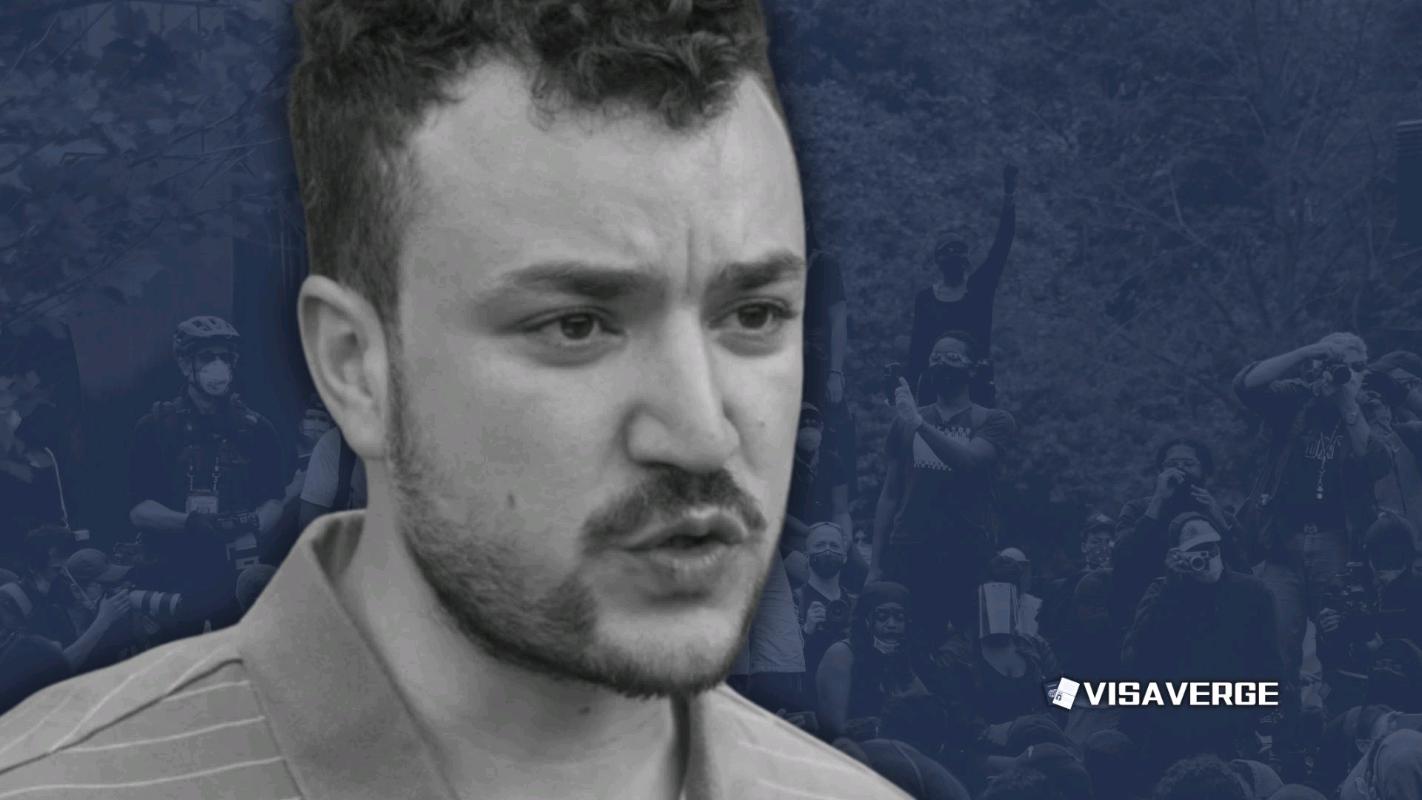
A January decision by a 2-1 panel of the 3rd U.S. Circuit Court of Appeals overturned U.S. District Judge Michael Farbiarz’s order releasing him. The appellate court held that immigration law channels Khalil’s claims through the immigration system, rather than allowing a district court to decide them first.
The appeals court has paused its ruling, and an order barring the government from re-detaining Khalil remains in effect for now. If the pause ends and the petition fails, he could face detention and removal.
The temporary protection applies to Khalil while the appeal proceeds
The appeals court concluded that federal courts could not review the legality of immigration detention until immigration courts had completed their consideration. It said Khalil could raise his arguments in an appeal from a removal order. The ruling concerns his case; the material describes no nationwide injunction.
After the full court declined to rehear the dispute in May, an expanded panel upheld the reversal by a 6-5 vote. Three judges who opposed the result wrote that it would “imperil[ed] the civil liberties of [Khalil] and similarly situated noncitizens.”
Khalil is separately challenging the immigration judge’s removal order. The Board of Immigration Appeals rejected that challenge in April, leaving removal to Algeria or Syria as the destinations named in the order. That appeal is pending before the 5th Circuit Court of Appeals, where written arguments are expected to conclude in early November.
The temporary bar on re-detention gives Khalil protection while those court proceedings continue. The appeals court put its ruling on hold to let him seek Supreme Court review.
The petition asks whether federal courts can hear retaliation claims
Khalil’s lawyers argue that immigration statutes should not prevent noncitizens from asking federal courts to consider whether detention punishes speech protected by the First Amendment. They say immigration courts operate within the executive branch, allowing the government to prolong proceedings while a person remains detained.
The petition alleges that authorities arrested and detained Khalil in March 2025 to punish his advocacy for Palestinians and deter others. It states: “If the decision stands, the government would be handed a powerful and unprecedented weapon to silence its critics.”
Khalil described the appeal as a fight over more than his own immigration status. “This fight is not only about whether I get to stay in this country, it's really about whether anyone in this country can speak out for Palestinians without being punished for it,” he said at a remote news conference Monday.
Baher Azmy, legal director of the Center for Constitutional Rights and a member of Khalil’s legal team, said the ruling could leave people unable to challenge detention. “It's terrifying. What's particularly dangerous about this decision is the idea that you can be in detention based on some arbitrary executive diktat — and there is nothing you can do to challenge it.”
The administration disputes Khalil’s account. The Department of Homeland Security said it acted within its authority and urged him to “use the CBP Home app and self-deport.” White House spokeswoman Lauren Bis said Khalil “obtained his visa by willfully and intentionally failing to accurately report information relevant to his background” and that people who lie to the government to enter the United States “will face justice.”
The detention fight began after Columbia demonstrations
Khalil is a lawful permanent resident and Algerian citizen who was born in 1995 in a Palestinian refugee camp in Syria. His wife and their 1-year-old son are U.S. citizens.
Immigration agents arrested him in the lobby of his university residence in Manhattan on March 8, 2025. The government tied the case to his participation in Columbia University pro-Palestinian demonstrations in spring 2024, arguing that his presence harmed U.S. foreign-policy interests.
Secretary of State Marco Rubio invoked an immigration-law provision to deem Khalil removable, citing what the government called “antisemitic protests and disruptive activities.” Rubio said Khalil’s activities “compromise a compelling U.S. foreign policy interest.” The government later also alleged omissions on his green-card application. Khalil has not been charged with a crime.
He spent 104 days in an ICE facility in Louisiana and missed the birth of his first child. Farbiarz, a New Jersey-based judge appointed by former President Joe Biden, ordered the Department of Homeland Security to release him in June 2025. The judge found that Khalil was likely targeted for constitutionally protected speech and that his detention was likely unconstitutional on First Amendment grounds. Khalil had first been held briefly in New Jersey before his transfer to Louisiana.
No court has yet fully resolved the constitutionality of the immigration law at issue. A federal judge in Boston ruled last year that First Amendment protections apply to noncitizens. Khalil’s lawyers and immigrant-rights advocates warn that denying district-court review could leave people alleging unlawful detention without a timely remedy.
Conflicting appeals rulings could bring the justices a second case
The dispute sits amid a split among federal appeals courts over whether district judges can hear detention challenges before immigration proceedings end. In the case of Georgetown University scholar Badar Khan Suri, the 4th U.S. Circuit Court of Appeals in Richmond, Virginia, upheld a release order, reaching a result that conflicts with the ruling in Khalil’s case. The administration asked the high court last month to review the Suri decision.
If the justices take Khalil’s case, lawyers expect arguments in the spring, with a decision by the end of June. The court may consider the petition at a private meeting in January. Khalil said he viewed the outlook for Supreme Court review as uncertain, despite believing the legal question should be straightforward.
Khalil and several colleagues also filed a separate lawsuit against Columbia University in mid-September 2026. They accuse the university administration of ignoring harassment and failing to protect students who faced smear campaigns and assaults over their support for the Palestinian cause.
This article provides general information and is not legal advice. Consult a qualified immigration attorney about your specific case.