- Phoenix air traffic control prevented a midair collision after two American Airlines jets shared the same call sign.
- A 1,000-foot vertical gap was strictly maintained by controllers despite horizontal separation shrinking to 0.23 miles.
- The FAA and NTSB are investigating a dispatch breakdown that allowed both aircraft to operate under the same identifier.
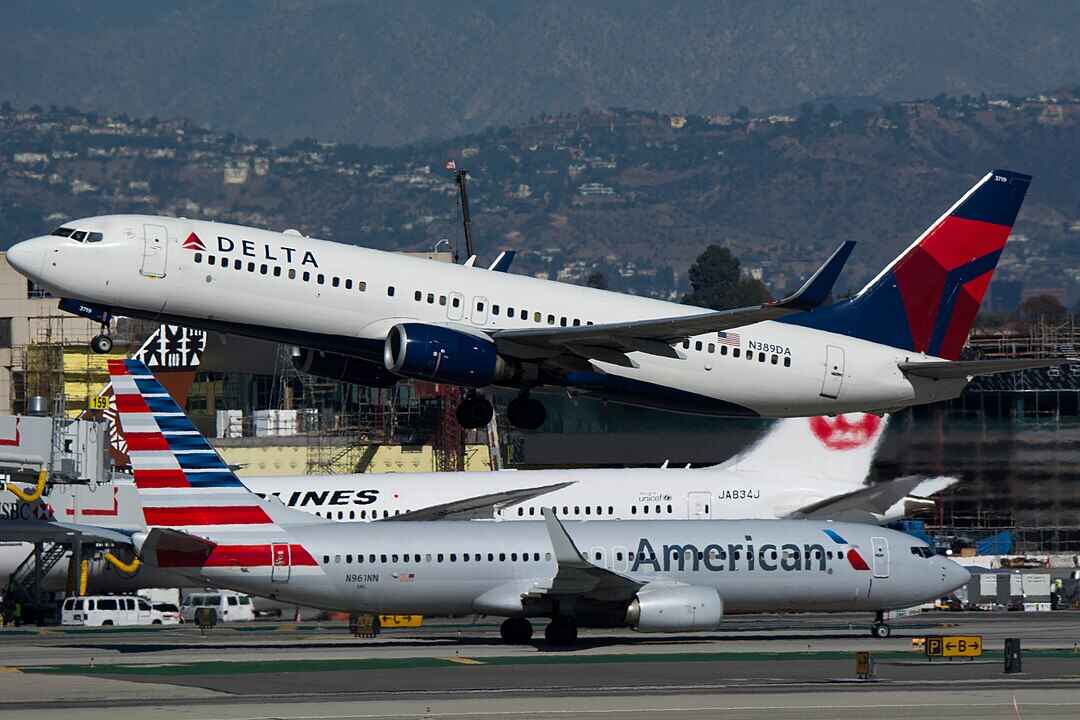
A Phoenix air traffic controller prevented a potential midair collision Friday after two American Airlines Boeing 737-800s converged near Phoenix Sky Harbor International Airport using the same flight number and call sign. The aircraft carried a combined 295 passengers.
The incident unfolded shortly after midnight local time on Friday, August 14, 2026. One jet was arriving from Chicago, while the other prepared to depart for Chicago under the same identifier, American 2482.
Free toolB1/B2 Tourist Visa Stay Calculator online
The controller kept the arriving aircraft at 11,000 feet and the departing aircraft at 9,000 feet. That preserved a 1,000-foot vertical gap.
“I've been working air traffic for 25 years. I've never seen two aircraft pretty much merge with the same call sign. That's pretty incredible,” the controller said.
The flights continued safely without incident. American Airlines said the crews and controllers maintained the required separation throughout the encounter.
“The diligence and professionalism of air traffic controllers and our pilots ensured required separation was always maintained and the issue was identified and addressed. Both flights continued safely and without incident.”
The airline linked the duplicate identifier to a weather delay and an aircraft substitution. The Chicago-to-Phoenix flight arrived late, so the airline used another aircraft in Phoenix for the return trip to Chicago. Both aircraft then operated simultaneously under the same call sign.
A mistaken clearance exposed the duplicate call sign
At one point, the arriving pilot accepted an altitude clearance intended for the departing aircraft. The controller recognized the confusion and changed the radio terminology immediately.
The two jets became “American 2482 on the arrival” and “American 2482 on the departure.” The revised wording gave each aircraft a separate operational identity on the frequency.
Data from Flightradar24 showed the aircraft reached approximately 1,217 feet of horizontal separation, or about 0.23 miles. The arriving flight carried 122 passengers, while the departing flight carried 173.
| Aircraft | Role | Passengers | Reported altitude |
|---|---|---|---|
| Boeing 737-800 | Arriving from Chicago | 122 | 11,000 feet |
| Boeing 737-800 | Departing for Chicago | 173 | 9,000 feet |
The controller later described the possible outcome in stark terms.
“It could have been disastrous, but I'm glad it all worked out.”
Investigators are examining the dispatch breakdown
The Federal Aviation Administration and the National Transportation Safety Board have launched investigations into how two aircraft received the same call sign in the system. American is also reviewing its internal dispatch protocols.
The duplicate arose at the airline’s dispatch center, according to the account of the incident. Dispatchers did not assign either aircraft a unique suffix, such as “Alpha,” before both flights entered the same airspace and frequency.
The event also highlighted how a routine schedule recovery can create a safety problem. The airline had tried to prevent additional delays for passengers in Phoenix by using a replacement aircraft for the return leg.
That workaround left both aircraft airborne together.
Steve Arroyo, an aviation safety expert and former United Airlines dispatcher and pilot, said the episode showed both a failure and a successful defense within the system.
“You can drop the ball and that shouldn't happen, but it's nice to see that the system is resilient and we have all the safeguards.”
The same flight number can appear on multiple daily segments, but dispatch and operations systems must distinguish aircraft sharing an identifier when their paths overlap. The incident has renewed concern about call sign confusion as airlines approach the limits of available flight numbers.
Duffy warns pilots to follow controller instructions
U.S. Transportation Secretary Sean P. Duffy pointed to the incident while calling for strict compliance with controller instructions and upgrades to the nation’s air traffic control infrastructure. He described the event as evidence of “stress on an old network.”
“However, it is imperative that pilots follow the instructions of air traffic controllers. If they do not, their licenses will be pulled.”
The investigation will examine the dispatch decision, the duplicate call sign, the mistaken clearance and the safeguards that kept the aircraft separated. Both jets completed their flights safely after the controller clarified which aircraft was arriving and which was departing.
American’s review and the federal investigations will now determine whether new procedures are needed before another delayed flight and replacement aircraft share the same identifier.