- Sydney Airport faced four close calls in less than a month as Australia’s controller shortage worsened.
- On August nineteenth, twenty twenty-six, two Qantas jets nearly conflicted while taxiing, prompting an ATSB investigation.
- Airservices Australia is slowing departures to prevent overcrowding while staffing and airspace redesign concerns continue.
Australia’s air traffic controller shortage has coincided with at least four close calls at Sydney Airport in less than a month, including a runway incursion on August 9, 2026.
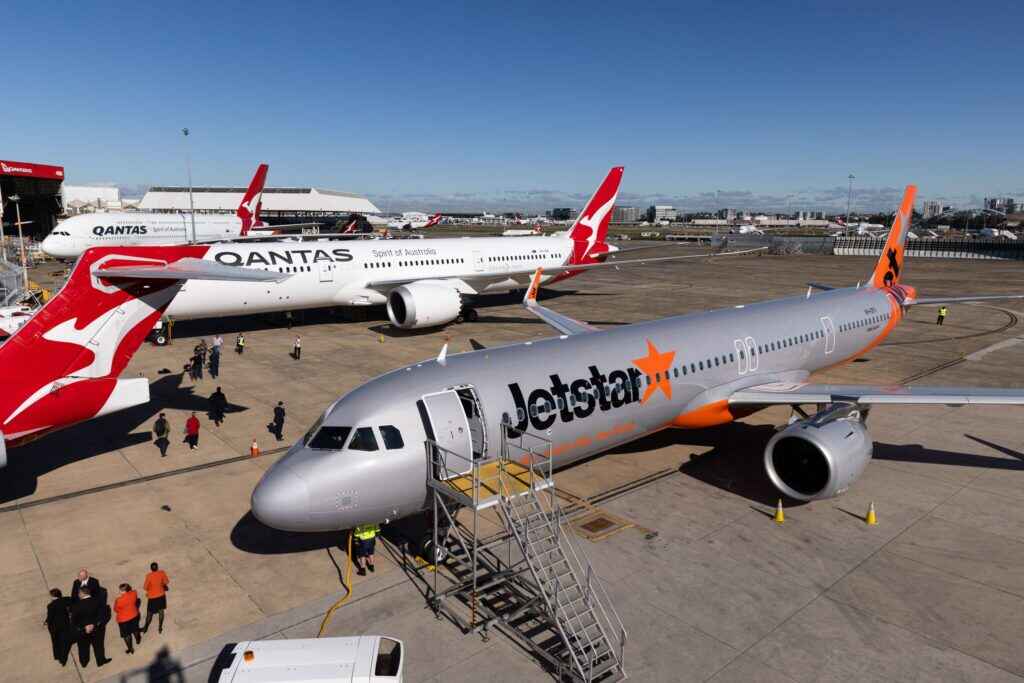
The latest incident involved two Qantas passenger jets. They were taxiing toward each other on August 19, 2026.
Free toolB1/B2 Tourist Visa Stay Calculator online
One aircraft had arrived from the Gold Coast. The other was preparing to depart for Melbourne.
The Australian Transport Safety Bureau said the crew of the Qantas A321 spotted the approaching Boeing and stopped. A Qantas spokesperson said the aircraft had permission to continue.
“Our aircraft was cleared to proceed following instructions from Air Traffic Control.”
The close calls have emerged as Airservices Australia slows departures to prevent overcrowding. The agency manages air traffic control and has attributed the restrictions to a shortage of controllers.
Four incidents are now under separate investigations
The incidents being examined include:
- On August 9, 2026, Virgin Australia flight VA555, bound for Perth, lost its takeoff clearance after Qantas flight QF728 began crossing the runway. The Qantas aircraft was about 1,200 metres to 1,300 metres away when the risk developed.
- On August 19, 2026, the two Qantas jets came into conflict while moving on the airport surface. The A321 crew stopped after seeing the Boeing.
- In another incident, a Jetstar aircraft braked suddenly to avoid a Qatar Airways aircraft being towed. A Jetstar cabin crew member suffered an injury.
- Two Qantas aircraft were involved in a similar close call on July 27, 2026.
The Australian Transport Safety Bureau is investigating the events as separate cases. Together, they have focused attention on delays and repeated ground incidents at the airport.
Airservices Australia chief executive Rob Sharp said initial reviews had not found systemic issues compromising passenger safety. He called the staffing problem a “structural challenge.”
Civil Air president Scott Nugent offered a sharper assessment. He said staffing levels were inadequate across the country and linked the shortage to earlier workforce decisions.
“there is insufficient staffing both in Sydney and elsewhere in Australia,”
Nugent also said a 2022 retirement scheme “removed 144 highly experienced controllers from the workforce.”
A July airspace redesign has widened the scrutiny
The close calls have also intensified questions about controller training, overtime, rostering and the redesign of Sydney’s airspace. The changes are tied to Western Sydney International Airport.
A confidential complaint to the safety regulator warned of “grave concerns” about the July airspace redesign. It cited “inadequate training for controllers, of all experience levels,” and described limited confidence among controllers handling the revised system.
The complaint said controllers had “minimal confidence in their ability to handle the new airspace and procedures under normal traffic levels.”
That concern sits alongside the operational pressure now visible at the airport. Airservices Australia has acknowledged rostering issues and departure slowdowns while managing traffic with fewer available controllers.
Officials are keeping the response focused on staffing and oversight
Angus Mitchell, chief commissioner of the Australian Transport Safety Bureau, is overseeing the safety agency’s investigations. The bureau’s work covers the recent ground conflicts and the other close calls reported at the airport.
Transport Minister Catherine King was described as directing staff to meet regularly with Airservices Australia. Those meetings add ministerial oversight to the agency’s response.
Sharp’s initial reviews and the separate investigations point to different questions. The reviews examined whether passenger safety had been compromised by systemic failures, while investigators are assessing the circumstances of each incident.
The staffing debate reaches beyond Sydney. Nugent said the gap exists “both in Sydney and elsewhere in Australia,” while the recent incidents have made the airport the main flashpoint.
Departure controls remain the immediate operational response. Airservices Australia is slowing movements to avoid overcrowding, as delays and surface conflicts keep attention on staffing capacity.
The July redesign, training concerns and the controller workforce will remain central as the investigations proceed. The latest Qantas incident occurred on August 19, 2026, less than two weeks after the Virgin Australia takeoff conflict.