- Two regional jets narrowly avoided a mid-air collision on approach to parallel runways at New York’s JFK airport.
- Onboard TCAS systems issued urgent resolution advisories as the planes came within 350 feet vertically of each other.
- The FAA is investigating why an American Airlines flight veered into the path of an Air Canada Express jet.
(NEW YORK, JFK) – Air Canada Express Flight 554 executed an emergency climb over New York on Monday, April 20, 2026, after the regional jet came within roughly 350 feet vertically and less than 1 kilometer horizontally of an American Airlines regional flight on approach to parallel runways at John F. Kennedy International Airport.
Both aircraft received TCAS resolution advisories, the onboard collision-avoidance alerts that direct pilots to take immediate evasive action, and both crews initiated go-arounds after urgent instructions from air traffic control.
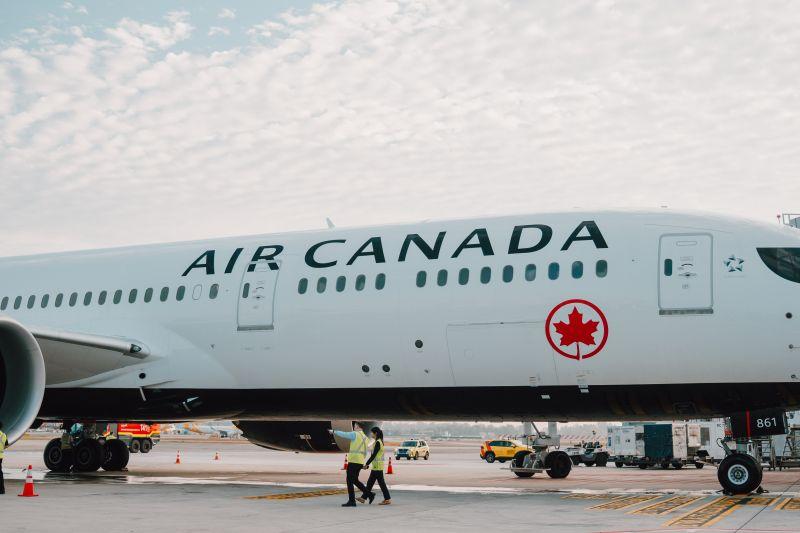
The flights later circled back and landed safely at John F. Kennedy International Airport, according to the incident account and an Air Canada statement.
Air Canada Express Flight 554, also identified as Jazz 554, was a Jazz Aviation E175 flying from Toronto Pearson Airport, listed in the incident account as Toronto (YYZ). The other aircraft was Republic Airways Flight 4464, operating as an American Airlines Embraer E175 with the call sign Brickyard 4464.
The near collision unfolded around 2:30 p.m. as the two jets approached parallel runways at JFK. Republic Airways Flight 4464 had been assigned to Runway 31L, while the Air Canada flight had been cleared for Runway 31R.
Federal Aviation Administration investigators are focusing on why the American Airlines jet veered off its assigned path to Runway 31L and entered the airspace of the Air Canada flight. The agency is investigating the incident.
Controllers responded with an urgent command to the Air Canada crew: “JAZZ 554, climb and maintain 3,000.” The pilot replied, “Climb and maintain 3,000, Jazz 554. TCAS RA.”
The American flight also acknowledged the maneuver. “We’re correcting, Brickyard 4464. we are going around,” the pilot said.
Those exchanges point to a layered response in the final stage of approach. Air traffic control instructed the climb to 3,000 feet, while the traffic alert and collision avoidance system issued independent resolution advisories to both cockpits.
In practical terms, both crews received warnings from the aircraft systems and from controllers at roughly the same moment, then broke off their landings. The planes separated, circled, and returned to land without injury.
The account identifies the Air Canada aircraft as an E175 operated by Jazz Aviation and the Republic Airways aircraft as an Embraer E175 flying under the American Airlines brand. That meant two aircraft of the same general type were converging on parallel runways at one of the country’s busiest airports when the alerts sounded.
Parallel approaches require tight adherence to assigned tracks. Investigators are examining why Brickyard 4464 moved out of the airspace for Runway 31L and into the path of the Air Canada aircraft lined up for Runway 31R.
Separation shrank to roughly 350 feet vertically and less than 1 kilometer horizontally before the evasive maneuvers took effect. At that point, the onboard systems triggered the resolution advisories on both aircraft.
Air Canada addressed the event in a statement attributed to a spokesperson. “On approach into New York (JFK), Flight 8554 en route from Toronto (YYZ), the flight crew received a traffic warning notification and resolution as well as direction from ATC, and the crew took immediate action. Safety is our top priority, and our crews are well-trained. The flight landed safely at JFK.”
The statement described the crew response as immediate and framed the outcome around training and procedure. It also referred to the flight as Flight 8554, while the incident account identified the aircraft involved as Air Canada Express Flight 554 and Jazz 554.
No injuries or damage were reported in the incident description. The episode nonetheless adds to a string of recent runway and approach alarms involving commercial traffic.
Within 48 hours, the JFK event formed part of a cluster of four close calls involving commercial flights, according to the incident account. Two of those involved Southwest Airlines planes in Nashville less than two days earlier.
The incident also came one month after a deadly runway collision at LaGuardia Airport involving an Air Canada Express jet and a fire truck. That crash, cited in the incident account as recent context, sharpened attention on runway incursions, approach deviations and controller-pilot coordination in congested terminal airspace.
At JFK, the sequence captured in the radio exchanges suggests the crews moved quickly from approach to escape maneuver. The Air Canada crew acknowledged both the controller’s instruction and the aircraft warning, while the Republic crew reported that it was correcting and going around.
That combination matters in any review of a close call. Investigators typically assess the aircrafts’ positions, controller instructions, crew responses and the timing of automated alerts; here, the available account already establishes that both the controller and the onboard systems intervened before the aircraft landed safely.
Air Canada Express Flight 554 had departed from Toronto and was nearing the end of a routine cross-border flight when the alert occurred. Republic Airways Flight 4464 was operating for American Airlines under the Brickyard 4464 call sign during the same approach bank into New York.
The incident description places the two aircraft on final approach to JFK’s parallel runways, a setup designed to keep arrival traffic moving but one that leaves little room for track deviations. Once the American flight crossed into the wrong airspace, the margin collapsed quickly.
Controllers then instructed Jazz 554 to climb and maintain 3,000 feet. The Air Canada pilots complied, reported the TCAS resolution advisory, and abandoned the approach.
Brickyard 4464 also went around after reporting that it was correcting. Both aircraft then circled back for another attempt and landed safely, ending the encounter without a collision.
The FAA investigation is likely to center on the movement that placed the Republic Airways jet into the Air Canada aircraft’s approach corridor. The central question identified in the incident account is why the American Airlines flight veered off its assigned path to Runway 31L and entered airspace associated with Runway 31R.
Close calls often turn on seconds, and the available details show a compressed timeline: a deviation during approach, rapidly shrinking separation, automated warnings in both cockpits, immediate radio instructions, two go-arounds, and safe landings. In this case, the barrier that held was the combination of TCAS resolution advisories and prompt compliance in the cockpit and control tower.
John F. Kennedy International Airport handles constant streams of arriving and departing traffic, and the event involving Air Canada Express Flight 554 and Republic Airways Flight 4464 will draw scrutiny because it involved two passenger jets converging on parallel runways in daylight approach conditions. The recorded command, “JAZZ 554, climb and maintain 3,000,” and the pilots’ acknowledgment of a “TCAS RA” will sit near the center of that review.
Air Canada’s public statement returned to a single point: “Safety is our top priority, and our crews are well-trained. The flight landed safely at JFK.”