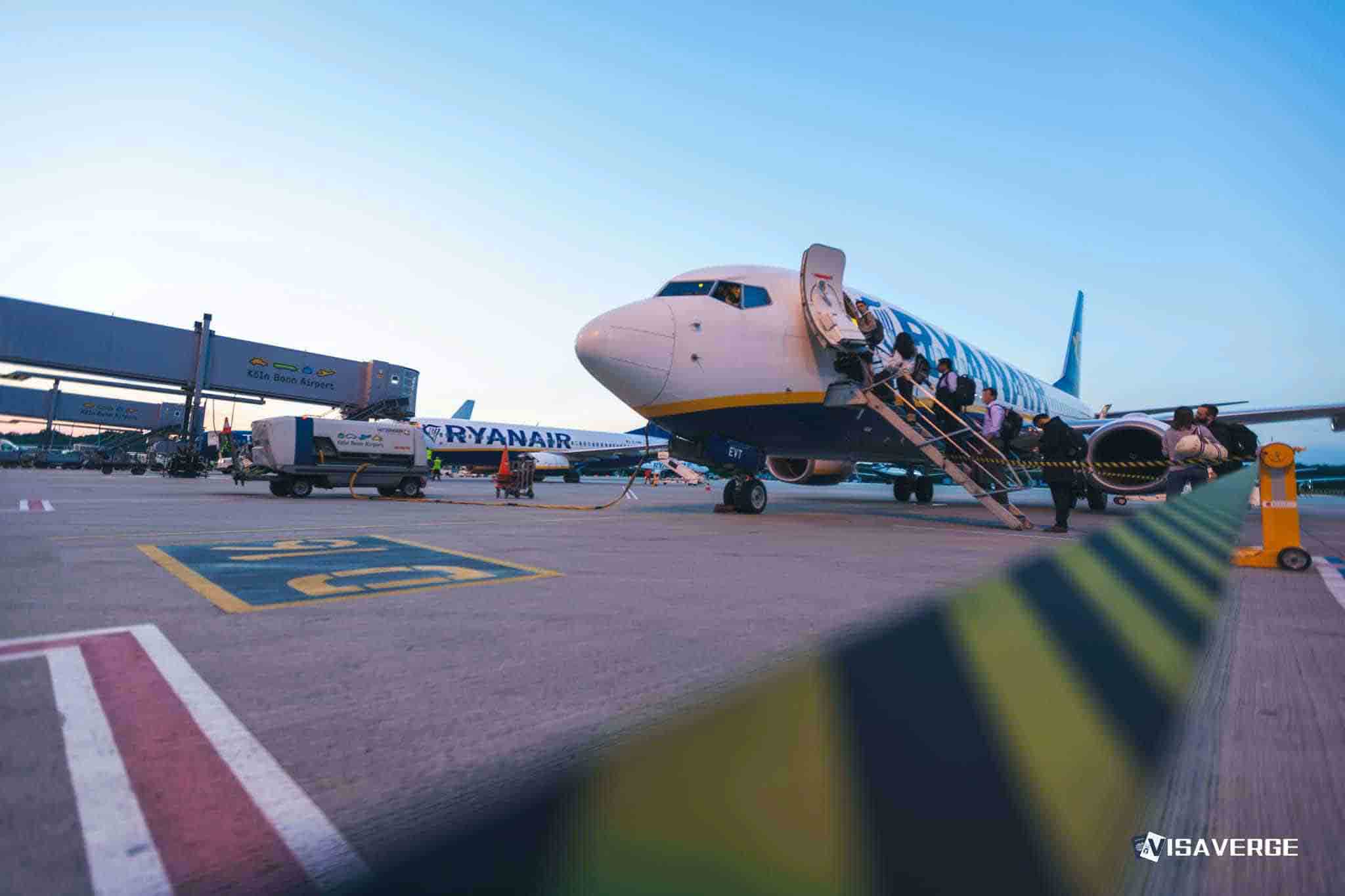
- Ryanair CEO Michael O’Leary has threatened to suspend all Portugal flights starting May 1, 2026.
- The airline demands urgent action to reduce excessive passport queues at Lisbon and Porto airports.
- Portuguese authorities have pledged 150 more officers and new e-gates to resolve the crisis.
(PORTUGAL) – Ryanair threatened to suspend all flights to Portugal from May 1, 2026 unless Portuguese authorities cut passport queues at Lisbon Humberto Delgado Airport and Porto Francisco Sá Carneiro Airport by the end of this month.
Michael O’Leary, Ryanair CEO, issued the warning on April 15, 2026 and set an April 30, 2026 deadline for action at the two airports, known as LIS and OPO. The airline said it would halt all Portugal services if the delays continued.
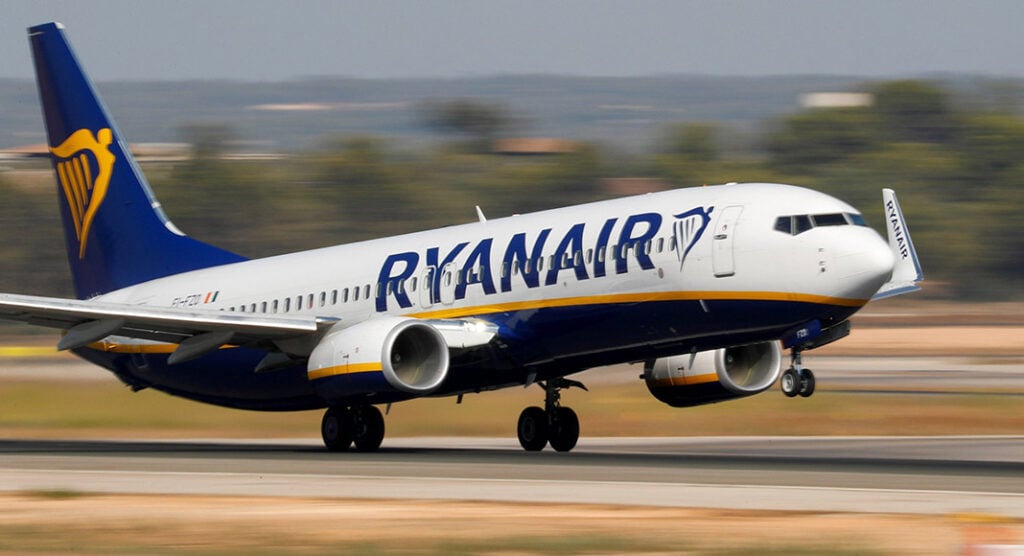
“If Portugal doesn’t fix their passport queues by end of April, Ryanair will axe ALL flights to Portugal from May 1st. We’ve lost 2,500 flights and €2.5 million since January due to these unacceptable delays,” O’Leary said.
The threat covers 28 daily flights from 13 bases to Lisbon and Porto. Ryanair said those routes carry 5.2 million passengers annually, placing a large share of Portugal’s short-haul market under pressure days before the summer travel season gathers pace.
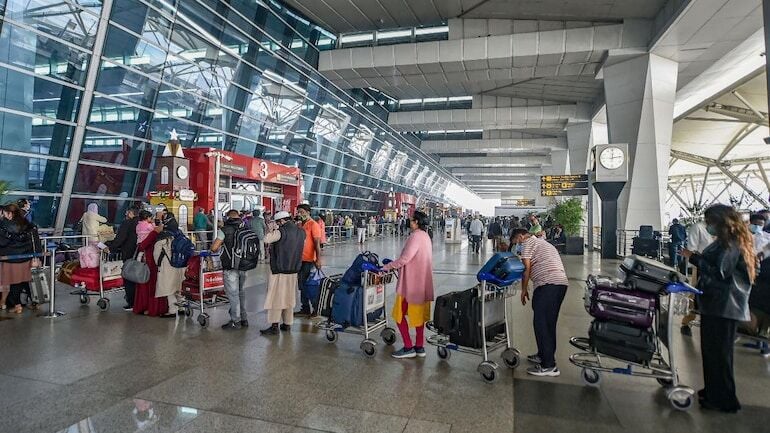
Data from the Portuguese Immigration and Borders Service showed average passport waits at Lisbon reached 92 minutes from January through April 2026. Peak-hour queues there exceeded 2 hours. Porto averaged 67 minutes.
Those delays are 3x the European Union average of 28 minutes and exceed International Civil Aviation Organization standards by 150%, according to the figures cited by Ryanair and Portuguese authorities.
Ryanair said the queues had already cost it 2,500 cancelled flights in 2026 and €2.5 million in compensation under EU261 passenger-rights rules. The airline tied those losses directly to bottlenecks at passport control.
Portugal’s government responded a day after O’Leary’s statement. Interior Minister José Luís Carneiro said authorities were “Recruiting 150 additional border officers for summer; deploying 12 new e-gates at LIS by June 15. Temporary mobile passport units operational from April 25.”
Pedro Sousa, Frontier Service President, confirmed €15 million had been allocated for automated systems. He set a target of waits below 20-minute by July 1.
ANA Aeroportos, the Portuguese airports authority, said current e-gates were operating at 62% capacity because of staff shortages. That gap has left automated passport systems underused while manual checks absorb heavy traffic.
Ryanair’s warning places Portugal in a pattern already seen elsewhere in Europe. The airline suspended 15% of its Italy flights in 2024 and 22% of its Spain flights in 2025 over similar airport control problems, then restored service after governments made concessions.
The company has also pushed for European Union minimum staffing mandates at border control. Ryanair said 17 major airports, including Athens and Milan Malpensa, face chronic delays that disrupt schedules and raise compensation costs.
Any full suspension would reach beyond the carrier’s timetable. Tourism in Portugal contributes €25.6 billion, or 12% of GDP, and Ryanair handles 18% of traffic at Lisbon and Porto.
That share gives the airline leverage in an argument that blends airport staffing, border policy and the economics of mass tourism. A stoppage at the start of May would hit just as carriers prepare for higher summer passenger volumes.
Passengers have already felt the effects in the first four months of the year through missed departures, disrupted connections and compensation claims. Ryanair’s figures tied the cancellations and payouts to queue times that far outstrip the European average.
Lisbon appears to be under the heaviest strain. An average wait of 92 minutes, with peaks above 2 hours, leaves little margin for airlines trying to turn aircraft quickly through a busy airport.
Porto’s average of 67 minutes is lower, but it still stands well above the 28-minute EU average. Delays at both airports matter for a carrier operating multiple daily rotations from bases including Dublin, London Stansted, Manchester and East Midlands.
Ryanair framed the issue as one of repeated operational failure rather than a short, seasonal squeeze. O’Leary’s ultimatum gave the government two weeks to show that staffing and technology measures were reducing queue times in a visible way.
Portuguese authorities have laid out a staggered response. Temporary mobile passport units are due to begin operating on April 25, while the 12 new e-gates at Lisbon are scheduled for June 15, after Ryanair’s cutoff date.
That timing leaves a narrow window for officials to persuade the airline that immediate relief is coming before the threatened suspension date of May 1, 2026. The government’s longer-term target of waits below 20-minute by July 1 also falls after the deadline set by Ryanair.
As of April 21, 2026, no resolution had been announced. Ryanair said it was monitoring the situation daily and scheduled its next update for April 25.
Passengers seeking updates can use Ryanair’s passenger rights portal, Portugal’s SEF contact page and ANA Aeroportos’ passport control information page. Whether those pages are enough to calm travel plans now depends on what happens in Portugal’s passport halls over the next nine days.