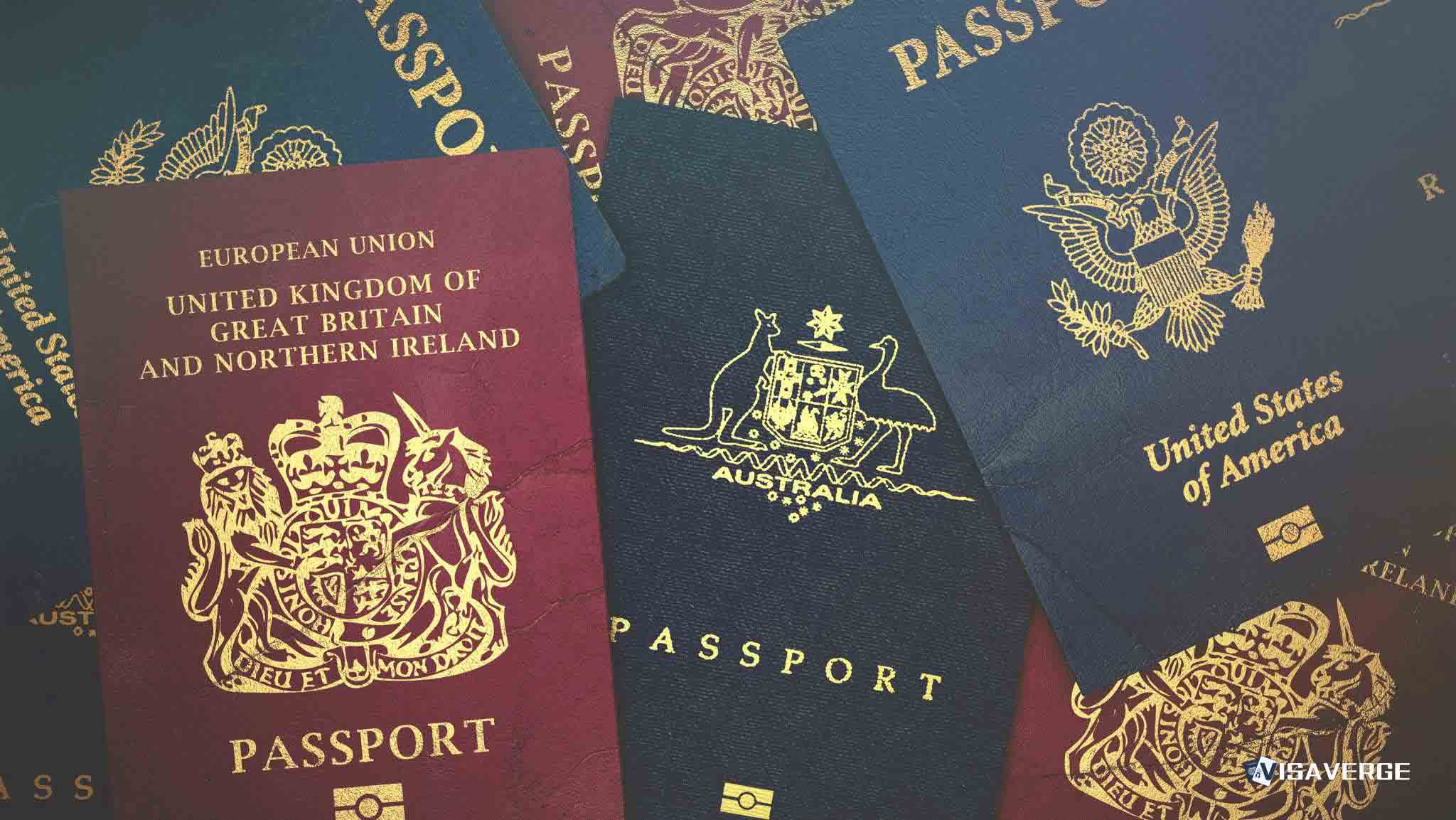
- Dual nationals face boarding denial starting 25 February 2026 if traveling on non-UK or non-Irish passports.
- British and Irish citizens cannot obtain an ETA, creating a screening gap in airline systems.
- Travelers must carry a valid UK passport or certificate of entitlement to prove their exemption status.
(UNITED KINGDOM) — British and Irish citizens traveling to the UK on non-UK or non-Irish passports face an ETA-driven boarding problem from 25 February 2026, with carriers allowed to deny boarding if travelers cannot show the documents that prove their status.
The change does not bar British citizens from flying home in general. It affects pre-boarding checks, where airline and carrier systems look for travel authorization tied to the passport presented at check-in.
Free toolB1/B2 Tourist Visa Stay Calculator online
That distinction has become central for dual nationals and others who hold British or Irish citizenship but travel on a passport from another country. British and Irish citizens cannot use an Electronic Travel Authorisation, or ETA, even if the passport they present is one that would normally trigger an ETA check.
The Home Office announced the change on 24 November 2025. It takes full effect on 25 February 2026.
Official guidance from the U.S. Embassy in London states the rule in direct terms: “If you are a UK or Irish citizen, you cannot receive an ETA. You may be denied boarding on your transport to the UK without a valid UK passport.”
GOV.UK sets out the same framework from the UK side. Travelers may need an ETA depending on nationality, while British and Irish citizens remain exempt from the ETA requirement.
That exemption, however, creates the boarding problem now confronting some travelers abroad. A passenger who presents a non-UK or non-Irish passport may appear in airline systems as someone who should have an ETA, while the same passenger, as a British or Irish citizen, is not eligible to obtain one.
Carriers check travel documents before departure, not only after arrival. That means the dispute often happens at the gate or check-in desk overseas, rather than at the UK border.
Dual British citizens traveling on another nationality’s passport may need either a valid UK passport or a certificate of entitlement to avoid boarding problems. Without one of those documents, the traveler can fall into a gap between citizenship rules and carrier screening systems.
Irish citizens face the same ETA exemption. If they travel to the UK on a non-Irish passport and cannot show the right proof of Irish citizenship, they can run into the same carrier checks before boarding.
The rule has generated confusion because headlines and social posts have framed it as a blanket ban on Britons returning home. Official guidance does not support that reading. British citizens are not banned from flights in general, and the issue does not create a universal new passport rule for every journey.
Instead, the problem arises on travel to the UK when a British or Irish citizen presents a passport from another country and the carrier expects an ETA-linked document trail. In those cases, the traveler may not be able to satisfy the boarding check with the non-UK or non-Irish passport alone.
The policy sits at the intersection of two rules that make sense separately but collide in practice. The first is that some nationalities now need an ETA before boarding transport to the UK. The second is that British and Irish citizens are exempt from ETA and therefore cannot receive one.
A traveler who is solely a foreign national can resolve the issue by obtaining an ETA if required. A traveler who is also British or Irish cannot do that, because the exemption blocks the ETA route.
That leaves document proof as the deciding factor. A valid UK passport, or in some cases a certificate of entitlement, can show the carrier why the traveler does not have an ETA tied to the passport used for the booking or check-in.
The emphasis on carrier checks also explains why the issue has appeared as a boarding refusal abroad rather than a question sorted out after landing. Airlines and other transport operators have to decide before departure whether a passenger appears to hold the right documents for travel to the UK.
Guidance from the embassy and GOV.UK points travelers toward the same practical conclusion. Anyone who holds British or Irish citizenship and plans to travel on a non-UK or non-Irish passport should confirm before departure whether a valid UK passport or certificate of entitlement is needed.
Airline requirements also matter because the screening happens in carrier systems before boarding. Travelers with dual nationality should check the document rules applied by the airline or transport operator for the specific journey, especially if the booking passport is not British or Irish.
Official guidance remains the clearest reference point because the issue turns on nationality, citizenship proof and ETA eligibility, not on a general travel ban. The Home Office timeline, GOV.UK ETA rules and the notice from the U.S. Embassy in London all point to the same date, 25 February 2026, as the start of full enforcement.
That date matters most for people who have long traveled to the UK on a second passport without trouble. Once the policy is fully in force, past experience may not help if a carrier system now expects an ETA for the passport shown, while the passenger, as a British or Irish citizen, cannot lawfully obtain one.
British citizens planning travel to the UK on a foreign passport should carry the document that proves why no ETA appears in the system. Without it, the airport desk may become the point where citizenship and boarding rules collide.