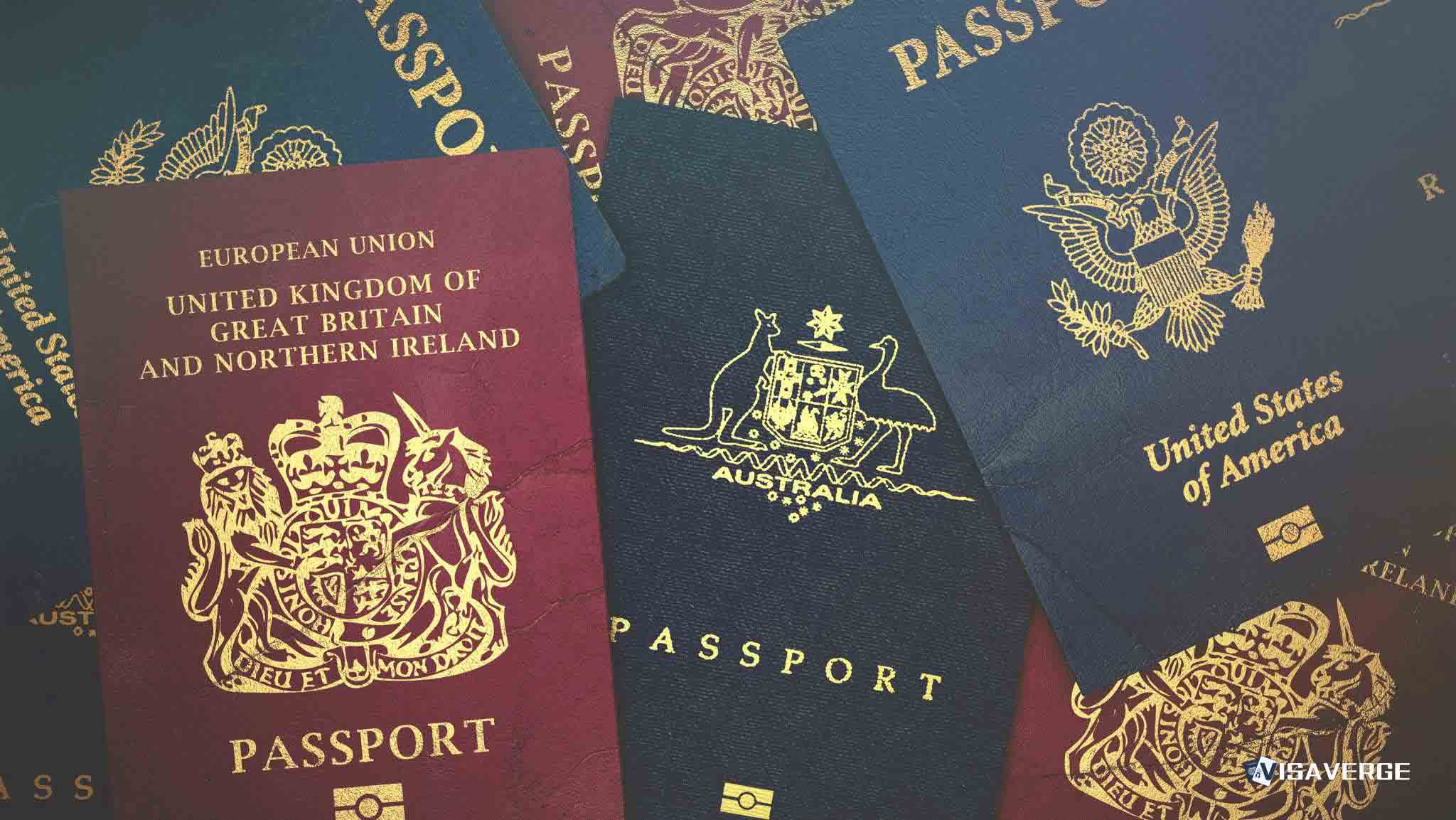
- Dual nationals must present British or Irish passports or a Certificate of Entitlement to enter the UK.
- Airlines and carriers are required to verify documents before boarding or face significant financial penalties.
- The new rules coincide with the ETA rollout, preventing dual citizens from using foreign passports for entry.
(UK) — The United Kingdom began requiring dual British nationals on February 25, 2026, to enter the country with a valid British passport, a valid Irish passport, or a foreign passport carrying a Certificate of Entitlement to the Right of Abode.
The change means dual British nationals can no longer rely only on a non-British passport at check-in, even if they are British citizens. Airlines and other carriers must verify travel documents before boarding and face penalties if they carry passengers without the right papers.

That check happens before the traveler reaches the UK border. A person who holds British citizenship and another nationality can be denied boarding by an airline, ferry operator or train company if they present only a foreign passport that does not meet the new rule.
The requirement arrived alongside the UK’s Electronic Travel Authorisation rollout. The ETA system requires visa-exempt visitors to obtain pre-travel permission before departure, but it does not apply to British citizens who can prove their right of abode with approved documents.
British citizens with another nationality cannot use that second passport to work around the system. A British dual national cannot apply for an ETA using a foreign passport.
Approved documents fall into a short list. The government strongly recommends a valid British passport. A valid Irish passport also works, which keeps British-Irish dual citizens outside the new difficulty faced by most other dual nationals.
A foreign passport can still be used in limited circumstances, but only if it carries a Certificate of Entitlement to the Right of Abode, in physical or digital form, and only if the traveler does not hold a valid British passport. An emergency travel document also remains available in specific cases.
A British nationality certificate on its own does not count as a travel document for these journeys. Carrier staff conduct the pre-departure checks, and citizenship alone does not prevent refusal at the boarding gate if the documents are not in order.
The rule reaches well beyond people who live in Britain. It applies globally, regardless of residence, and covers British citizens with any other nationality, including children and people living overseas, such as British-Americans based in the United States.
Business travelers fall within the same system. So do international families and frequent flyers who have grown used to traveling on the passport of another country.
European dual nationals are also affected unless the second nationality is Irish. Irish-only passport holders remain exempt.
A temporary transitional arrangement softens the change, but only briefly. From February 25, 2026, dual nationals may travel with an expired UK passport issued from 1989 together with a valid ETA-eligible foreign passport, provided the personal details match.
That concession does not replace a renewal. The government position in the guidance is that a valid British passport remains the preferred document, and the expired-passport option serves as a short-term measure.
The practical pressure point sits with carriers, not only border officers. Airlines, ferries and rail operators are expected to enforce the rule tightly because fines encourage them to stop non-compliant passengers before departure.
That creates a different kind of travel risk for people who assumed British citizenship would settle the matter at arrival. A dual national who turns up with the wrong passport can miss a flight, a family trip or a business meeting before ever leaving the departure airport.
Passport renewal timing now carries more weight. The guidance warns travelers to plan ahead because delays for British passport renewals can leave people without the document the new system expects.
The cost of the wider ETA system also frames the change. The authorization costs £16 and is set to rise to £20, though British citizens who prove their status with the correct documents are exempt from needing one.
That leaves dual nationals in a distinct position. They are not treated as ordinary visa-exempt visitors for ETA purposes, but they also cannot board freely on a foreign passport unless that passport is paired with proof of the right of abode through the approved route.
The approach aligns the UK with countries that expect their own citizens to travel on domestic passports. The United States ESTA system and Australia are examples of the same broad principle.
Families with children who hold two citizenships face the same document test as adults. A child traveling on a second country’s passport still needs to meet the British document rule if that child is also a British citizen.
People who left the UK years ago and rarely use a British passport are also pulled into the change. Residence abroad does not alter the requirement, and regular use of a foreign passport on previous trips does not preserve the old practice.
The rule also narrows the margin for spontaneous travel. Someone booking a short-notice trip for a funeral, school break or work meeting must now consider whether the British passport is current, whether an Irish passport provides an exemption, or whether a Certificate of Entitlement is already in place in the foreign passport.
That certificate becomes more visible under the new system because it is one of the few alternatives left to a valid British passport. It allows a traveler using a foreign passport to show the right of abode, but the option is limited to those who do not have a valid British passport.
The digital form of the certificate matters as well. The guidance says the Certificate of Entitlement can be physical or digital, which gives some flexibility on format while keeping the document requirement itself strict.
None of the listed alternatives turns a foreign passport by itself into an acceptable substitute. The core change in practice is that a second passport alone no longer gets a British citizen onto the plane, train or ferry.
That is likely to be most noticeable among people who do not think of themselves as immigration cases at all. Many dual nationals have long crossed borders as ordinary leisure or business travelers, but the ETA rollout has pushed nationality status and travel documentation into closer alignment.
The UK has reported no changes or reversals to the rule as of April 2026. Travelers with unusual or personal cases are being directed to check with the UK Home Office before departure.
Until any policy shift emerges, the working rule remains narrow and document-based: a valid British passport, a valid Irish passport, or a foreign passport with a Certificate of Entitlement to the Right of Abode. At airports and ports, that decision now happens at the boarding desk.