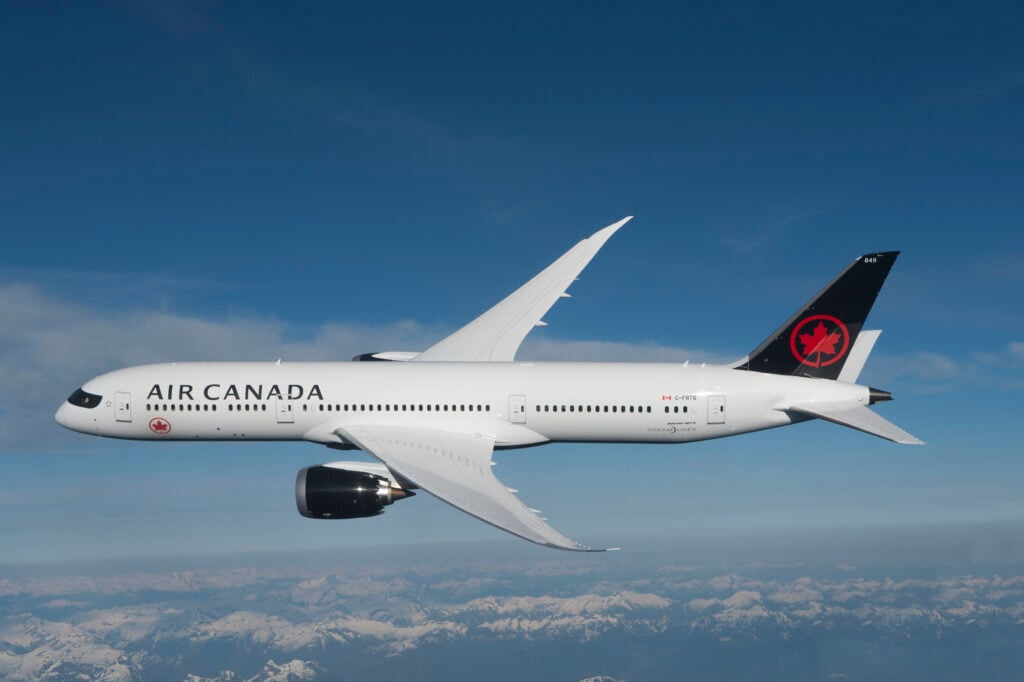
Air traffic controllers ordered an Air Canada Express jet to stop seconds after clearing it for takeoff as a Southwest Airlines 737 approached St. Louis Lambert International Airport on Tuesday. The regional jet halted before the runway boundary, and the 737 landed. No one was hurt.
The close call unfolded at about 9:10 a.m. on October 20, 2026, on Runway 12R. The departing aircraft was Jazz Aviation flight 886, listed as AC8886 and operated under the Air Canada Express banner, bound for Toronto.
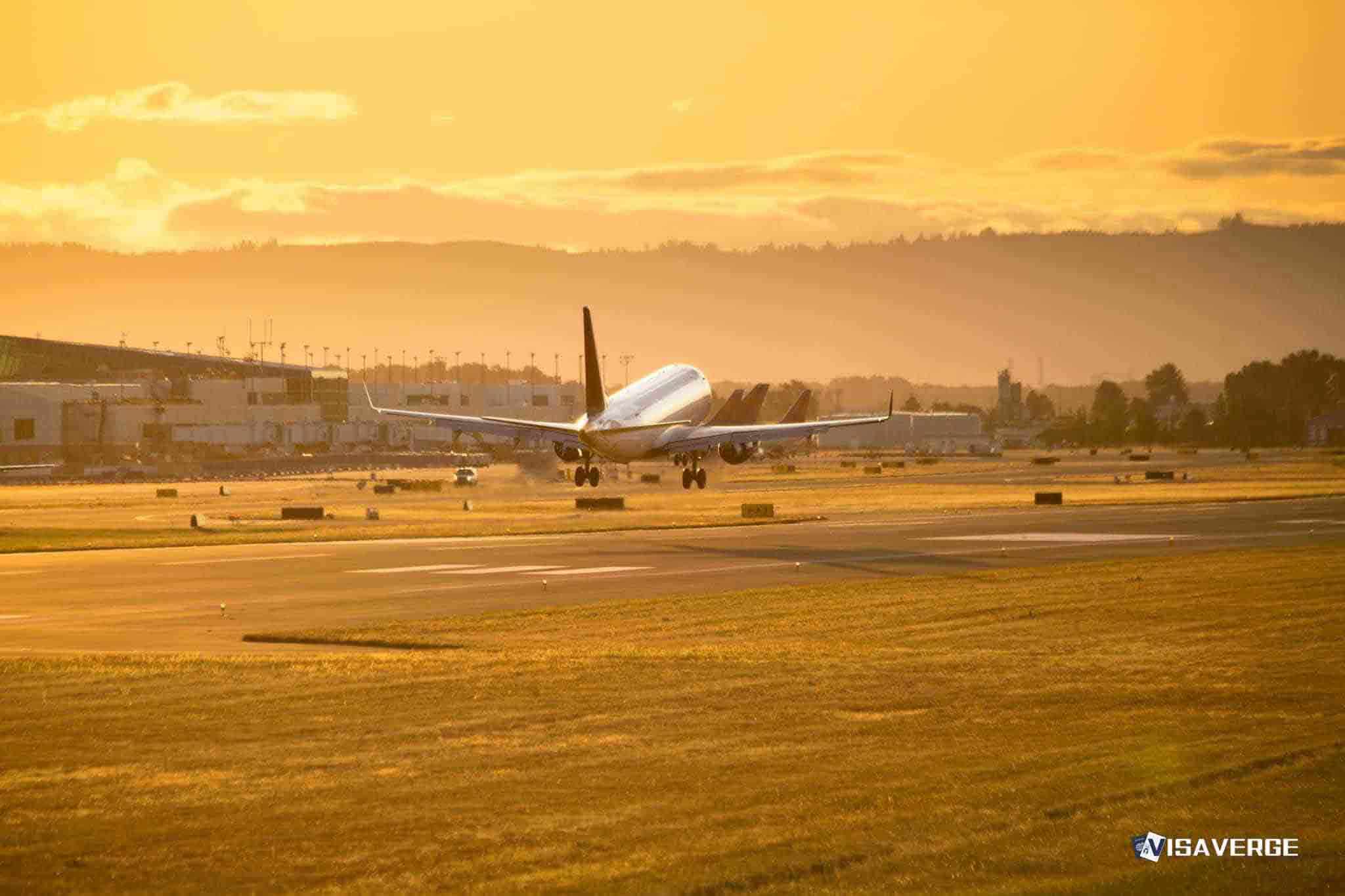
The arriving aircraft was flight 3082, a Boeing 737-800 from Minneapolis. Its crew had received clearance to land on the same runway before the tower cleared the regional jet for takeoff.
The controller canceled the departure clearance as the 737 approached
Free toolCanada Express Entry Points CalculatorAfter the arriving crew acknowledged its landing clearance, the controller cleared Jazz 886 for departure. The takeoff instruction lasted only moments before the tower canceled it with repeated stop commands.
The regional-jet crew acknowledged the order and said it was holding position. The Southwest pilots then asked whether their landing clearance remained in effect. The controller confirmed it.
The 737 touched down several seconds later. Only after it landed did the tower tell the Jazz crew that arriving traffic had been on an 8-mile final, then instruct the pilots to line up and wait.
The regional jet was a Bombardier CRJ900 with registration C-FTJZ. The arriving aircraft was a Boeing 737-800. Both had been cleared to use Runway 12R in quick succession.
The FAA says the jet stopped short of the protected runway area
The Federal Aviation Administration said the CRJ900 stopped before the hold short line and did not enter the runway. The agency said “the required separation was maintained.”
The FAA could not confirm the time between the regional jet stopping and the 737 landing. That interval remains unclear.
The hold short line marks the boundary before an aircraft enters the runway’s protected area. The FAA defines a runway incursion as the incorrect presence of an aircraft, vehicle or person in that area. Because the jet stopped short, the event may not meet that definition.
Had the CRJ900 crossed the line, the 737 could have landed while the regional jet occupied the runway. The number of passengers and crew on either aircraft was not disclosed. One analysis, using estimated load factors, put the combined number above 250.
Lambert’s longest runway has seen a fatal collision before
Runway 12R/30L is the airport’s longest, stretching 11,020 feet. Lambert has experienced a fatal runway collision before.
On November 22, 1994, TWA Flight 427 struck a Cessna 441 during its takeoff roll after the smaller plane taxied onto the active runway. The National Transportation Safety Board said both people aboard the Cessna died.
The aircraft involved Tuesday differed in size and operating weight. The CRJ900 is a regional jet, while the 737-800 is a larger narrowbody arriving at landing speed. A collision on an active runway could have exposed people aboard both aircraft to severe danger.
A fatal LaGuardia crash and rising severe-incursion figures frame the close call
The St. Louis event came seven months after a Jazz-operated Air Canada Express flight crashed into a fire truck at New York’s LaGuardia Airport. On March 22, flight AC8646, a CRJ-900 arriving from Montréal with 76 people aboard, struck a Port Authority fire truck on Runway 4 moments after landing. Both pilots died.
The truck had been cleared to cross about 12 seconds before the jet touched down. Investigators said the driver heard the controller’s stop instruction but did not know it was directed at the truck. The tower identified the vehicle only in its second call.
An FAA Safety Team report released in August found that total U.S. runway incursions fell 1% in 2025, to just over 1,600. The most severe Category A and B events, involving narrowly avoided collisions or time-critical evasive action, rose 44%, to an estimated 13 incidents nationwide.
The FAA says controller operational errors account for roughly one-fifth of runway incursions each year. Pilot deviations make up about 60%, with vehicle or pedestrian deviations accounting for the rest.
Since the January 2026 collision at Reagan National Airport between an American Airlines flight and a military helicopter, which killed 67 people, the Aviation Safety Reporting System has logged about six airport near-collisions per month nationwide.
A proposed $30 billion bill includes Lambert among possible grant candidates
Missouri’s congressional delegation is pressing federal lawmakers for airport infrastructure upgrades at Lambert. U.S. Sen. Eric Schmitt introduced the $30 billion Modern Skies Act in late September.
The proposal would direct $10 billion toward modernizing or rebuilding aging terminals nationwide. Tower improvements and other infrastructure would also fall within the broader bill, and Schmitt has identified Lambert as a primary grant candidate.