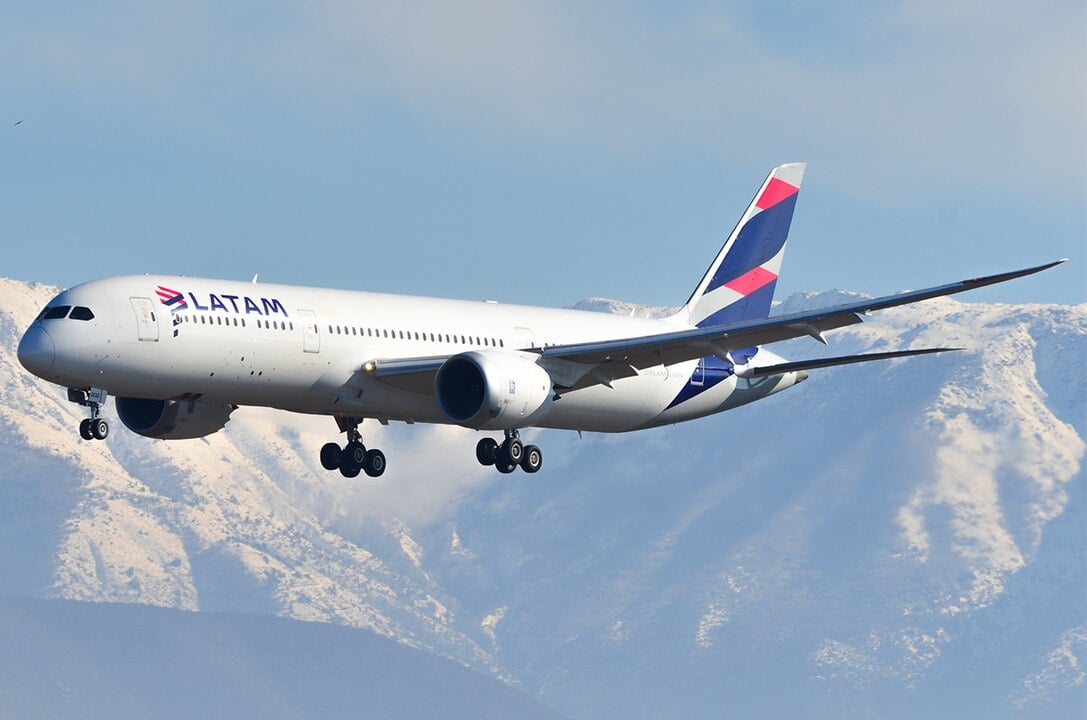
The FAA approved the Boeing 737 Max 10 for passenger service on Tuesday, October 20, 2026, issuing an amended type certificate and an updated Production Limitation Record. The decision clears the aircraft’s design and authorizes production.
Transportation Secretary Sean Duffy handed the certification documents to Boeing officials at the company’s factory in Everett, Washington. He joked about the length of the process: “To think that it took us almost 10 years to get here. We all probably had a little less gray hair 10 years ago”.
The agency said the amended certificate confirms the aircraft meets applicable design and safety requirements. The updated production record authorizes aircraft production.
Duffy called the approval “a major win for American manufacturing and our nation's status as a global aviation powerhouse.” Boeing Commercial Airplanes President and CEO Stephanie Pope said certification clears the way for delivery and completes the 737 Max family.
Certification clears the design, not an individual aircraft for a flight
A type certificate approves an aircraft design. Manufacturing approval addresses whether Boeing can build planes that conform to it. Each aircraft also needs an airworthiness certificate after production.
That distinction leaves a separate step before any specific plane can enter service. The agency restored Boeing’s authority to issue airworthiness certificates for new 737 Max and 787 aircraft under its oversight in July.
Travelers should confirm the aircraft with their airline
The certification is not an airline schedule. Passengers planning around a particular aircraft should check with the carrier rather than assume a projected delivery means the plane will already be flying commercially.
- Check the airline’s schedule for your route and travel date.
- Treat delivery and entry-into-service windows as targets until the airline confirms the aircraft is operating.
- WestJet is targeting entry into service in the first quarter of 2027, but a planned delivery alone does not establish the first commercial flight.
The certification required new controls and starts fleet deadlines
The test program recorded 976 flights, more than 2,060 flight hours and approximately 1,040 hours of ground testing. Three aircraft took part. The campaign also involved human-factors and design-assurance reviews, system-safety analyses, tens of thousands of pages of documentation and formal meetings with the agency.
The Max 10 is the first model to meet the full requirements of the 2020 Aircraft Certification, Safety, and Accountability Act, which requires more extensive safety documentation and human-factors evaluations. The agency also required changes addressing recommendations from the National Transportation Safety Board.
An enhanced angle-of-attack system monitors sensor readings, flags suspect data and blocks faulty readings from reaching other aircraft systems, or substitutes a default value. A cockpit alert identifies the affected sensor. Pilots also gain a switch to silence an erroneous stick-shaker warning.
Faulty angle-of-attack readings were central to the sequence of events in both fatal Max crashes in 2018 and 2019. Boeing says the enhanced system will become standard on new Max aircraft and can be retrofitted to planes already in service. Testing also covered an updated engine anti-ice system designed to address conditions in which it could overheat without pilot intervention.
The certification process continued after the agency determined that a software issue involving automated navigation on certain missed approaches did not pose a safety concern. The navigation issue disclosed in September 2026 had threatened to delay approval.
Fleet changes now have deadlines. Beginning October 2027, newly certificated 737 aircraft must include enhanced angle-of-attack and crew-alerting protections. Existing 737 Max aircraft must meet the requirements by October 2029, including protections against erroneous sensor data and a way for pilots to silence stall and overspeed warnings.
Airline delivery targets range from early to late 2027
More than 30 customers have ordered 1,555 Max 10s that Boeing has not yet delivered. Those orders account for more than 30% of the company’s 737 Max backlog. Boeing originally planned to begin deliveries in 2020, then said in its 2020 annual report that the first delivery would come in 2023.
| Airline or lessor | Reported plan |
|---|---|
| WestJet | Targeting entry into service in the first quarter of 2027; Aviation Capital Group says its first aircraft is scheduled for the carrier. |
| Ryanair | Expects 16 aircraft in early 2027, according to CEO Michael O'Leary; it has ordered up to 300, with 150 firm orders and 150 options. |
| Alaska Airlines | Expects its first delivery in the second quarter of 2027; it ordered 105 in January, with options for 35 more. |
| United Airlines and Delta Air Lines | Expect deliveries during 2027. |
Aviation Capital Group has 63 Max 10s on order. WestJet is currently scheduled as the launch customer, but that plan is not a confirmed handover or start of passenger service. Boeing expects deliveries to begin in 2027.
Pope called the day a milestone in Boeing’s recovery. Mike Sinnett, senior vice president of Product Strategy, Product Development and Development Programs, said lessons from the certification would inform work on the 777-9 and future aircraft development. Chris Payne, vice president and general manager of 737 Airplane Development Programs, said the flight-test team validated each system through a disciplined campaign.
The Max 10 adds seats but trails the A321neo in range
Boeing lists typical two-class seating at 185 to 210 passengers, with a maximum capacity of 230. Its range reaches 3,100 nautical miles (5,740 km). Boeing says the plane has 365 nautical miles more range than competitors without auxiliary fuel tanks and the lowest per-seat operating costs of any single-aisle aircraft in service.
The largest A321neo can carry more passengers and fly farther without refueling. The Max 10 sits at the top of Boeing’s single-aisle family: the 737-7 typically carries 135-160 passengers and reaches 3,800 nautical miles (7,040 km); the 737-8 carries 160-180 and reaches 3,500 nautical miles (6,480 km); and the 737-9 carries 175-195 with a 3,300-nautical-mile (6,110 km) range. The Max 9 typically seats 175-195 and the Max 8 160-180.
Boeing is completing a program shadowed by earlier crashes
Boeing has delivered nearly 2,500 of the 7,350 737 Max aircraft ordered as of September 2026. The agency cleared the smaller 737-7 for airline operations in August 2026; the 737-8 and 737-9 were certified in 2017 and 2018.
The Max 10’s approval follows years of scrutiny after two Max 8 crashes killed 346 people in Indonesia and Ethiopia in 2018 and 2019. In 2024, a panel separated from an Alaska Airlines Max 9 in midair, renewing attention to Boeing’s manufacturing and safety practices.