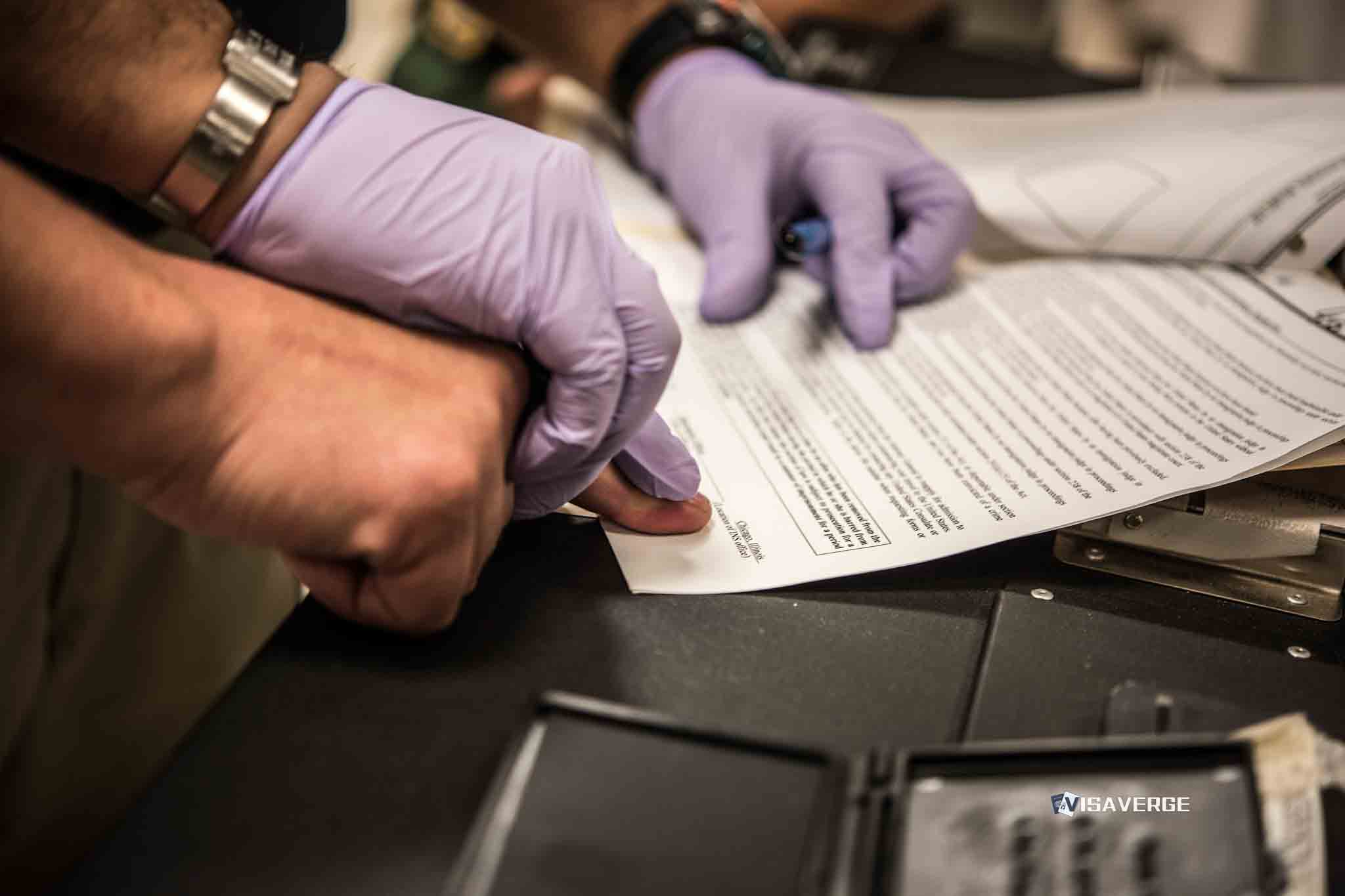
- ICE arrested an 86-year-old widow in Alabama for overstaying her 90-day Visa Waiver Program limit.
- The French government is fully mobilized to secure release for Marie-Thérèse Ross due to health concerns.
- Law requires survivors of U.S. veterans to file specific petitions to prevent deportation after a spouse’s death.
(ALABAMA, UNITED STATES) — U.S. Immigration and Customs Enforcement detained Marie-Thérèse Ross, an 86-year-old French citizen and widow of a U.S. Army veteran, in Anniston, Alabama, on April 1, 2026, after authorities said she had remained in the country beyond the period allowed under the Visa Waiver Program.
Authorities later transferred Ross to a federal immigration detention facility in Louisiana, while French officials pressed U.S. authorities for her release. Rodolphe Sambou, the Consul General of France in New Orleans, said, “Given her age, we really want her to get out of this situation as soon as possible. We want to get her out of jail.”
Free toolI-94 Expiration Calculator Online
Sambou said the French government is “fully mobilized” to secure her release and repatriation. The case has drawn attention because Ross is elderly, has reported heart and back problems, and had married an American veteran months before his death.
Ross traveled to the United States in June 2025 to reunite with William “Billy” Ross, a former U.S. Army captain she had first met in the 1950s. The couple married in April 2025, and he died in January 2026.
DHS officials described Ross as an “illegal alien from France” who overstayed the authorized period of her admission. An ICE spokesperson said Ross entered under the Visa Waiver Program and “remained in the country for seven months after her visa expired” and was therefore “illegally in the United States.”
Public accounts of her arrest added another layer. Family members alleged Ross was handcuffed at her hands and feet when officers took her into custody during a dispute with her late husband’s son over inheritance and her right to remain in the couple’s home.
The legal framework behind the arrest is narrow and unforgiving. The Visa Waiver Program permits citizens of eligible countries, including France, to enter the United States for business or tourism for up to 90 days without a visa, but it does not allow open-ended residence.
Travelers who want to remain longer are expected to obtain a visa instead. Once that 90-day period ends, an overstay can place a person in removal proceedings and detention, even if the original entry was lawful.
Another condition of the program carries its own consequence. A person admitted through the Visa Waiver Program waives the right to contest removal, other than on the basis of an application for asylum, leaving far less procedural room once the authorized stay expires.
That structure helps explain why Ross’s case moved quickly from a lawful arrival to federal detention. It also explains why diplomatic intervention from France has become central as relatives and consular officials push for discretion on humanitarian grounds.
Her marriage to a U.S. citizen did not, by itself, stop that clock. Widowhood did not stop it either.
U.S. immigration law does provide one possible avenue for surviving spouses. A widow or widower of a U.S. citizen may file Form I-360, a widow(er) petition, within two years of the citizen spouse’s death if the couple was not legally separated at the time.
That relief sits beside another set of discretionary options tied to military service. USCIS says some relatives of U.S. military personnel and veterans may receive parole or deferred action on a case-by-case basis, and spouses and widow(er)s may fall within that military-family relief framework.
Those protections are not automatic. They do not prevent arrest on their own, and they depend on the timing of filings, the person’s manner of entry, the relief requested, and whether immigration officials choose to exercise discretion.
Ross’s case appears to have collided with those timing questions. Reports indicated she had begun the residency process, but it had not been finalized before her husband died.
That left her in a weaker position after January 2026. Marriage to a U.S. citizen can open a path toward permanent residence, but the filing posture matters, and immigration outcomes often turn on whether the right petition was filed before an enforcement action begins.
Military-family ties can influence that analysis, but only as part of a broader discretionary decision. U.S. immigration law has long recognized special equities connected to military service, yet those equities do not erase an overstay under the Visa Waiver Program.
Ross’s age and health concerns also shape the case. ICE detention standards require access to medical care and humane treatment, and those requirements carry added weight when a detainee is elderly or medically fragile.
Consular officials and relatives said they were worried about her food and health care while in custody. Her son said, “she won’t last a month in such conditions.”
Age, frailty and chronic conditions often affect the way lawyers and diplomats approach detention cases. Medical records, evidence of mobility limits, prescriptions, cardiac history and other documentation can become central in requests for humanitarian release.
Ross reportedly suffers from heart and back problems. She is being held in a facility with approximately 70 other detainees.
The detention has also widened into a policy dispute. The case has sharpened questions about how strictly the United States enforces overstays under the Visa Waiver Program when the person involved is an elderly widow of a veteran.
Critics of the detention argue that prior military-family leniency has narrowed. Supporters of strict enforcement point to the same basic fact cited by DHS and ICE: Ross entered lawfully in June 2025, stayed beyond the program’s 90-day limit, and fell out of lawful status.
That clash has given the case diplomatic weight beyond Alabama and Louisiana. France’s decision to become “fully mobilized” has exposed friction between Paris and Washington over the treatment of an elderly French national in U.S. custody.
Ross’s detention also illustrates how little cushioning exists after a Visa Waiver Program admission expires. The program is designed for short stays, not for building a life in the United States while later trying to resolve status through marriage, widowhood or hardship.
Families often assume that a wedding to a U.S. citizen pauses immigration deadlines. It does not.
They also often assume that a surviving spouse cannot be detained while a possible immigration benefit remains available. Ross’s case shows that enforcement can move ahead while those possibilities remain unsettled, especially if the overstay has already occurred and no completed relief has blocked removal action.
That is why the record in cases like this often turns on dates. Ross entered in June 2025. She married in April 2025. Her husband died in January 2026. ICE detained her in Anniston, Alabama, on April 1, 2026.
Each of those points can matter in a detention fight. The sequence affects whether a widow(er) petition remains available, whether any adjustment process was already underway, and whether officials choose to weigh military-family equities or humanitarian concerns in favor of release.
Relatives and advocates in similar cases usually move on several tracks at once. They seek legal counsel, gather medical documentation, contact the relevant consulate, and assemble evidence that supports a discretionary release request while also assessing whether any USCIS relief tied to military service or widowhood still applies.
Consular involvement can be especially important for foreign nationals in detention. Diplomatic officials can press for access, track conditions, communicate with family and seek repatriation if release is secured.
Ross’s case remains defined by a handful of verified facts and a series of unresolved legal choices. She is 86, French, widowed, and in ICE custody in Louisiana after an arrest in Alabama that federal authorities tied to an overstay under the Visa Waiver Program.
Behind those facts sits a harder question about discretion. U.S. law offers limited openings for military families and surviving spouses, but those openings depend on filings, timing and official judgment, not on sympathy alone.
France’s intervention has kept pressure on the case as Ross remains in detention. Sambou’s appeal captured the urgency in the eyes of her government: “Given her age, we really want her to get out of this situation as soon as possible. We want to get her out of jail.”