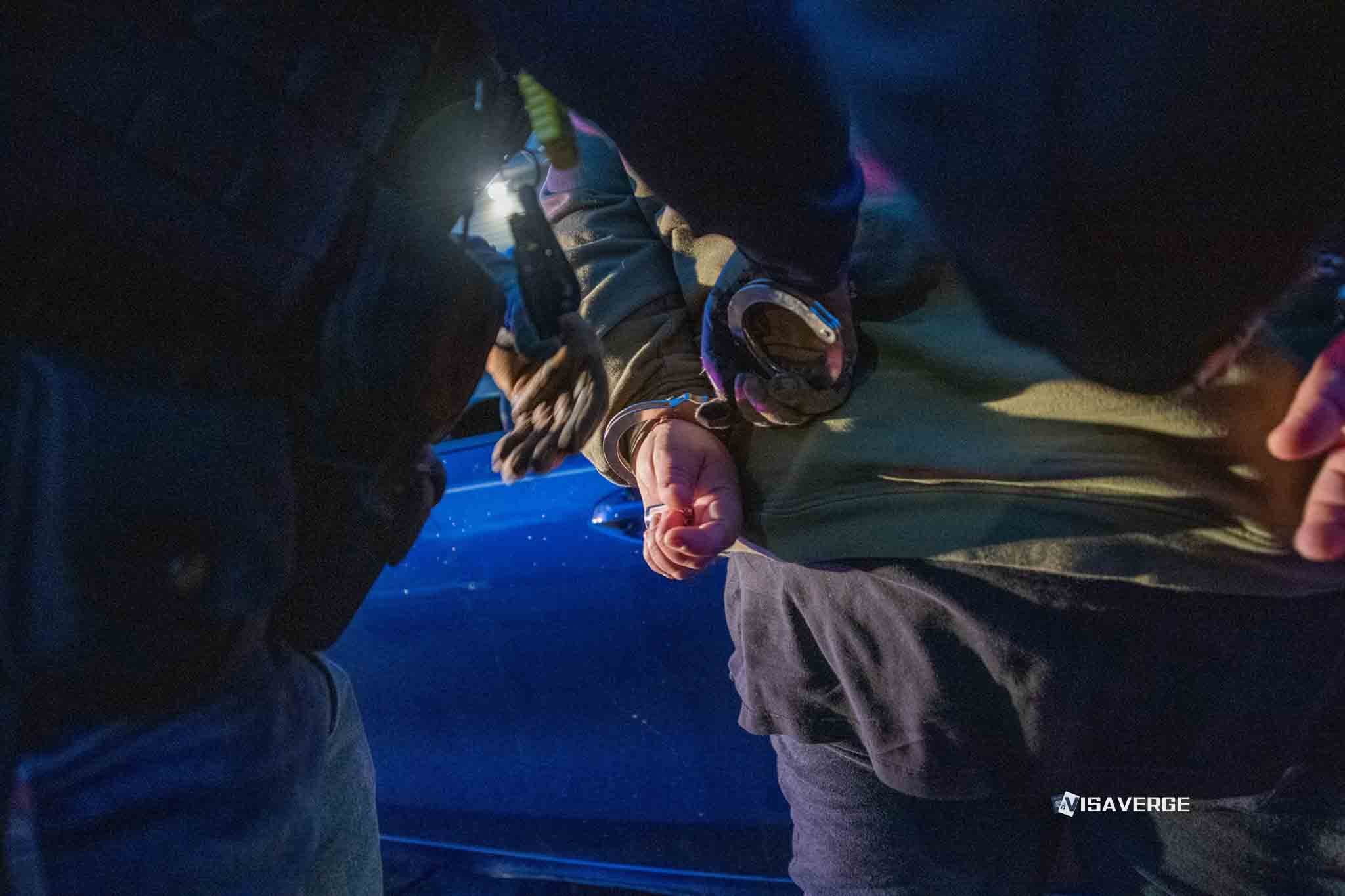
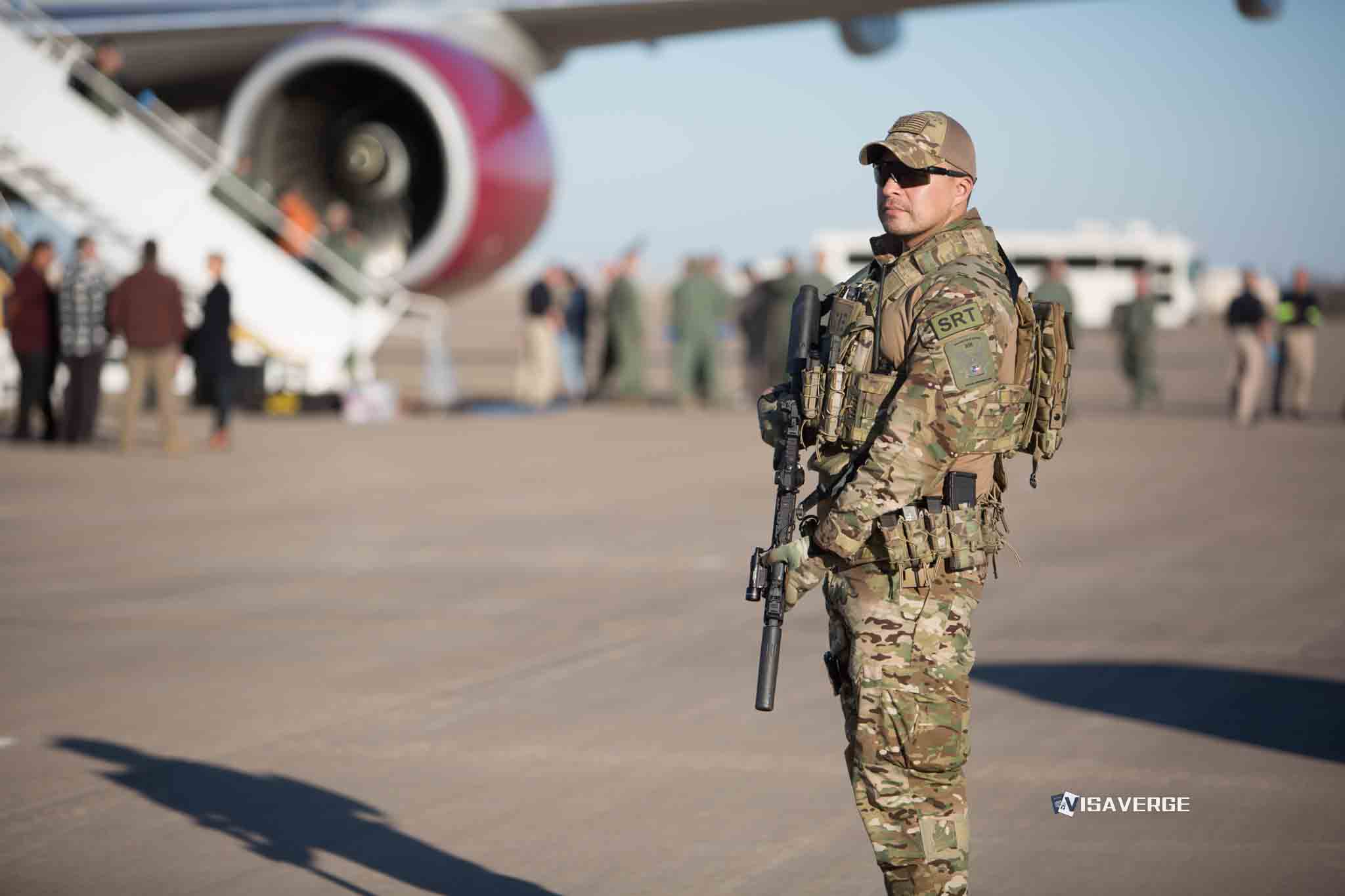
- Activists in New Mexico protested against deportation flights operated by CSI Aviation at Albuquerque International Sunport.
- The federal government sued New Mexico and Albuquerque over laws restricting cooperation with immigration enforcement authorities.
- DHS officials threatened to withdraw CBP officers from non-cooperative airports, potentially stripping their international status in 2026.
(ALBUQUERQUE, NEW MEXICO) – Immigrant rights groups and local activists organized a major demonstration at the Albuquerque International Sunport this weekend, targeting CSI Aviation and denouncing the company’s role in Department of Homeland Security deportation flights.
Protesters used the slogan “They’re not welcome here in Albuquerque” as they gathered near the airport, where CSI Aviation is headquartered adjacent to the Sunport. Activists demanded an end to private contracts that facilitate deportations and pointed to New Mexico’s Immigrant Safety Act, also known as HB 9.
Free toolUSCIS Receipt Number Decoder
The protest caused minor disruptions to airport access roads, but airport officials maintained domestic operations. The action unfolded on May 30-31, 2026, as Albuquerque’s airport and city government sat at the center of a widening federal dispute over local limits on immigration enforcement.
That dispute has sharpened since the federal government sued over New Mexico and Albuquerque policies that restrict cooperation with immigration authorities. On May 8, 2026, First Assistant U.S. Attorney Ryan Ellison for the District of New Mexico described the conflict in sweeping constitutional terms when the government filed its case against the city.
“The State of New Mexico and the City of Albuquerque seek to intentionally obstruct federal law enforcement by preventing cooperation between local governments and the federal government. HB9 and the [Safe Community Places Ordinance] unlawfully interfere with federal immigration enforcement, illegally discriminate against federal operations, and violate constitutional protections regarding contracts and federal supremacy,” Ellison said.
HB 9 prohibits local governments in New Mexico from entering into or renewing contracts with the federal government to detain people for civil immigration violations. The law was set to take effect on May 20, 2026, but federal litigation has stalled it.
Albuquerque’s own Safe Community Places Ordinance restricts ICE from using city-owned property, including the Sunport, to stage enforcement actions. It also requires businesses to notify workers if ICE agents are present.
The airport has become a visible test case because CSI Aviation holds a contract with DHS to provide what officials describe as “relocation” and deportation flights. Protesters focused on that role, arguing that private contractors have become an operational link in mass deportation efforts even where local officials seek to limit cooperation.
The clash widened again on May 27, 2026, when DHS Secretary Markwayne Mullin said the administration was considering withdrawing Customs and Border Protection officers from airports in cities that do not cooperate with federal immigration enforcement. His warning raised the possibility of direct consequences for the Albuquerque International Sunport beyond street protests and court filings.
“They don’t want us to enforce immigration, but they want us to process immigration at their facilities? Local, radical left Democrats aren’t allowing us to do our job and enforce federal laws, so we shouldn’t be processing international flights into their cities,” Mullin said.
If carried out at the Sunport, that step could strip Albuquerque of its international airport status. The prospect has added economic pressure to the legal fight, with tourism and trade now tied to the same argument over whether sanctuary officials can deny federal immigration agencies access to local property and cooperation.
The standoff has also coincided with changes inside the immigration system itself. On May 22, 2026, USCIS issued policy memorandum PM-602-0199, titled “Adjustment of Status is a Matter of Discretion and Administrative Grace,” directing officers to grant adjustment of status only in “extraordinary circumstances.”
That memo pushes more people toward consular processing abroad instead of seeking permanent residence from inside the United States. For immigrants affected by the policy, leaving the country to complete a green card case can carry the risk of long-term bars to re-entry.
DHS has also begun implementing what it calls “Mega Master” hearings in immigration courts, grouping up to 100 individuals in a single hearing to accelerate deportation proceedings. In Albuquerque, that broader enforcement push has merged with a local fight over airport property, city contracting rules and the reach of federal power.
CSI Aviation now sits at the center of that confrontation because its business touches both the local economy and the federal deportation system. The company’s position next to the Sunport gives protesters a visible target, while its DHS work places it inside a national campaign to speed removals.
City and state measures in New Mexico do not attempt to block federal immigration law outright; they limit the use of local governments, local property and local contracts in carrying it out. Federal officials argue that those limits unlawfully interfere with immigration enforcement and violate the Supremacy Clause, the constitutional doctrine that federal law overrides conflicting state or local law.
That legal argument now frames the fight over whether Albuquerque can keep city-owned airport property from serving as a staging ground for immigration operations while federal agencies continue to use the airport for broader functions. The same dispute also reaches businesses operating on or near city property, including contractors whose work supports deportation flights.
At the Sunport this weekend, activists tied those legal and policy fights to a direct public message aimed at both the contractor and Washington. Their slogan, repeated outside the airport, cast the protest not as a symbolic action but as an effort to pressure Albuquerque institutions to cut ties with deportation logistics.
Federal officials, meanwhile, have signaled that they view non-cooperation laws as a direct challenge to immigration enforcement authority. Ellison’s statement in the Justice Department case and Mullin’s warning about airport processing showed a strategy that combines litigation with administrative threats aimed at local governments that resist federal operations.
The result is a confrontation playing out on several tracks at once: in court, in immigration policy, at airports and in public demonstrations. Albuquerque has become one of the clearest places where those tracks meet, with sanctuary officials defending local restrictions even as DHS presses to expand enforcement and contractors such as CSI Aviation continue working inside that system.
At the airport on Sunday, domestic flights continued while demonstrators kept their attention on the company beside the runways and the federal contracts behind it. Their message, shouted beside one of New Mexico’s most visible transportation hubs, left little doubt about where the local battle over deportation flights now stands: “They’re not welcome here in Albuquerque.”