- Australia is replacing orange paper cards with a digital declaration system for all international arrivals.
- The digital pass includes a QR code for border officials, submitted within seventy-two hours of arrival.
- Major hubs move to permanent use in July 2026 with nationwide rollout following over eighteen months.
Qantas passengers will be able to replace Australia’s orange paper Incoming Passenger Card with a digital form as the federal government moves the system from a limited pilot toward a nationwide rollout. The change covers international arrivals, including Australian citizens returning home and overseas visitors. It is designed to reduce queues at the border.
The Qantas trial began in October 2024 and has since reached more than 450,000 passengers on selected flights arriving in Brisbane, Sydney and Melbourne. The government is now shifting the program from pilot status to permanent use at major hubs.
Free toolB1/B2 Tourist Visa Stay Calculator online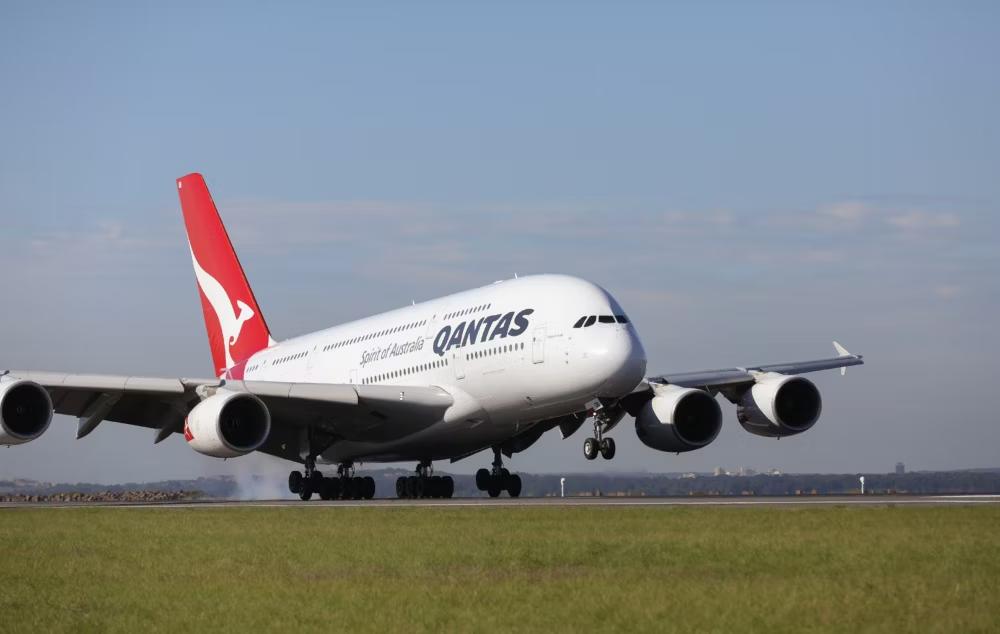
Travellers can submit the Australia Travel Declaration up to 72 hours (3 days) before reaching Australia. A completed submission produces a digital pass with a QR code, delivered by email or through the Qantas app.
The paper card is not disappearing immediately. Paper forms will remain available in airport arrivals halls for people who cannot use the digital service.
Home Affairs Minister Tony Burke said the old process slows passengers and border staff after long flights.
“Traveller modernisation is essential to Australia's prosperity and national security. A lot of us have been in the situation at the end of a flight when the cards get handed out, and you’re not always at your best. People are scrambling around, ‘Who’s got a pen?’ . dealing with pieces of cardboard just slows the process down.”
The government has committed $56.1 million (AUD) over four years to modernise airport systems and introduce the new process nationwide. Earlier descriptions of the border-modernisation package put the investment at A$50 million.
Major airports are moving first, with wider rollout to follow
The first permanent phase is taking place in July 2026 at major hubs. Testing is scheduled to expand to Perth and Adelaide in late 2026, followed by a staged rollout to all international airports and seaports over the next 12–18 months.
The transition is not limited to one carrier. The government plans to make the service available across international airports and seaports, while building a purpose-built website for passengers flying airlines that have not yet integrated the process into their apps.
| Rollout point | What the research identifies |
|---|---|
| October 2024 | Pilot begins on selected Qantas flights |
| July 2026 | Pilot moves toward permanent use at major hubs |
| Late 2026 | Trials expand to Perth and Adelaide |
| Next 12–18 months | Phased expansion to all international airports and seaports |
| Up to 72 hours before arrival | Travellers can submit the declaration |
The pilot expanded to Melbourne Airport on May 26, 2026, covering Qantas flights QF154 and QF178 from Auckland and Queenstown. Brisbane and Sydney were already among the participating arrival points.
Passengers arriving at other airports will encounter a staged process rather than one national switch. The rollout is intended to cover both airports and seaports.
The digital form keeps the same border questions
The new service replaces the orange Incoming Passenger Card, but it does not remove the declarations travellers must make. Arriving passengers still provide personal details, travel history and information about food, animal and plant products.
The border agencies can receive the information before an aircraft lands. Officials say that supports earlier risk assessment and faster arrival processing, while the government describes the broader project as an effort to modernise security and biosecurity checks.
Agriculture Minister Julie Collins said the digital format can support rapid updates to declaration requirements during global disease outbreaks or other biosecurity hazards. That flexibility is one of the government’s stated reasons for moving away from a paper form.
Paper remains the backup. Travellers who cannot access the digital service will be able to complete a card in the arrivals hall at all airports.
Qantas users have the most integrated version so far
The current passenger experience is tied closely to the Qantas app. Eligible international arrivals can complete the form there and receive the QR-coded pass before reaching the border.
Rachel Yangoyan, Qantas chief technology, AI and transformation officer, said the app had recorded more than 380,000 digital declaration submissions by May 27, 2026.
“Since launch, we’ve now seen over 380,000 digital declaration submissions through the Qantas app, and the response has been incredibly positive.”
That figure differs from the government’s count of more than 450,000 passengers using the pilot. The two figures describe different measures: total passengers on selected flights versus submissions through the Qantas app.
The app integration gives Qantas passengers a single place to complete the form and hold the digital receipt. Other airlines will gain access through the government website before they add the capability to their own applications.
Ministers say shorter paperwork will help tourism
Trade and Tourism Minister Don Farrell said the change should reduce the time visitors spend completing forms after landing.
“This is a win for tourists and a win for our tourism operators, helping make Australia an even easier and more welcoming place to visit. Visitors can spend less time filling out forms and more time enjoying everything Australia has to offer.”
The Australian Airports Association also backed the change. Simon Westaway, the association’s chief executive, said passengers often search for pens after long-haul flights and described the paper process as outdated.
“Many of us have experienced the outdated method of filling in a paper card. often tired after a long-haul flight and caught out searching for a pen. This is such an important move and we thank the Federal Government for taking action to modernise a process that has remained largely unchanged for decades.”
The government is linking the project to expected growth in international arrivals ahead of the 2032 Brisbane Olympic and Paralympic Games. It also places Australia closer to digital-first arrival systems already used in Singapore, Japan and New Zealand.
Australia has tried to digitise arrivals before
The current project is Australia’s third attempt to replace the paper arrival process. An earlier 2016 “seamless traveller” program did not fully eliminate the card.
The new approach combines advance submission, a QR code and a gradual rollout across carriers and ports. That structure allows the government to test the system at major airports before extending it more broadly.
A passenger’s immediate task is straightforward: complete the form within the 72-hour window, retain the digital pass and present its QR code to border officials. The paper option remains available when the digital route cannot be used.
Perth and Adelaide are due to join the trials in late 2026, before the planned expansion to every international airport and seaport over the following 12–18 months.