- New CT scanners at checkpoints enforce stricter bag sizes due to narrower physical entry tunnels.
- Over two hundred fifty airports now use three-D imaging that allows liquids and laptops to stay inside.
- Travelers with oversized carry-ons face mandatory airline check-ins and additional baggage fees in twenty twenty-six.
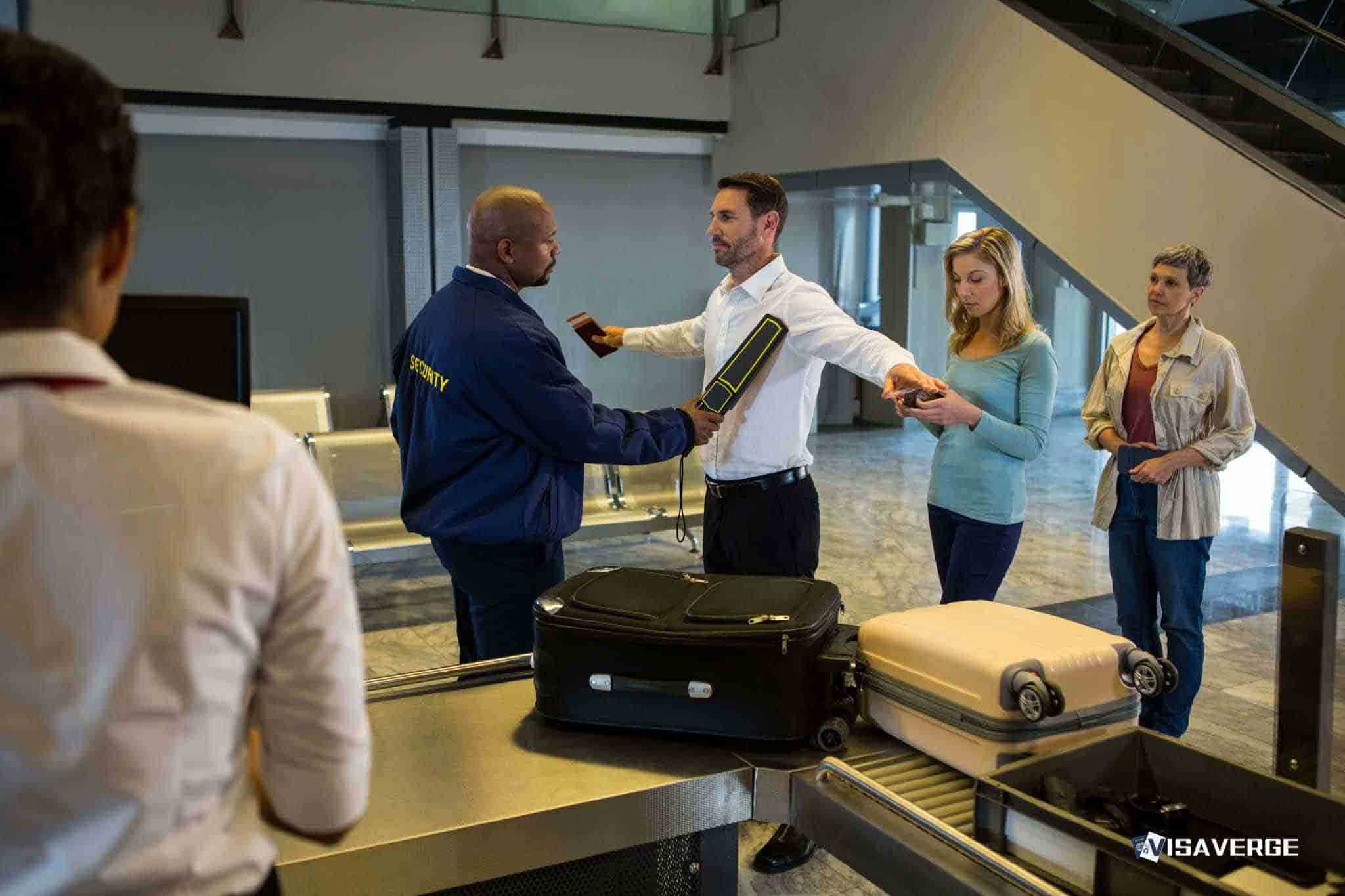
Travelers are finding that some carry-on bags no longer clear airport security lanes as the Transportation Security Administration expands a new screening system with tighter physical openings.
The change is coming from TSA 3D computed tomography scanners, and the problem starts with their smaller entry tunnels. The new units measure about 24.5 inches wide by 16.5 inches high, while the standard domestic carry-on limit remains 22” x 14” x 9” including wheels and handles.
Bags that were already packed to the edge, or had protruding wheels or handles, can now stop at the mouth of the machine instead of sliding through. That has turned the checkpoint into an unexpected form of carry-on bag enforcement.
Travelers whose bags do not fit are being sent back to the airline counter, where they may have to pay checked-bag fees and risk delays before departure.
TSA’s Rapid Rollout of CT Scanners
The Transportation Security Administration has been installing the new equipment at speed. CT scanners are now in over 250 airports across the U.S., and the agency’s broader rollout is expected to take years.
In March 2022, the TSA awarded about $781.2 million in contracts to Analogic for as many as 938 CT X-ray systems, split between 469 base and 469 full-size units.
Benefits for Travelers
The new machines do carry one benefit that many flyers already know: laptops can stay in bags at many checkpoints, and travelers no longer have to empty electronics and travel-size liquids in the same way they did with older lanes.
We have deployed new technology to improve security and the passenger experience. [CT scanners] reduce the need to touch or manually check bags and eliminate the need to take electronics and travel-size liquids out.
TSA Administrator David Pekoske, January 2024 review
Pekoske also said technology is the piece that will have the “greatest impact on security effectiveness”.
The Physical Design Problem
But the physical design of the equipment creates a different problem for people who pack close to the limit. The earlier 2D X-ray units had openings of about 25.2 inches wide by 16.9 inches high, a difference that looks small on paper but can decide whether a soft-sided bag gets through or gets pulled aside.
TSA has warned travelers not to try to jam larger items into the tunnel. If a bag will not fit, officers can redirect the traveler back to the airline counter rather than force the item through the lane.
Warnings for Photographers
Photographers face another issue. The agency says undeveloped film can be fogged or destroyed by the stronger imaging in a single screening, so film should be kept out of the bag before the checkpoint and set aside for hand inspection.
TSA says travelers should request that inspection at security rather than bury film in luggage. Digital cameras, lenses, batteries and memory cards are not affected in the same way, but undeveloped rolls remain vulnerable in the newer machines.
TSA also recommends that passengers place undeveloped film and cameras containing undeveloped film in carry-on bags or bring them directly to the checkpoint for inspection.
Uneven Rollout and Practical Tips
The rollout has been uneven enough that many travelers may not notice the change until they are already in line. A bag that looked acceptable at home can still be stopped if its shape changes after packing, especially when jackets, boots or other bulky items push it past the edges.
The new scanners leave no wiggle room, because the bag has to fit the tunnel as it is, not as it was intended to fit. Some airports and airlines are already adjusting around that reality.
Airlines are increasingly installing automated baggage sizers at gates in 2026 to match the tighter physical limits at security, closing the gap between what gets through the checkpoint and what gets onto the plane. That shift is especially important for passengers who previously relied on soft-sided bags that stretched beyond the published size.
As of July 2026, the practical advice is simple: measure your carry-on with wheels and handles included, keep it at or under 22” x 14” x 9”, and remove undeveloped film before you reach security. In airports where the newer scanners are already in place, the machine itself can become the final test of whether a bag travels in the cabin or goes to the counter.