- ICE recently detained and released long-term resident interpreter Meenu Batra, highlighting significant legal vulnerabilities.
- Decades of residence do not guarantee citizenship or permanent protection from immigration enforcement and detention.
- Status like withholding of removal offers limited security and lacks the stability of lawful permanent residence.
(TEXAS) — U.S. Immigration and Customs Enforcement detained Indian-origin interpreter Meenu Batra for several weeks and later released her, drawing fresh scrutiny to how long-term U.S. residents can still face enforcement despite decades in the country.
Batra reportedly lived in the United States for about 35 years and worked in Texas as a legal interpreter for Punjabi, Hindi, and Urdu speakers. Her case put an Indian-origin interpreter with longstanding ties to courts, family, and community support inside the ICE detention system.
Free toolREAL ID Requirements Checker tool
Reports on her case also said she had withholding of removal, a form of protection that often carries less security than many families assume. That distinction sits at the center of what happened to Batra and why similar cases continue to unsettle immigrant communities.
Years in the United States do not convert on their own into citizenship, a green card, or protection from arrest. A person may have worked, paid taxes, raised children, and built deep local ties, yet still remain exposed to detention or removal proceedings if the underlying immigration status never became permanent.
That gap often affects South Asian families whose immigration histories stretch across temporary, pending, deferred, or humanitarian categories. Some of those categories allow employment. Some reduce immediate risk. Not all of them create lawful permanent residence.
Withholding of removal blocks the government from sending someone to a country where that person’s life or freedom would be threatened. It does not grant citizenship or a green card, and it does not carry the same stability as lawful permanent residence.
The protection also does not create derivative status for a spouse or children. A person with withholding of removal may receive work authorization, but that person can still remain under immigration supervision and still face removal questions if authorities examine whether removal to a third country is possible.
Batra’s detention brought those limits into view. A person can hold a recognized protection against return to one country and still land in custody while immigration officials sort out detention authority, case posture, and whether release is available.
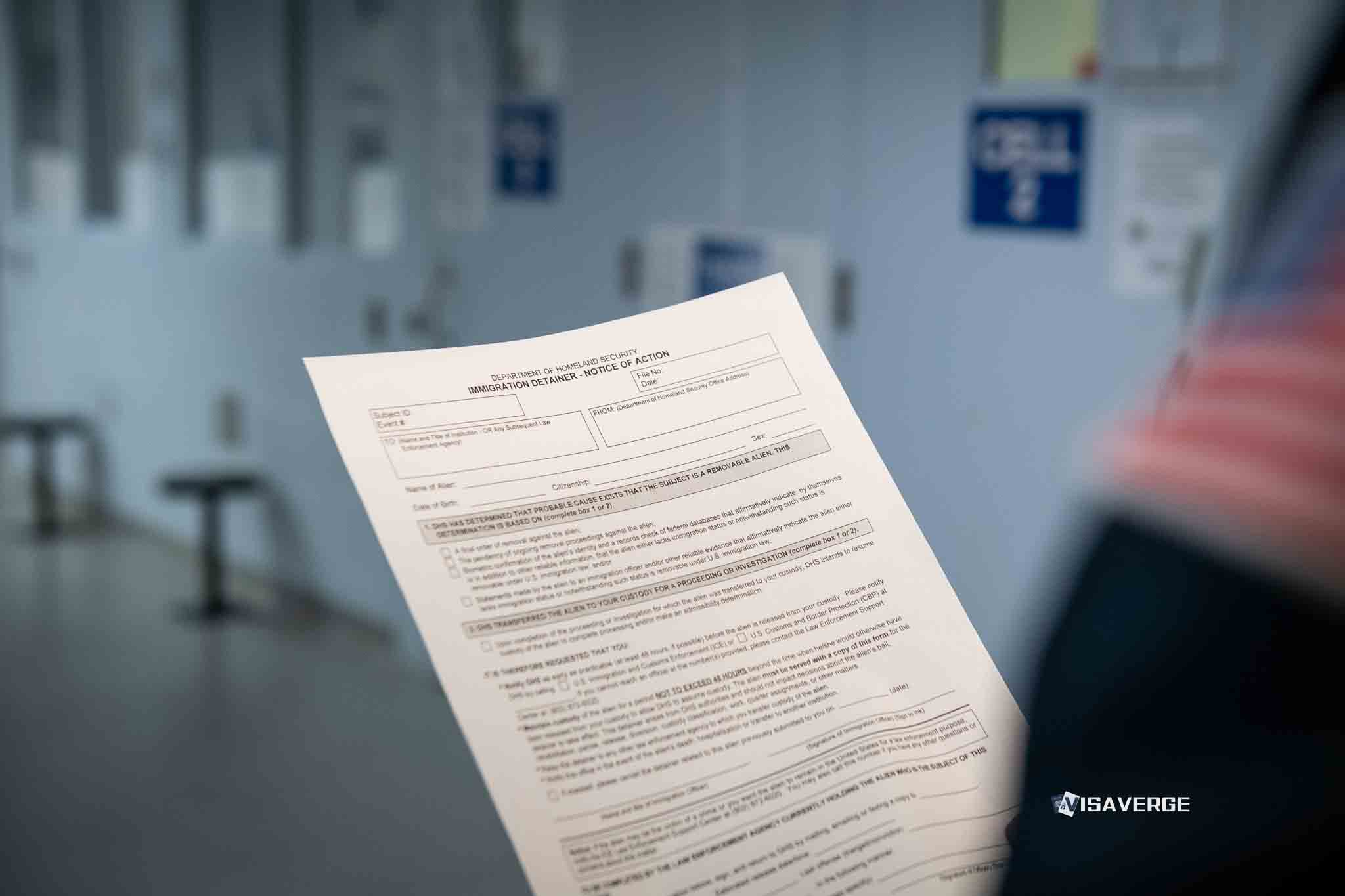
ICE says detention secures a noncitizen’s presence for immigration proceedings or removal. In practice, detention can interrupt work, medication access, legal preparation, and family support within days, especially when relatives do not know where someone is being held or what kind of proceeding controls the case.
Those disruptions often hit harder when the detained person is the primary earner, the caregiver, or the one relative who understands the family’s paperwork. In many Indian-origin households, that role includes translating legal notices, court records, and immigration documents for others. When that person disappears into ICE detention, the family can lose income and its main source of information at the same time.
Release from custody does not rest on money alone. Bond may be available in some cases, but eligibility can turn on immigration history, any criminal record, prior removal orders, flight risk, danger findings, and the statute used to hold the person.
That is why families often misunderstand what a bond can do. Paying bond does not guarantee release if the law bars bond in the first place or if another legal obstacle blocks discharge from custody. Attorney review usually becomes the first step in figuring out whether a detainee can ask an immigration judge for bond, seek parole, or challenge detention on another ground.
Military family ties can help in some immigration cases, and reports about Batra mentioned such ties. Those connections may support requests for parole or another form of discretionary relief, but they do not erase an old order, convert a temporary status into a permanent one, or automatically stop enforcement.
Families with U.S. military service members still need records that match the relief sought. Service papers, proof of the relationship, and a clear legal strategy often determine whether that connection has any effect at all.
Batra’s case also exposed a broad problem among long-term Indian and South Asian residents who arrived in the 1980s, 1990s, or early 2000s and never fully regularized status. Some carry old asylum cases. Some missed hearings years ago. Some hold final removal orders they do not fully understand. Others kept renewing work permits without realizing that employment authorization is not the same as permanent residence.
Several misunderstandings recur in those cases. A work permit is not a green card. Withholding of removal is not asylum. A pending application is not permanent status. Long residence is not citizenship.
Those distinctions can remain hidden for years because daily life appears stable. Someone goes to work, pays rent, files taxes, helps relatives, and assumes the paperwork in hand provides full protection. Then an arrest, a check-in, a file review, or an old court record brings the case back into motion.
Families trying to assess risk usually start with the paper trail. The central records include the A-number, old immigration court notices, copies of work permits, asylum or withholding decisions, I-94 records, passports, visas, criminal court records, family-based petitions, and military documents.
Each record answers a different question. Court notices can show whether removal proceedings ever began. Work permits can reveal the category behind the card. An asylum or withholding decision can show exactly what protection was granted and what it did not grant.
That review often shapes the next move in a crisis. If a relative is detained, locating the person and obtaining the A-number usually comes first. After that, families generally need a lawyer with detention and removal defense experience, along with identity papers, proof of residence, medical records, family records, employment history, tax filings, military records, and community support letters.
Signing documents too quickly can change a case in ways families do not expect. Some papers waive rights, accept removal, or narrow later options. The legal effect turns on the document itself, the person’s status, and the procedural stage of the case.
Green card holders have stronger protection than many other noncitizens, but their status is not untouchable. Removal proceedings can still arise after certain criminal convictions, long absences from the United States, abandonment issues, or fraud allegations.
Some lawful permanent residents may seek cancellation of removal, but eligibility depends on years of residence, time in lawful permanent resident status, and the nature of any offense. Naturalization, when available, remains the strongest long-term protection because citizenship carries a different level of security than a green card.
Temporary visa holders face another version of the same problem. Students on F-1 visas, workers on H-1B, dependents on H-4, employees on L-1, and exchange visitors on J-1 may spend years in the country while still holding no permanent status at all.
A long stay on a visa does not by itself build a safety net. Job loss, school termination, visa expiration, travel mistakes, status violations, or record problems can quickly turn an apparently settled life into an immigration case.
Batra’s detention drew strong public attention partly because she reportedly worked inside the justice system itself. Interpreters often stand between non-English speakers and the proceedings that decide asylum claims, detention outcomes, and removal orders. Without them, many immigrants cannot fully understand what a judge, officer, or lawyer is telling them.
Her case showed that community value and legal vulnerability can exist at the same time. A person can help courts function, serve families in three languages, and still remain exposed if the immigration category underneath that life never became durable.
The practical lesson from Batra’s release is not limited to one family or one profession. Long-term residence can create the appearance of safety, but immigration law still turns on status, orders, and records. Families with old cases, work permits, or withholding of removal often discover that point only after an arrest, a check-in, or a transfer into ICE detention.
Early legal review remains the clearest way to measure that risk. Families who gather their records before a crisis, identify the actual status they hold, and understand the limits of each document stand on firmer ground than those who rely on time in the country alone.