- Thailand’s Labour Minister ordered a nationwide inspection of foreign workers following unauthorized daycare raids.
- U.S. ICE tightened rules by reclassifying I-9 paperwork errors as substantive violations with immediate fines.
- Both nations are intensifying workplace enforcement through strict audits, steep fines, and potential deportations.
(THAILAND) — Thailand’s Labour Minister Julapun Amornvivat ordered a nationwide blanket inspection of foreign workers on May 4, 2026, launching a broad Labour Ministry enforcement push after a raid on an unlicensed daycare center in Koh Phangan.
The order followed the May 1, 2026 operation, where multiple foreign nationals were arrested for working without permits. Julapun directed the Department of Employment, or DOE, to carry out proactive inspections in every province.
Free toolUSCIS Receipt Number Decoder
Authorities will check whether foreign nationals are working within their legal scope. Workers found in violation face fines of 5,000–50,000 baht, deportation, and a two-year ban on reapplying for work permits.
Employers face fines of 10,000–100,000 baht per worker. Repeat offenders face up to one year in prison and a three-year hiring ban.
“I have instructed the Department of Employment to urgently verify cases. any foreign workers found working without permits or outside authorized roles will face strict legal action,” Julapun said on May 3, 2026.
The directive places Thailand at the center of a wider enforcement drive aimed at illegal foreign workers. Thousands of migrant workers are undergoing permit verification, with a specific focus on “sensitive” nationalities.
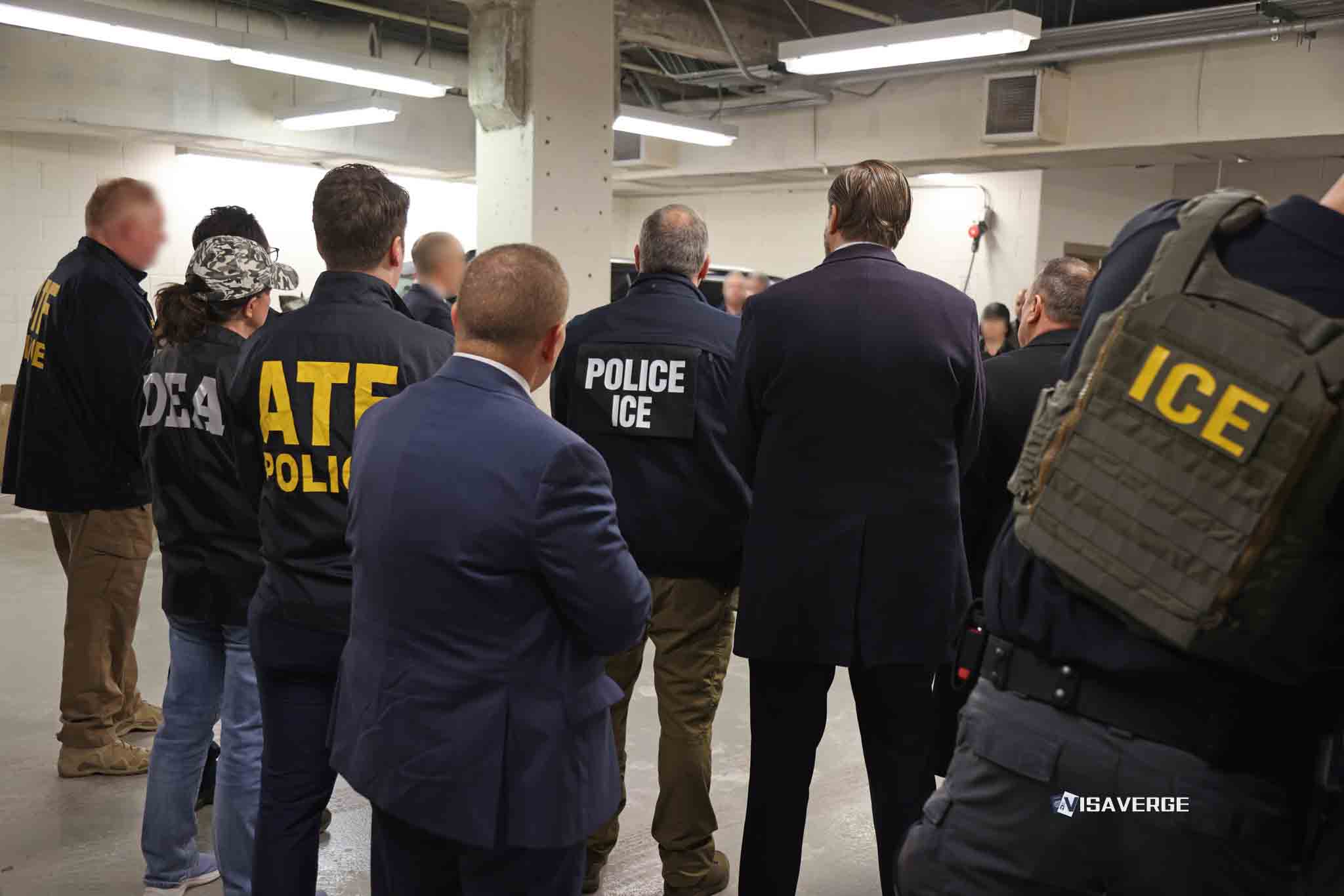
At the same time, U.S. agencies have tightened workplace enforcement through a different system. On May 1, 2026, U.S. Immigration and Customs Enforcement updated its Form I-9 Inspection Fact Sheet and reclassified over 10 common administrative errors from “technical” to “substantive.”
The change ended the 10-day cure period that had allowed employers to fix minor mistakes. During audits, immediate fines now apply, ranging from $288 to $2,861 per Form I-9.
That shift raises the cost of paperwork errors that had once been treated more leniently. Missing birthdates and signatures are among the errors now treated as substantive violations.
U.S. Citizenship and Immigration Services and the Department of Homeland Security have framed the policy in national security and public safety terms. The administration has described the effort as a return to stricter screening, vetting, and enforcement.
Matthew Tragesser, USCIS spokesman, said on Nov 13, 2025: “The distinction between legal and illegal immigration becomes meaningless when both can destroy a country at its foundation. Unchecked mass migration floods the American labor market, depressing wages and taking jobs away from hardworking Americans.”
The USCIS Newsroom said on March 30, 2026: “Since taking office, President Trump has prioritized national security and public safety by implementing a series of executive orders. that mandate strict screening and vetting of foreign nationals seeking entry or immigration benefits.”
Administration figures state that over 2.5 million illegal aliens have left the United States since 2025. That total includes 605,000 formal deportations and 1.9 million self-deportations.
The same figures say the United States recorded negative net migration in 2025 for the first time in over 50 years. The administration ties that result to the enforcement crackdown.
Another policy change is set for later this month. The H-R 1 Reconciliation Act takes effect on May 29, 2026, adding new fees and stricter requirements for humanitarian programs, including an Annual Asylum Fee that must be paid to maintain work authorization.
Employers in the United States now face higher financial exposure during I-9 audits, while TPS holders also face immediate deadlines. TPS for Yemen expires on May 4, 2026, affecting approximately 1,400 individuals who must depart or seek alternative status.
The Thai and U.S. actions come from different legal systems, but both reflect tougher enforcement against unauthorized work. Thailand’s campaign relies on province-by-province inspections, while U.S. agencies have tightened audit rules and penalties.
In Thailand, the immediate trigger was a local raid in Koh Phangan. In the United States, the immediate change came through the revised Form I-9 inspection guidance issued by ICE.
Each system places employers under direct pressure. Thai employers risk fines tied to each worker and, for repeat violations, prison and a hiring ban; U.S. employers face per-form fines as soon as auditors find substantive errors.
Workers also face steep consequences. Thailand’s penalties include deportation and a two-year bar on seeking another work permit, while U.S. immigration enforcement has coincided with departures counted by the administration in the millions.
The official U.S. record of recent statements and releases appears on the [USCIS Newsroom](https://www.uscis.gov/newsroom) and [DHS Press Releases](https://www.dhs.gov/newsroom/press-releases). Federal labor information for foreign labor programs is published by the [U.S. Department of Labor’s Office of Foreign Labor Certification](https://www.dol.gov/agencies/eta/foreign-labor).
Julapun’s order gives Thai inspectors a simple mandate: check every province and act quickly. With fines, deportations, prison terms, and hiring bans now in view, the nationwide crackdown has moved from a local raid to a national enforcement campaign.