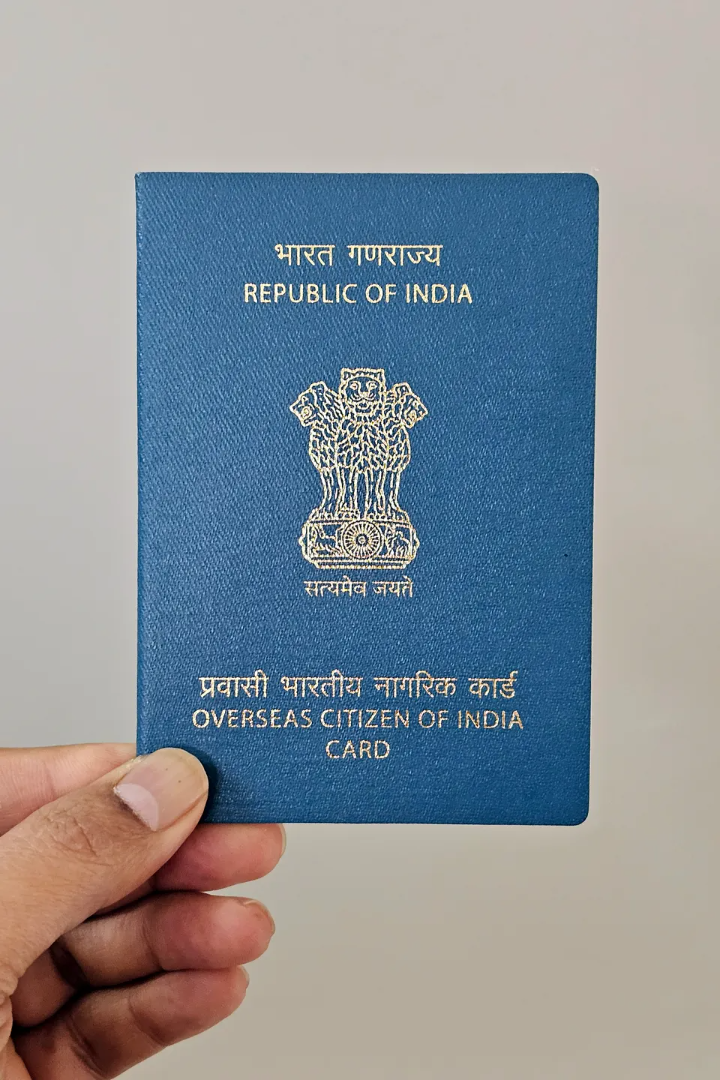
- India transitioned OCI to a 100% digital model effective May 1, 2026, under new citizenship rules.
- Authorities now hold power to invalidate OCI status digitally regardless of whether physical cards are returned.
- Processing times are expected to drop to 15 days with e-OCI issuance and biometric integration.
(INDIA) — India’s Ministry of Home Affairs brought the Overseas Citizen of India system under the Citizenship (Amendment) Rules, 2026 into force on May 1, 2026, shifting the process to a 100% digital model and giving authorities wider power to cancel OCI status in official records.
The notification was issued on April 30, 2026. It took effect a day later. The changes move registration, document handling, biometrics, renunciation and status management onto the government’s OCI portal at ociservices.gov.in.
Free toolDS-160 Form Filling Online Helper Tool
Under the new rules, registered individuals will receive an electronic OCI, or e-OCI. Physical cards remain available on request, but they are no longer mandatory for travel or immigration clearance in India.
The ministry also removed the earlier requirement to submit documents in duplicate. All documents and biometrics now move through the online system, a change that recasts a process long tied to paper applications and physical card handling.
The overhaul reaches beyond digitization. Revised Rule 35 allows the government to invalidate a person’s OCI status in digital records even if that person does not return a physical card, closing a gap that had left cancellation tied in part to the surrender of the document itself.
The notification says, “The issuing authority will also maintain a digital record of all OCI cardholders. In case of cancellation, the government can declare the status invalid in official records regardless of physical card return.”
People who choose to give up OCI status must now file `Form XXXI` online. They must also surrender the original physical card to the nearest Indian Mission or Foreigners Regional Registration Office, or FRRO.
The rules also tighten compliance for children. A minor child cannot hold an Indian passport while also possessing a passport from another country, and parents must provide a declaration and tick an online verification box confirming the child’s status.
That change addresses an area that had remained uncertain for some families during OCI transitions. The 2026 framework replaces that uncertainty with a direct online declaration requirement and a clear bar on holding both passports at the same time.
Biometric consent now becomes part of the registration process as well. Applicants must consent to biometric collection during registration to be enrolled automatically in India’s Fast-Track Immigration Programme, or FTIP.
That enrollment links OCI processing with broader border automation. E-OCI holders will be able to use automated facial-recognition e-gates at major airports in Delhi, Mumbai and Bengaluru for touch-less entry.
The practical effect of the new portal rules extends to passport renewals. OCI holders must update their new passport details on the portal within three months of renewal, a deadline that places routine record maintenance inside the same digital system now used for registration and status management.
The Bureau of Immigration projects that average processing times for straightforward digital applications will fall to 15 working days, down from the previous 6–8 week paper process. That target, if met, would compress a system that had depended on duplicate submissions and physical handling into a shorter electronic cycle.
The rules also create a formal appeals channel. If an application is rejected, the applicant may appeal to an authority one rank higher than the original decision-maker and has a right to be heard.
That appeals provision introduces an internal review path that It places rejections, like applications and renunciations, inside a structured digital process rather than leaving them to a less defined administrative chain.
The official notification identifies the issuing authority as the Ministry of Home Affairs, Government of India, and names the reform package as the Citizenship (Amendment) Rules, 2026. The portal listed for the revised OCI system is ociservices.gov.in.
The changes amount to the largest OCI overhaul since 2005. They pair easier digital access with closer monitoring, giving the government the ability to manage records, enforce compliance and invalidate status in official systems without waiting for a card to be physically returned.
People holding OCI status, or seeking it, now face a system built around the portal rather than the card in hand. Registration is electronic. Renunciation is electronic. Record updates are electronic. Cancellation can also take effect electronically, a change that places the legal force of OCI status squarely in the government’s digital register.
Physical cards have not disappeared, but their role has narrowed. They remain optional on request, while the e-OCI becomes the core proof tied to travel and immigration clearance, and the surrender requirement now matters chiefly in renunciation cases even as digital invalidation stands on its own.
The rules also fold immigration convenience into the same system that collects compliance data. Biometric consent opens the way to FTIP enrollment and airport e-gates, while the same digital framework tracks passport updates, declarations for minors and any later cancellation action.
Families with children, frequent travelers and applicants awaiting decisions all face new online obligations from the start of the new regime. A missed passport update after renewal, an unresolved dual-passport issue for a minor, or a renunciation without surrender of the original card now falls into a system designed to detect and act through official records.
The reform leaves OCI in place as a channel for the Indian diaspora, but under tighter rules and faster electronic administration. As of May 3, 2026, the operative facts are the ones set by the ministry’s notification: a 100% digital process, e-OCI issuance, biometric integration, a new appeals route, and cancellation powers that now work directly through the state’s digital record.