- India has launched the e-OCI platform, digitizing the entire Overseas Citizen of India application and issuance lifecycle.
- New regulations ban minors from holding both an Indian passport and a foreign passport simultaneously.
- The 100% digital workflow aims to reduce processing times from eight weeks down to just 15 working days.
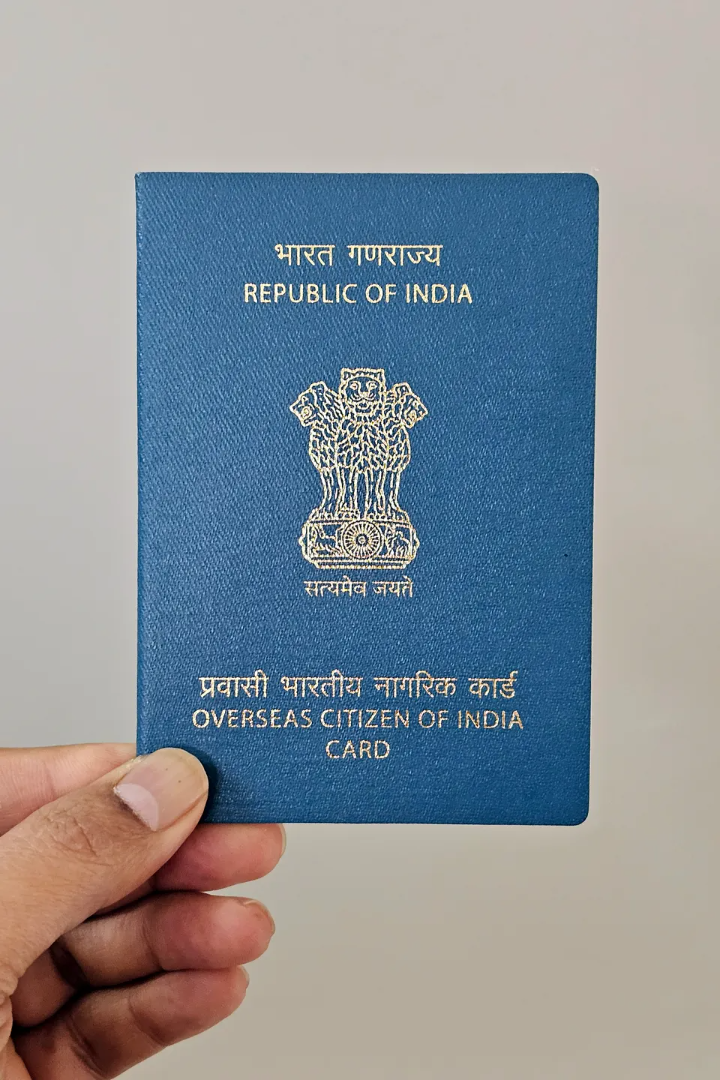
(INDIA) — India’s Ministry of Home Affairs notified the Citizenship (Amendment) Rules, 2026 on April 30, 2026 and launched a fully digital e-OCI platform a day before the rules took effect on May 1, 2026. The changes move Overseas Citizen of India services onto [the OCI Services Portal](https://ociservices.gov.in) and replace the old paper-heavy process with electronic applications, records and credentials.
The new system issues an electronic OCI credential in Form XXIX, which the government says can be used for travel and identification without a mandatory physical card. The rules also tighten documentation for children by barring minors from holding an Indian passport and a foreign passport at the same time.

The Ministry of Home Affairs said in its official notification: “An application for registration as an Overseas Citizen of India cardholder. shall be made in Form XXVIII electronically on the designated online portal, namely, https://ociservices.gov.in. The minor child cannot at any time hold the passport of any other country while also holding the Indian passport.” An MHA official said on May 1, 2026 that the “new rules bring in a completely digital framework. making online applications, electronic records, and digital acknowledgements mandatory while gradually removing repeated physical paperwork.”
The overhaul marks the biggest rewrite of the OCI scheme since 2005. It also ties the system to India’s Immigration, Visa & Foreigners Registration & Tracking, or IVFRT, 2.0 framework, which the government is using to push more automated border processing.
Under the new structure, the e-OCI platform handles the full OCI lifecycle online, from application and issuance to later updates and renunciation. Applicants file electronically in Form XXVIII, receive the electronic credential in Form XXIX, and can track progress in real time through cloud-based uploads rather than duplicate paper submissions.
That digital shift carries a practical change for overseas applicants, including the large Indian diaspora in the United States. The system no longer requires duplicate physical document sets for routine processing through consular channels, and the government says straightforward cases that once took 6–8 weeks should now move in 15 working days.
The Bureau of Immigration projects that faster turnaround from a 100% digital workflow. Fees also stay standardized globally at $275 USD, or local equivalent, for fresh applications, while a new $25 late fee applies if passport details are not updated within three months of renewal.
Families with young children face the sharpest legal change. A new proviso to Rule 3 bars a minor from keeping both an Indian passport and a foreign passport, ending a practice that many families had treated as a temporary bridge after birth or registration abroad.
Parents now must choose one track early: an Indian passport for the child, or a foreign passport paired with OCI status. If they pursue OCI status, the Indian passport must be surrendered, and the rules remove any room for a child to hold both documents at once before turning 18.
That provision carries immediate weight for U.S.-born children of Indian parents, who often qualify for both citizenships under separate national laws. On May 1, 2026, the U.S. Consulate General in Chennai issued a consular message on passport documentation that said, “Failure to bring all necessary documents will significantly delay the processing of your application,” reflecting tighter scrutiny around minor documentation after India’s dual-passport ban.
The new framework also builds biometric collection into the OCI process. Applicants must give mandatory consent for biometric data collection, and the government says that data will be shared with India’s Fast Track Immigration Programme, or FTIP, which is intended to support automated clearance.
India plans to make FTIP-linked e-gates available at 13 international airports by December 2026. If the rollout proceeds on that schedule, e-OCI holders who complete the new biometric process will be able to use automated entry points rather than standard staffed counters.
Renunciation has also moved onto the digital system. The surrender process now runs online through Form XXXI; physical cards still must be returned, but cancellation of the e-OCI record happens instantly in digital form.
Applicants now have a tighter set of official entry points to the system. The core application route sits on [OCI Services Portal](https://ociservices.gov.in), while rules and notifications appear through the [Ministry of Home Affairs](https://mha.gov.in) and [Indian Citizenship Online](https://indiancitizenshiponline.nic.in). U.S.-based applicants can also monitor consular notices through the [U.S. Embassy & Consulates in India](https://in.usembassy.gov) and the [Embassy of India, Washington D.C.](https://indianembassyusa.gov.in), as families adjust to a system that is now fully digital and less forgiving on passport choices for children.