- Skip lagging is not illegal in the U.S., but it violates airline contracts of carriage and a Texas jury hit Skiplagged.com with a $9.4 million judgment in October 2024.
- The trick only works on one-way, carry-on-only bookings; round-trip tickets are auto-cancelled the moment a passenger no-shows on any segment.
- Caught flyers face cancelled return flights, voided AAdvantage or MileagePlus accounts, billed fare differences, and lifetime bans from carriers like American, United, and Delta.
Skip lagging, also called hidden city ticketing, is a booking trick where a flyer buys a connecting ticket but gets off at the layover city and skips the final leg. The connecting fare is often cheaper than a direct ticket to the layover city itself, so the passenger walks away with the discount and abandons the seat the airline planned to fly them in. It is the single most aggressively policed loophole in commercial aviation, and a Texas federal jury hit booking site Skiplagged with a $9.4 million judgment over it in October 2024.
The practice is not illegal under U.S. law. No criminal statute bans it, and Skiplagged itself remains online and operational as of 2026. What skip lagging violates is the airline’s contract of carriage, which is the legal terms a passenger agrees to at the moment of booking. That distinction matters because airlines cannot send anyone to jail for skipping a flight, but they can cancel return tickets, void frequent flyer accounts, demand the difference between the fare paid and the published direct fare, and ban the traveler for life.
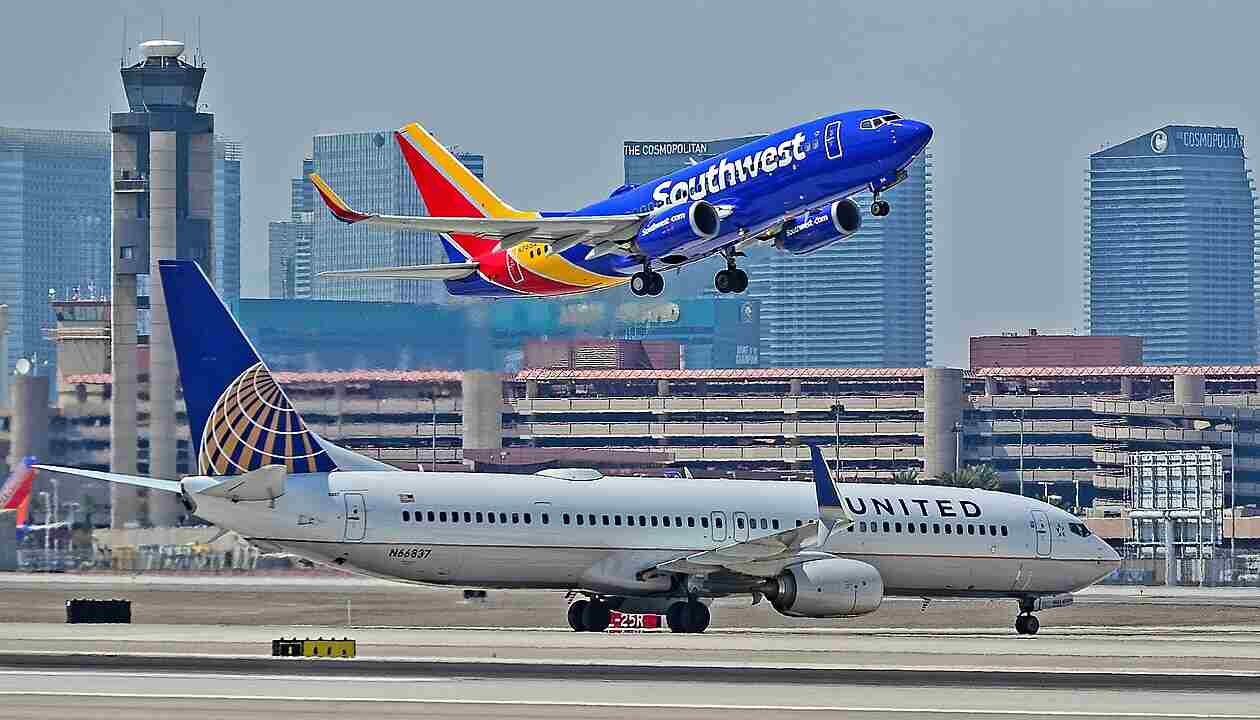
Major U.S. carriers, including American Airlines, United Airlines, Delta, and Southwest, all prohibit skip lagging in their published rules. American sued Skiplagged in 2023 and won. Southwest sued in 2021 and settled out of court. United Airlines and Orbitz brought a 2014 case that was later dismissed. The legal record is mixed, but the consumer risk is consistent: travelers who get caught lose money, status, and sometimes their return flight home.
This guide explains how the trick works, why it exists, the most recent court rulings, the risks for individual flyers, and the situations where skip lagging fails outright. For the mechanics behind the booking technique, see our deeper breakdown of how hidden city ticketing works. For the legal terms airlines use to enforce the ban, see our analysis of how airlines use conditions of carriage to ban skip lagging.
How Skip Lagging Works
The trick starts with the way airlines price connecting itineraries. A nonstop ticket from New York (JFK) to Orlando (MCO) might cost $400. The same airline might also sell a New York to Houston (IAH) ticket that connects through Orlando for $220. The Orlando leg is identical on both itineraries. The flyer who actually wants to be in Orlando books the cheaper Houston ticket, exits the plane during the Orlando layover, and never boards the second flight to Houston. The airline holds the empty Houston seat. The flyer saves $180.
To make this work the booking has to be one-way and carry-on only. Checked bags are tagged through to the final ticketed destination, so a checked bag on a New York to Houston ticket lands in Houston, not at the Orlando hidden-city stop. There is no recovering it without flying the second leg. Round-trip bookings also fail because the moment the passenger no-shows for any segment, the airline automatically cancels every remaining segment in the itinerary, including the return.
Skiplagged.com built a business on indexing these mismatches. The site searches for routings where the connecting fare is cheaper than the nonstop fare to the connecting city, then sells the booking to consumers who know they are going to walk off at the layover. The company says it has saved travelers more than $2 billion over its lifetime. Airlines say it costs them revenue on every booking the site facilitates, because the carrier could otherwise have sold the layover-city seat at the higher direct fare.
Why Hub-and-Spoke Pricing Creates the Loophole
Skip lagging is not a bug in airline pricing. It is a side effect of how U.S. legacy carriers price routes through their hubs. Airlines like American at Dallas-Fort Worth, United at Houston and Chicago, and Delta at Atlanta funnel most of their flights through a small number of fortress hubs. At those hubs the carrier often holds a near-monopoly on direct flights, which lets it charge a premium for nonstop service into and out of the hub. A direct ticket from a smaller spoke city to the hub is typically more expensive than a connecting ticket that uses the hub as a layover.
Connecting fares are priced for competition, not distance. If American can sell a one-stop New York to Houston ticket for $220, it is because Spirit, Frontier, JetBlue, and other carriers fly the same route at low fares. The Orlando layover is incidental. American does not want the same passenger booking New York to Orlando for $220, because Orlando is one of its higher-yield leisure markets. The price gap is the carrier’s revenue management system optimizing two different competitive markets that happen to share an airplane.
The same dynamic shows up internationally. Travelers headed to London often buy tickets ticketed onward to a smaller European city, exiting at Heathrow. Travelers headed to Frankfurt sometimes book onward to Eastern European destinations through Lufthansa’s hub. The pattern repeats wherever a hub airport is also a high-demand destination in its own right. For a wider view of how published fares move with seasonality and search timing, see our breakdown of cheapest days to book airline tickets.
Is Skip Lagging Illegal?
No federal or state law in the United States makes skip lagging a crime. The Department of Transportation has not banned it. The Federal Aviation Administration does not regulate it. A passenger who walks off a plane at the connecting airport and never boards the next leg has not violated any criminal statute, has not committed fraud against the U.S. government, and faces no risk of prosecution.
What skip lagging does violate is private contract. Every airline ticket includes a contract of carriage, and most major U.S. carriers expressly prohibit hidden city ticketing in those terms. American Airlines’ contract calls out the practice by name. United, Delta, and Southwest have similar language. The contract is enforceable in civil court, which means an airline can sue a passenger for breach. In practice they almost never sue individual flyers because the recoverable amounts are small, but they do enforce the contract through internal penalties: voiding tickets, canceling frequent flyer balances, and demanding the difference between the fare paid and the published nonstop fare.
One narrow case where skip lagging crosses into legal trouble involves immigration and customs documents. A traveler who books an international itinerary to a country requiring a visa, and then never flies the segment that justifies the visa application, may have made false statements on the visa form. That is a separate problem from the carrier’s contract dispute and falls under federal immigration law, not airline policy.
The American Airlines vs. Skiplagged Lawsuit
The biggest legal fight over skip lagging unfolded in the Northern District of Texas in 2023 and 2024. American Airlines filed suit against Skiplagged.com in February 2023, claiming the website infringed the carrier’s trademarks, copyrights, and intellectual property by displaying American’s logo and selling its tickets without authorization. American sought $94 million in damages. The case went to a jury trial in October 2024.
The verdict was split. The jury awarded American $9.4 million total: $4.7 million in disgorgement of Skiplagged’s revenues and $4.7 million for copyright infringement tied to American’s logo appearing on Skiplagged’s site. The jury rejected American’s primary claim, the trademark infringement count, and awarded $0 in damages on it. The jury also found that Skiplagged’s underlying booking practice qualified as fair use, a finding favorable to the website. Judge Mark Pittman issued a follow-up ruling on May 6, 2025, that upheld the jury’s fair use finding and its determination that American had failed to mitigate its own damages.
Skiplagged’s CEO Aktarer Zaman has publicly framed the lawsuit as an existential attack on consumer fare transparency, and the site has not changed its core booking flow despite the judgment. The company is appealing the copyright portion of the verdict. American is appealing the trademark loss. The practical effect for travelers: Skiplagged still works, hidden city tickets are still bookable, and the airline still bans them. Nothing about the user experience has changed since 2024.
Southwest Airlines filed a separate suit against Skiplagged in 2021 over similar trademark and fare-display claims. That case settled out of court in 2023 with no public terms. United Airlines and Orbitz sued the site in 2014 in Illinois federal court; that case was dismissed for lack of jurisdiction. Across all three lawsuits, no court has held that the underlying act of skip lagging is illegal. The dispute has consistently been about how the booking site presents fare data, not whether passengers may walk off planes.
What Airlines Can Do to You
Carriers have a defined set of penalties they apply when they detect a skip-lagged itinerary. They are written into the contract of carriage and survive any change in personnel. The penalties are not theoretical. American, United, and Delta have each enforced them publicly within the past three years.
- Cancellation of return and onward flights. The most common consequence. The moment the airline detects a no-show on any leg, its automated systems cancel every downstream segment, including the return ticket on a round-trip booking.
- Forfeiture of the unused fare. The passenger does not receive a refund for the skipped leg. They paid for the seat; the seat went unfilled; the airline keeps the money.
- Loss of frequent flyer miles. Carriers can void mileage credit on the entire itinerary and, in repeat cases, close the loyalty account. American Airlines’ AAdvantage program has terminated accounts for documented hidden city patterns.
- Demand for the fare difference. Some airlines bill the passenger the gap between the fare paid and the published direct fare to the layover city. United has issued these invoices in writing.
- Lifetime ban from the carrier. Repeat offenders can be added to a no-fly list maintained by the airline. The ban is private, not federal, but it covers all flights on that carrier and its codeshare partners.
- Civil suit. Rare, but legally available. American sued one passenger in 2018 for $2,500 over repeated skip lagging.
Detection has gotten better. Airline revenue management software now flags repeat patterns: same passenger name, same hub airport, repeated no-shows on the second leg. Loyalty program data ties bookings to a single profile, even across different credit cards. Travelers who skip lag once or twice on different carriers are rarely caught. Travelers who skip lag a dozen times through American’s DFW hub on the same AAdvantage number almost always are.
When Skip Lagging Doesn’t Work
The trick fails outright in several common scenarios. Travelers who try it without understanding the failure modes lose money or get stranded.
The first failure is checked baggage. Bags are tagged through to the final ticketed destination at check-in and travel in the cargo hold of the connecting flight. A passenger who exits at the layover loses access to anything checked. Bringing only a personal item or a single carry-on is mandatory. This eliminates skip lagging for any trip requiring cold-weather gear, professional equipment, or items that exceed carry-on size limits.
The second failure is round-trip bookings. Airline systems treat every segment of a multi-segment ticket as conditional on the prior segment. A no-show on segment one cancels segments two, three, and four automatically. A passenger who skip lags the outbound leg and tries to fly the return finds the return seat already gone. Skip lagging is a one-way technique. Travelers who want to skip lag a round trip have to buy two separate one-way tickets, which often eliminates the savings entirely.
The third failure is irregular operations. When weather, mechanical, or crew issues cause a flight delay, airlines reroute passengers. A traveler ticketed New York to Houston via Orlando might be rebooked New York to Houston via Charlotte, with no Orlando stop at all. The skip-lag opportunity vanishes mid-flight, and the passenger ends up at the wrong city. Refusing to board the rebooked flight is the passenger’s right, but the unused ticket is non-refundable for hidden city bookings on basic economy fares.
The fourth failure is international routing on a single ticket. Skip lagging an international itinerary at a U.S. layover means clearing immigration in the layover city, which can be impossible if the passenger does not have the right visa for that country, or if the airline’s customs preclearance flags the no-show. Airlines and U.S. Customs and Border Protection share data on no-show passengers on inbound flights.
Smarter Alternatives to Skip Lagging
Travelers chasing the same savings can usually find them with strategies that do not violate any contract. The savings are smaller per ticket but the risks are zero.
Booking flexibility is the single biggest lever. Tuesday and Wednesday departures consistently price below Friday and Sunday departures on the same route. Booking 21 to 60 days ahead of departure for domestic travel and 60 to 120 days ahead for international travel hits most carriers’ published advance-purchase windows. Mixing carriers on a round trip, with the outbound on one airline and the return on another, often beats a single round-trip ticket booked under one record locator. Our breakdown of timing strategies for cheaper airfare covers the seasonal patterns in detail.
Low-cost carriers are the second alternative. Spirit, Frontier, Breeze, Avelo, and JetBlue often beat legacy direct fares to leisure markets. The base fare excludes seats, bags, and drinks, but a carry-on-only traveler who books early often ends up below the skip-lag savings without any contract violation. Southwest, despite suing Skiplagged, prices its non-hub leisure routes aggressively and includes two free checked bags, which alone outperforms most skip-lag scenarios.
Frequent flyer redemptions are the third alternative. A 12,500-mile one-way award on American or United often costs less in dollar value than a paid coach ticket and carries no skip-lag risk. Travelers who put recurring spending on a co-branded airline credit card accumulate enough miles in a year to cover four to six domestic round trips at saver award levels. Award seats are limited, but they exist and are bookable directly through the airline app.
What to Do If You Get Caught
A traveler stopped at the gate or pulled aside by a gate agent who has flagged the booking as a hidden city ticket has limited options. Refusing to board the second leg is the passenger’s right; the airline cannot force a flight. The carrier can, however, immediately void the return ticket and demand the difference at the counter. Paying that difference on the spot avoids account closure and a potential ban. Refusing it ends the relationship with the carrier.
If the airline closes a frequent flyer account, the passenger should request the closure rationale in writing through the carrier’s elite or executive customer relations channel. Account closures based on a single hidden city booking are sometimes reversible. Closures based on a documented pattern of repeat skip lagging are almost never reversed. Consulting an attorney for the contract dispute is rarely worth the cost; the recoverable amounts are below most contingency thresholds.
The clearest defensive step is record separation. Travelers who genuinely need to skip lag for a one-time trip should book under a name and credit card not tied to their primary frequent flyer account, pay cash for incidentals at the layover city, and avoid using the carrier’s app for the booking. None of this protects against contract enforcement, but it limits the cross-referenced data the airline can match against the loyalty profile. For travelers concerned about how booking-name discrepancies trigger their own problems, our piece on flight booking name mistakes walks through the documentation rules.
Frequently Asked Questions
Is skip lagging illegal in the United States?
No federal or state law makes skip lagging a crime in the U.S. The Department of Transportation has not banned it and the FAA does not regulate it. The practice does violate the airline’s contract of carriage, which is enforceable in civil court, but a passenger who walks off at a layover faces no risk of criminal prosecution.
How much can I save with hidden city ticketing?
Savings vary by route, but a typical hidden city booking runs 30 to 50 percent below the published direct fare. A $400 nonstop from JFK to Orlando might book at $220 as a connecting ticket via Orlando, a $180 saving of about 45 percent. Larger gaps appear on routes through fortress hubs like DFW, IAH, and ORD.
What happened in the American Airlines vs. Skiplagged lawsuit?
A Texas federal jury awarded American Airlines $9.4 million in October 2024: $4.7 million in disgorgement and $4.7 million for copyright infringement tied to American’s logo. The jury rejected American’s primary trademark claim and awarded $0 on it. A May 6, 2025 ruling by Judge Mark Pittman upheld the jury’s fair use finding.
Can I check a bag if I am skip lagging?
No. Checked bags are tagged through to the final ticketed destination at check-in and travel in the cargo hold of the connecting flight. A passenger who exits at the layover cannot retrieve a checked bag without flying the second leg. Skip lagging requires carry-on or personal-item baggage only.
Does skip lagging work on round-trip tickets?
No. The moment a passenger no-shows on any segment, the airline’s automated systems cancel every remaining segment, including the return. Skip lagging is a one-way technique. Travelers who want round-trip savings must book two separate one-way tickets, which often eliminates the price advantage entirely.
What can airlines actually do if they catch me?
Airlines can void return and onward flights, cancel frequent flyer mile balances, close loyalty accounts, demand the fare difference between the ticket paid and the published direct fare, and impose a lifetime ban on the carrier and its codeshare partners. American sued one passenger for $2,500 in 2018, but civil suits against individual flyers remain rare.
Is Skiplagged.com still operating in 2026?
Yes. Skiplagged remains online and continues to sell hidden city itineraries despite the $9.4 million judgment. CEO Aktarer Zaman has framed the lawsuit as an existential attack on fare transparency, and the company is appealing the copyright portion of the verdict. American Airlines is appealing the trademark loss.
What is the safest alternative to skip lagging?
Booking Tuesday or Wednesday departures, mixing carriers on round trips, using low-cost airlines like Spirit and Breeze, and redeeming frequent flyer miles all deliver savings without violating any contract. A 12,500-mile saver award on American or United often beats the cash fare and carries zero skip-lag risk.