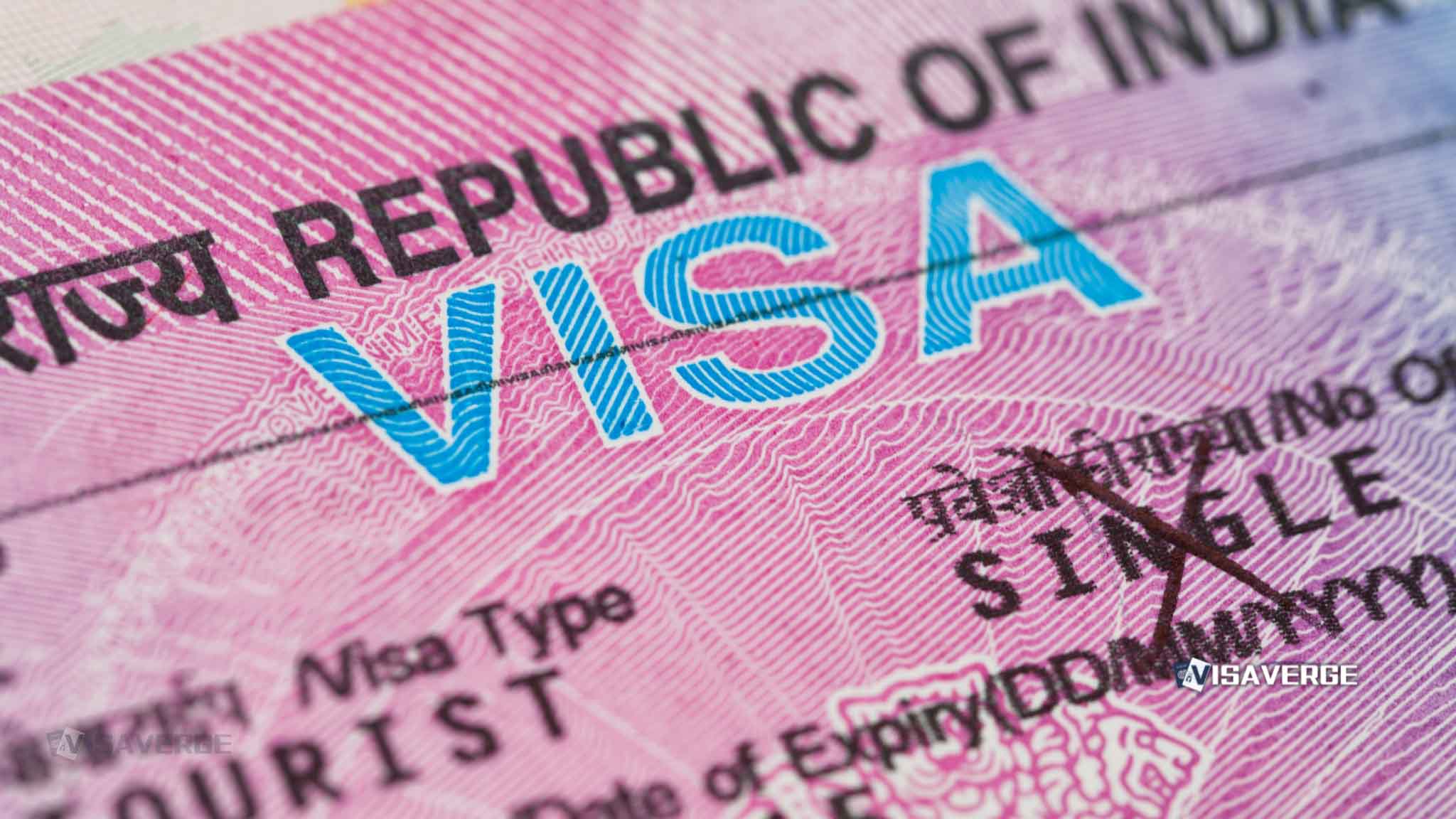
- India and Bangladesh are restoring full visa services after an eighteen-month suspension affecting cross-border travel.
- India is implementing a phased restart currently operating at fifteen to twenty percent of its total capacity.
- Full staffing and operations are expected by June 2026 to accommodate the peak Eid travel season.
(INDIA, BANGLADESH) – India and Bangladesh moved toward the full restoration of visa services after an 18-month suspension that sharply restricted cross-border travel and cut deeply into business movement between the neighboring countries.
Bangladesh has already restored visa facilities for Indian citizens across all categories, while India has begun a phased restart for Bangladeshi applicants at only 15–20% capacity.
Free toolDS-160 Form Filling Online Helper Tool
On March 1, 2026, Bangladeshi Home Minister Salahuddin Ahmed said India had “assured it will gradually resume full visa operations” for Bangladeshi citizens after a courtesy call by Indian High Commissioner Pranay Verma.
That commitment points to a staggered reopening rather than an immediate return to pre-suspension levels. Tourist and business e-visa slots are due to expand first, followed by student and medical categories.
Biometric-only submission centres in Dhaka and Khulna are scheduled to reopen by April. Full staffing is expected before the Eid travel peak in June.
Bangladesh’s side of the system has already reopened across multiple Indian cities. Visa centres were operational in New Delhi, Kolkata, Agartala, Mumbai, and Chennai as of February 2026.
India’s side remains more limited. Processing for Bangladeshi applicants continues at a fraction of earlier levels even as both governments signal that wider access is coming.
The restrictions date to mid-2024, when visa appointments were curtailed after violent protests outside Indian missions in Chittagong and Sylhet. The disruption came during a period of political upheaval in Bangladesh and a sharp cooling in bilateral ties.
Sheikh Hasina was ousted in August 2024, and relations remained strained during the interim government led by Muhammad Yunus. Ties have since shown signs of improvement under the BNP-led administration, with Tarique Rahman taking office earlier in 2026.
The visa slowdown hit more than tourism. Visitor-visa issuance fell from 1.4 million in 2023/24 to fewer than 300,000 in 2024/25, a drop that disrupted routine commercial travel across one of South Asia’s busiest borders.
Garment buyers, IT vendors, and maritime-services personnel were among those affected. A system that once supported frequent short-notice travel for meetings, sourcing, inspections, and service work slowed to a narrow channel, with access controlled by reduced appointment capacity and selective processing.
The sequencing of the reopening gives a clear sense of official priorities. Tourist and business categories are set to move first, suggesting that authorities want the quickest possible recovery in short-term mobility while keeping higher-volume categories under tighter control until staffing and biometric operations return.
Student and medical visas are expected to follow after the first expansion in tourist and business access. That order matters in a corridor where travel often combines family visits, treatment, education, and trade, but the current plan separates those streams and restores them in stages.
The reopening of biometric-only submission centres in Dhaka and Khulna by April marks one of the most concrete operational steps announced so far. Those centres are central to processing because they handle the in-person enrollment that many applicants need before a visa can move forward.
Full staffing before the Eid travel peak in June also sets an informal deadline for both sides. Eid periods routinely bring heavier passenger demand, compressed appointment schedules, and pressure on consular teams, making staffing levels a practical measure of whether the broader reopening has taken hold.
The shape of the current arrangement also shows how uneven the recovery remains. Bangladesh has reopened all visa categories for Indian citizens, but India is still running below normal for Bangladeshi applicants, leaving the restoration process formally mutual but operationally out of balance.
That gap explains why officials have described the Indian reopening as gradual. A limited intake at 15–20% capacity allows missions to test staffing, appointment flow, and biometric handling before moving to a wider release of slots.
Travel demand, however, is likely to arrive faster than consular systems can absorb it. The collapse in issuances over the past year left a large pool of postponed trips, business visits, and family travel, and even a moderate expansion in e-visa slots may draw intense early demand as applicants try to secure openings.
Business travelers stand to benefit first if the timetable holds. Garment buyers and IT vendors often depend on short scheduling windows, while maritime-services personnel work around vessel movements and port deadlines, making visa availability a direct factor in whether cross-border commercial activity runs smoothly.
The current plan gives applicants a rough calendar rather than a single reopening date. Tourist and business access expands first, biometric submission capacity in Dhaka and Khulna is due back by April, and full staffing is expected before the Eid rush in June.
Anyone planning travel between the two countries now faces a system in transition, not a completed reset. The policy direction is toward full restoration of visa services, but access still depends on a phased restart, the pace at which India lifts processing from 15–20% capacity, and how quickly the promised e-visa slots and biometric operations come back online.
If travelers and businesses time their applications against that schedule, the clearest openings are likely to come as tourist and business channels widen first and staffing builds toward June, when the long diplomatic freeze is expected to give way to a more fully functioning visa corridor.