- CBP held Norwegian Encore passengers for several hours in San Francisco due to technical and procedural issues.
- A facial-recognition system failure forced federal officers to conduct manual document checks on 3,000 travelers.
- Foreign nationals faced rigorous biometric processing, including fingerprinting, following the ship’s arrival from Mexico.
(SAN FRANCISCO, CALIFORNIA) — U.S. Customs and Border Protection held passengers aboard the Norwegian Encore in San Francisco for hours before allowing them to disembark, citing the ship’s arrival from Mexico, biometric processing for foreign passengers, a facial-recognition problem affecting U.S. citizen verification, and the handling of a death on board.
Passengers disputed parts of the timeline. The ship carried about 3,000 people.
Free toolB1/B2 Tourist Visa Stay Calculator online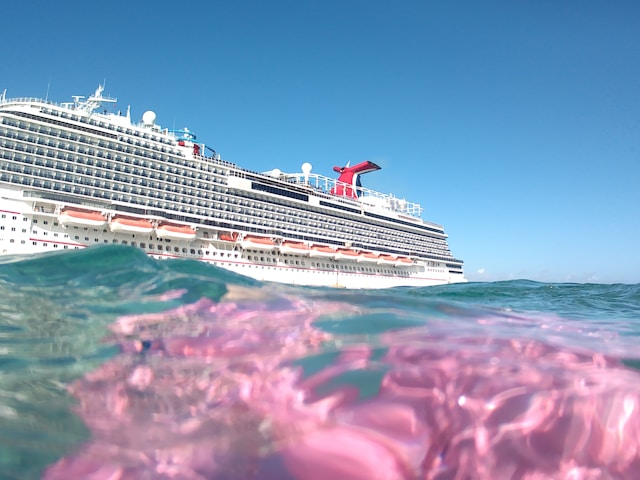
The delay turned a routine cruise arrival into a federal inspection event, a point that often surprises travelers who have already cleared cruise-line check-in and expect to step ashore quickly. At a U.S. port after a foreign stop, CBP officers decide when passengers can enter the country.
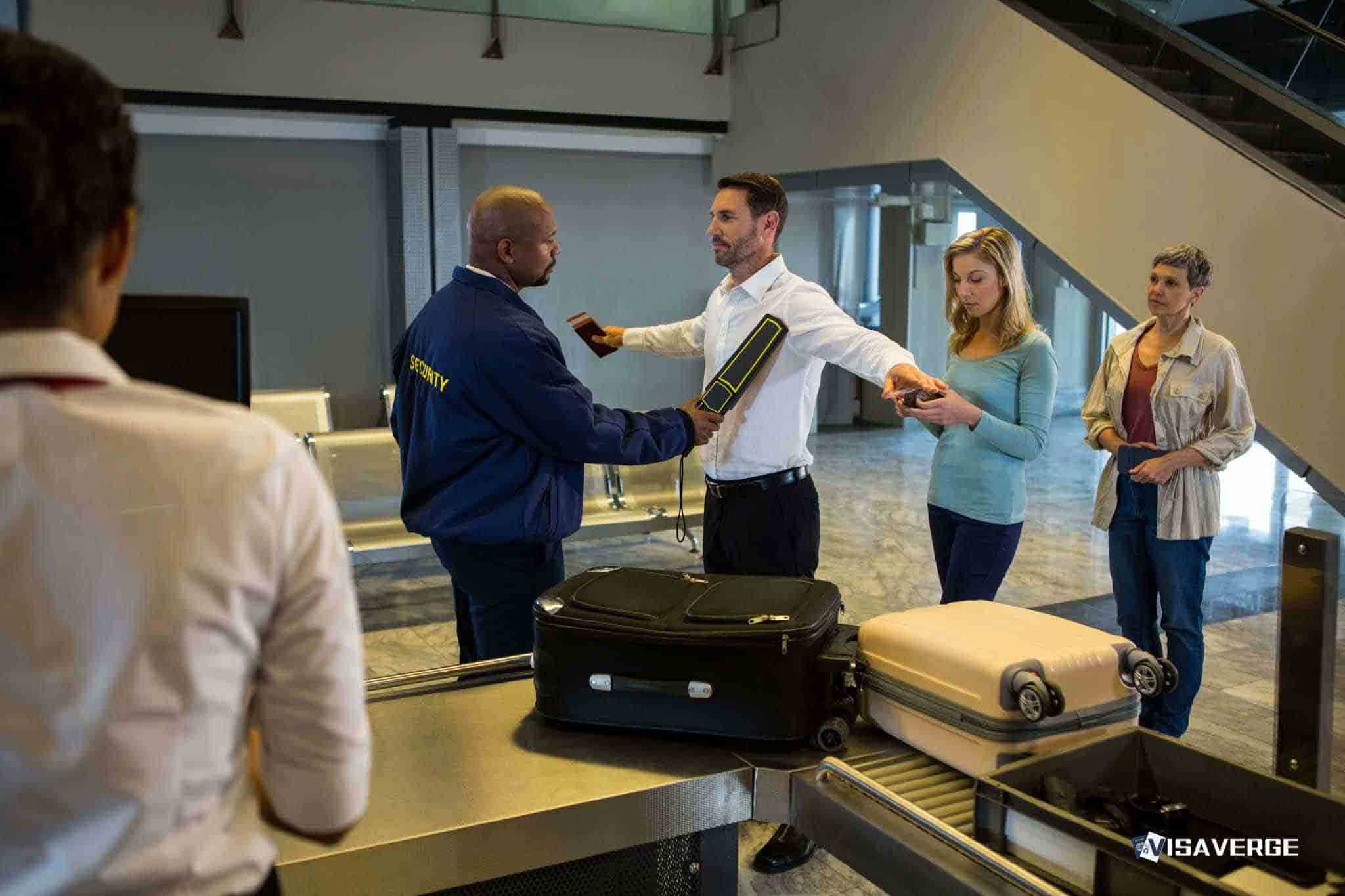
Federal rules treat those arrivals as port-of-entry inspections, not domestic ferry stops. Officers can check documents, verify identity, review customs declarations, screen for agricultural concerns, run biometric comparisons and send some travelers to secondary inspection.
That applies even on itineraries that begin and end in the United States. A passenger may board in one American city, stop in Mexico or another foreign port, and still face a full CBP inspection at the next U.S. arrival.
Biometric systems sit at the center of that process. CBP has said facial comparison can cut cruise debarkation times by up to 30% in some settings by matching a live image against passport, visa or other government travel-document records.
When the technology works, lines move faster. When it does not, officers shift to manual checks, and a ship carrying thousands of passengers can back up quickly.
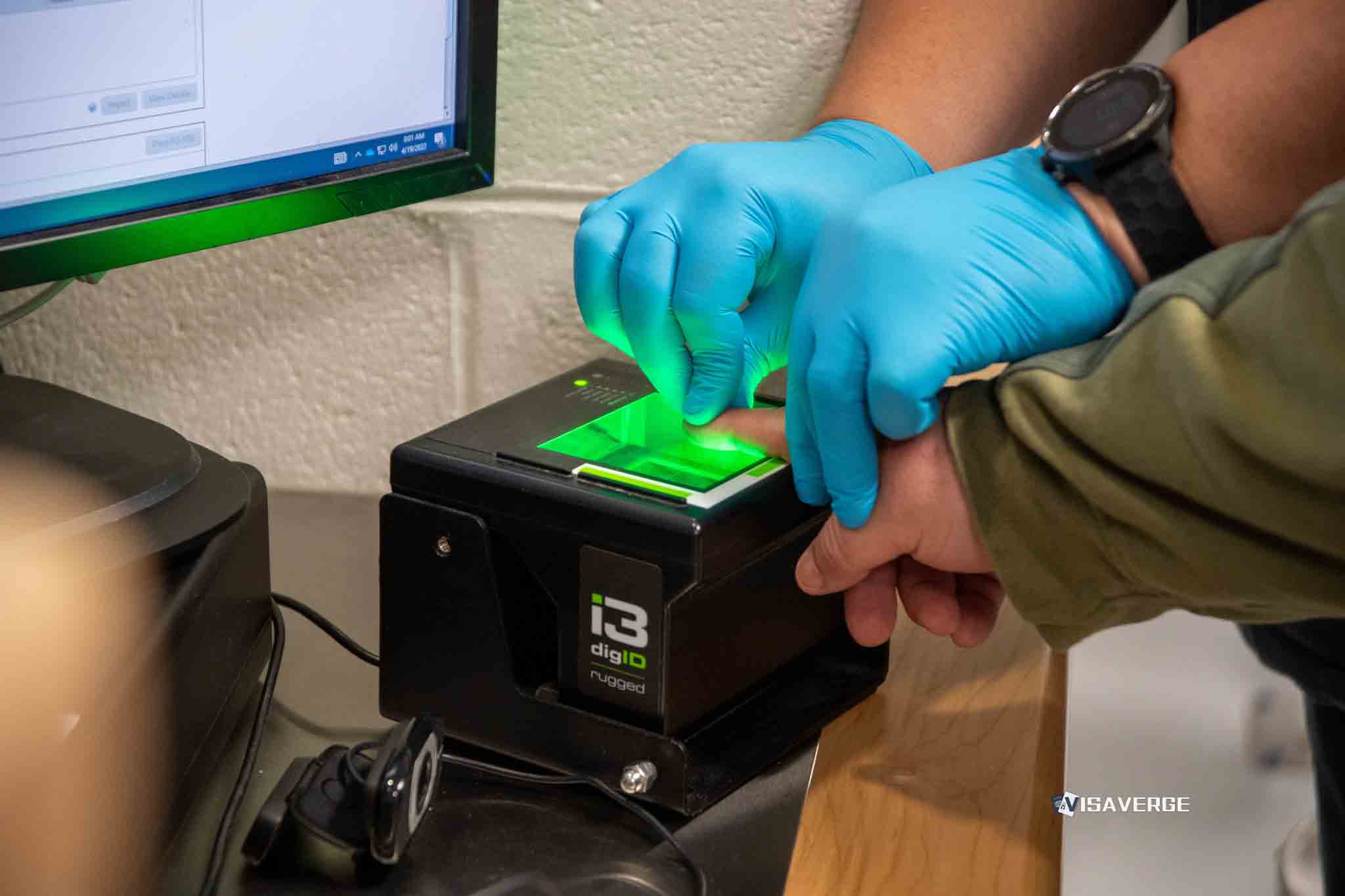
CBP said the facial-recognition system used to verify U.S. citizens was not working in San Francisco, which meant more passengers had to move through biometric screening. The agency also said the ship’s arrival from Mexico triggered more rigorous processing for foreign passengers, including fingerprinting.
Foreign nationals often face a broader set of checks than U.S. citizens at cruise terminals. Officers may need to confirm visa status, Electronic System for Travel Authorization approval under the Visa Waiver Program, passport validity, admissibility and biometric identity before allowing entry.
That reaches across a wide range of travelers, including visitors on B-1/B-2 visas, students, workers, lawful permanent residents and passengers using ESTA. A cruise may feel like a closed vacation environment; U.S. admission law still applies at the dock.
Visa Waiver Program travelers carry a particular risk because ESTA approval is not a visa and does not guarantee admission. Students and workers also face added scrutiny if a short sailing interrupts a U.S. stay and return documents need to match current status.
Recent name changes can complicate identity checks. So can expired or damaged green cards, prior overstays, old visa problems, family travel involving children whose parental documentation may be questioned, and trips that involve medication, mobility assistance or urgent onward connections.
U.S. citizens are not exempt from disruption. The State Department strongly recommends that cruise passengers travel with a passport book even when a cruise line or a closed-loop itinerary allows alternative documents.
A passport card can help for reentry by sea from Mexico, Canada, Bermuda and the Caribbean, but it does not replace a passport book if an emergency forces international air travel. Illness, a missed sailing or an on-board emergency can turn that distinction into an immediate problem.
Permanent residents and visa holders face a different challenge: access to paperwork at the moment officers ask for it. Lawful permanent residents should carry a valid green card and passport where required, while visa holders should keep a passport, visa, `I-94` access information and any supporting documents tied to their status close at hand.
CBP advises international travelers to keep passports and other travel documents ready and not pack them in luggage. Cruise travel creates a common trap because passengers often surrender large bags to the cruise line, keep a small day bag for excursions and assume their documents will not matter again until the trip ends.
That assumption can fall apart at the first U.S. port after a foreign stop. Travelers with `I-20`, `DS-2019`, `I-797` approval notices or other status records may need them available if an officer asks follow-up questions.
The Port of San Francisco handles far more than occasional ship calls. Pier 27 James R. Herman Cruise Terminal opened in 2014, and the port serves cruises to Alaska, Hawaii, Mexico and other destinations while also acting as a homeport for Princess Cruises and Carnival Cruises.
Ships at Pier 27 can connect to a 12-megawatt shore power system, one of the city’s larger investments in cruise infrastructure. A long delay does not stop with the passengers on board; it ripples into excursion schedules, transportation bookings, restaurant traffic and other tourism spending on the waterfront and beyond.
That wider effect helps explain why a disembarkation slowdown draws attention quickly in a city that depends on visitors. A cruise ship arriving late to shore is not simply a travel inconvenience; it is a missed business day for guides, drivers and merchants waiting for thousands of people to come ashore.
Passengers planning future sailings can reduce some of the risk before they ever board. Every traveler on the reservation needs the correct passport, visa, ESTA approval or residence document for every country on the itinerary, including ports where they expect to remain on the ship.
That review matters because cruise routes often cross multiple legal systems in a single week. A document that works for boarding in one city may not satisfy immigration rules at a later foreign stop or during reentry to the United States.
Paperwork backup also matters. Travelers should keep digital and paper copies of passports, visas, green cards, ESTA approvals, the cruise itinerary, emergency contacts and travel-insurance details in places they can reach without opening checked luggage.
Timing is another practical issue. Tight shore excursions, same-day flights and fixed appointments immediately after a cruise arrival leave little room for a CBP delay caused by biometric screening, manual inspection or an on-board emergency.
Passengers with the least margin for disruption often include people who need medication on schedule, those using mobility assistance and families managing children through long waits in controlled areas. The same goes for travelers who must clear the terminal and head straight to an airport, a train station or a work obligation.
Foreign nationals have less room for error because a cruise return is still a U.S. entry event. Admission does not rest on the vacation booking or the ship’s manifest; it rests on the traveler’s documents and the officer’s inspection at the port.
The San Francisco delay aboard the Norwegian Encore showed how quickly a leisure itinerary can turn into an immigration and customs bottleneck. CBP viewed an arriving vessel from a foreign country carrying thousands of people who needed identity, document and admissibility checks before the city could receive them.
That reality shapes the advice travel lawyers and border officials have repeated for years, even if many passengers hear it only after a disruption. Carry a valid passport book, keep immigration documents accessible throughout the voyage, and leave enough time at the end of an international cruise for the border to move at its own pace.