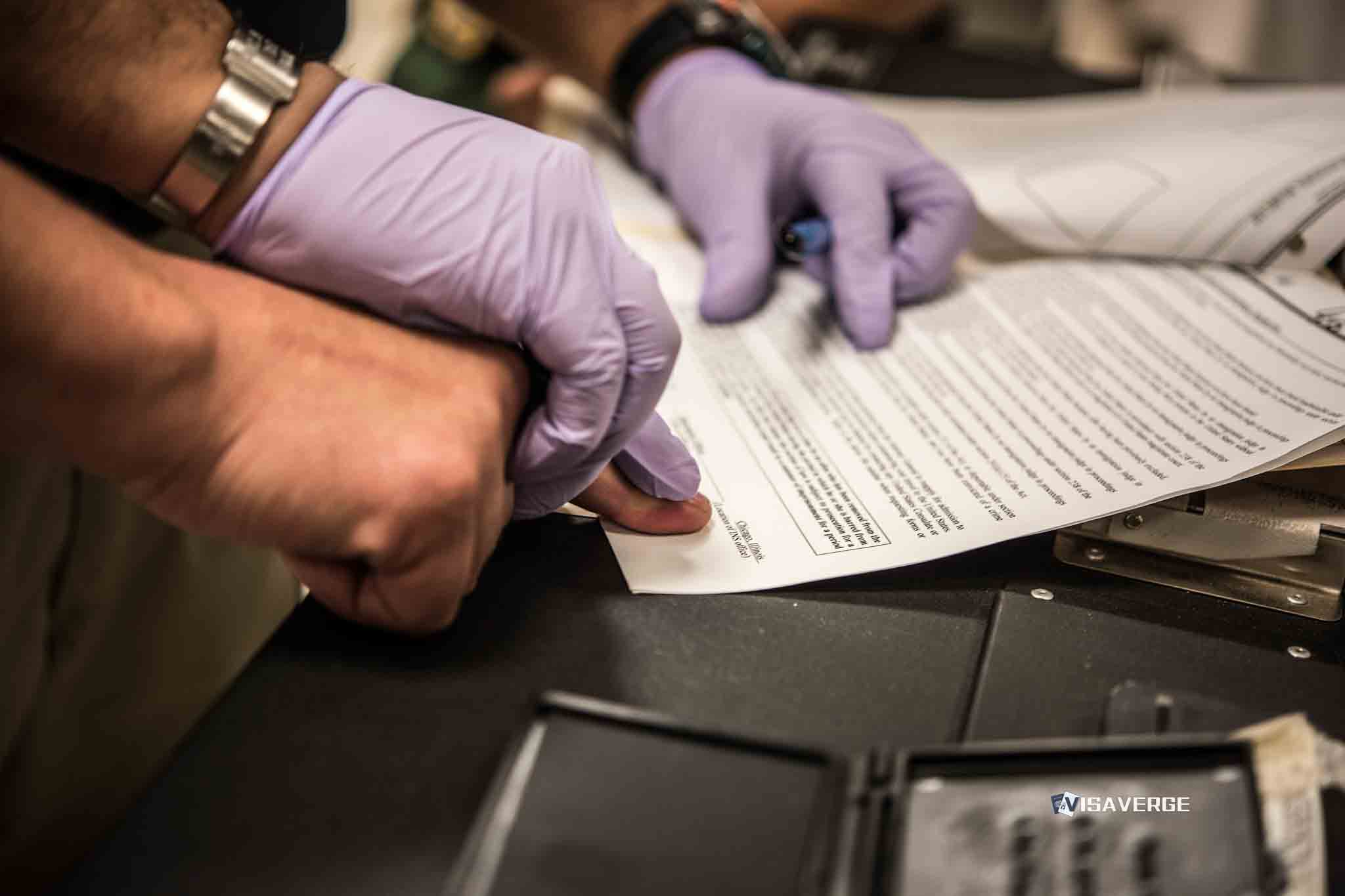
- U.S. authorities detained 85-year-old Marie-Thérèse Ross-Mahé for 16 days over an ESTA visa overstay in Alabama.
- The case sparked condemnation from French officials regarding the treatment and shackling of the elderly widow.
- An Alabama judge suggested a family estate dispute led to the ICE tip-off that prompted her arrest.
(ALABAMA) — U.S. immigration authorities detained Marie-Thérèse Ross-Mahé in Anniston on April 1, 2026, held the 85-year-old French widow in U.S. immigration custody for 16 days, and returned her to France on April 17, 2026, in a case that drew protests from French officials and scrutiny from an Alabama probate judge.
Ross-Mahé had entered the United States in June 2025 through the Visa Waiver Program, using the Electronic System for Travel Authorization, or ESTA. The Department of Homeland Security said she stayed beyond the 90-day period allowed under the program and detained her on that basis.

French officials confirmed her return on April 17. Her son, Hervé Goix, said she arrived at Paris-Charles de Gaulle airport still wearing detention-issued “orange shoes and stained sweatpants” and remained in a state of shock.
The case turned an estate fight in Alabama into an immigration and diplomatic dispute. Ross-Mahé had moved to Alabama after marrying William Ross, a retired U.S. Army captain and former romantic partner from decades earlier, and her position became more precarious after he died in January 2026 before her effort to secure lawful status was resolved.
DHS said an “illegal alien from France” matching her identity “entered the country in June 2025 and overstayed her 90-day visa” under the Visa Waiver Program. The department added that “staying beyond the authorized period of admission is a violation of federal law.”
That program allows short-term entry without a visa, but it offers little room once the period of admission expires. The federal government also treats Visa Waiver Program entrants differently from many other noncitizens because the program includes a waiver of rights to contest removal, except for asylum.
Ross-Mahé’s family said she had sought to regularize her status after marrying Ross and had filed an I-130 Petition for Alien Relative. Family accounts placed her in the middle of an adjustment process tied to her marriage to a U.S. citizen, but her husband’s death before the case was completed left timing and eligibility questions unresolved.
Pending immigration filings do not stop enforcement when the government treats someone as out of status. Ross-Mahé’s case showed that gap in stark terms: family members said she was pursuing a path toward permanent residence, while DHS relied on the expired admission period from her ESTA entry.
Her arrest came amid a bitter dispute over the estate of William Ross, who died without a will. Calhoun County Probate Judge Shirley Millwood later issued an order suggesting that one of Ross’s sons, a retired Alabama State Trooper and current federal employee, may have “misused his position” to tip off ICE agents about Ross-Mahé’s status just days before a scheduled estate hearing.
Millwood’s order also pointed to problems with Ross-Mahé’s mail. The judge found that mail had been deliberately redirected, a step that family accounts tied to a missed immigration-related appointment and to the wider probate conflict over Ross’s property and papers.
That overlap between family litigation and immigration procedure can carry immediate consequences. A missed notice, a disrupted mailing address, or delayed access to records can leave a noncitizen exposed even while a lawyer is trying to keep an application on track.
French Foreign Minister Jean-Noël Barrot condemned the way U.S. authorities handled the case after Ross-Mahé’s detention became public. On April 17, 2026, he said ICE’s methods were “not in line” with French standards and were “not acceptable to us,” criticizing the use of shackles on an elderly woman with heart and back problems.
Family members said agents took Ross-Mahé from the home in her nightgown and shackled her “by the hands and feet” during transport to a detention facility in Louisiana. Those details turned a visa overstay case into a wider debate about detention discretion, proportionality, and how authorities handle elderly people with medical vulnerabilities.
ICE confirmed Ross-Mahé’s departure from the United States on April 17, 2026. Officials “declined to comment on reasons for her release,” citing privacy and operational policy, though DHS sources said the release came on “humanitarian grounds” after diplomatic intervention at senior levels.
Her detention also raised questions about how the government treats spouses and relatives of current or former U.S. service members. Ross-Mahé was the widow of a veteran, but no automatic shield protected her once authorities classified her as removable under the terms of her admission.
Advocates cited the case as an example of a stricter enforcement climate, saying earlier use of prosecutorial discretion for elderly relatives or military families has narrowed. The case did not establish that every overstay under the Visa Waiver Program will end in detention, but it showed a harder line on expired admissions and on people whose applications remain unresolved.
That harder line mattered here because Ross-Mahé was not a recent border arrival and was not described by officials as a fugitive. She had been living in Alabama since June 2025, was tied to a local probate proceeding, and had family members publicly arguing that she was trying to comply with the law after her marriage.
The facts also exposed the difference between eligibility for relief and current legal status. A foreign spouse may have a path to lawful permanent residence after marrying a U.S. citizen, but that path can narrow quickly if the citizen spouse dies, notices go astray, or the case stalls before approval.
In cases involving a death in the family, lawyers often need to protect more than one file at once. Estate counsel may control access to the home, mail, bank records, and identity documents, while immigration counsel needs those same records to keep a filing active and respond to agency notices on time.
Ross-Mahé’s case put those pressures in one place. An estate battle over Ross’s property unfolded alongside an unresolved immigration process, and the mailing dispute identified by Millwood showed how a probate fight can spill into federal compliance problems.
The case also brought the Visa Waiver Program into public view for reasons far removed from tourism or business travel. The program is designed for brief visits, and once the authorized stay ends, the legal consequences can arrive before a family has solved a death, an inheritance fight, or the paperwork that follows a marriage late in life.
French criticism gave the matter weight beyond Alabama. Barrot’s remarks turned a local detention into a bilateral complaint about treatment standards, and Ross-Mahé’s return to Paris closed the immediate custody battle without quieting questions about why an elderly widow with a pending family-based case spent more than two weeks in detention.
Ross-Mahé is now back in France, where her family said recovery is the priority. In Alabama, the court fight over William Ross’s estate and Millwood’s findings about redirected mail left behind a record showing how quickly marriage, bereavement, and a visa overstay can converge into an immigration arrest.