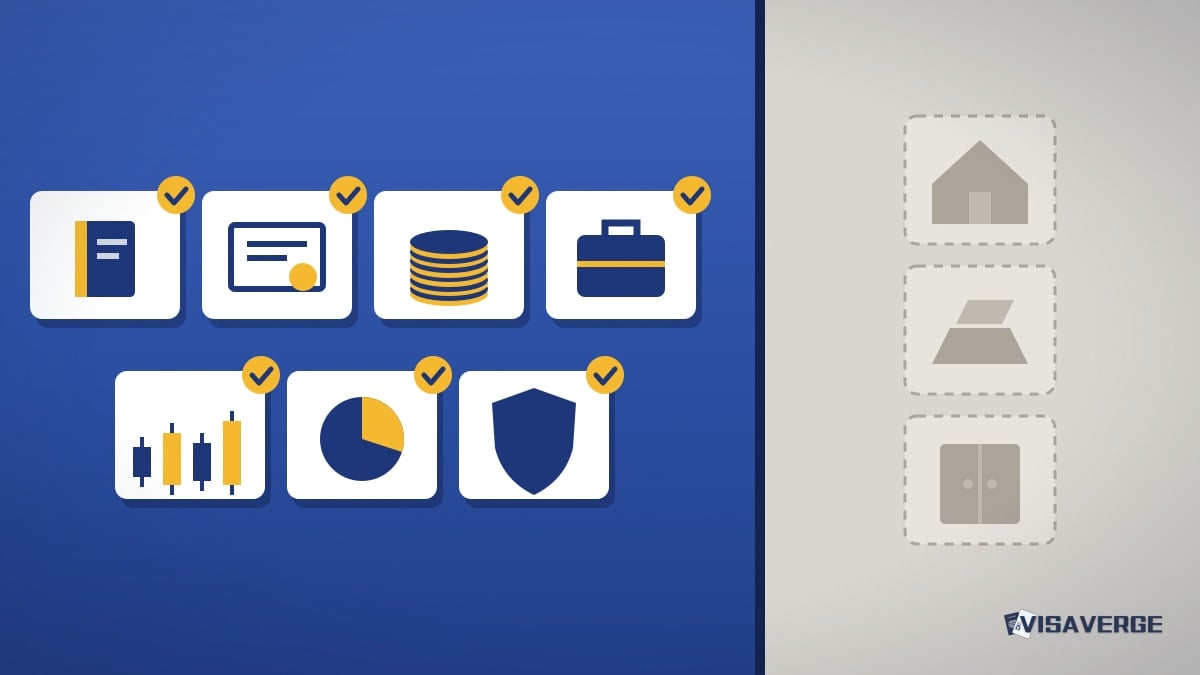
- Transition from seasonal filing to year-round tax compliance for NRIs, H-1B workers, and green card holders.
- Monthly milestones prioritize gathering foreign income records and verifying residency status before April deadlines.
- Maintain a permanent tax file for immigration and financial applications beyond simple IRS compliance.
(U.S.) — A year-round U.S. tax compliance checklist urges NRIs, H-1B workers and green card holders to treat U.S. tax compliance as more than a once-a-year filing task.
The checklist frames tax season as the end point of work that starts months earlier, with federal and state filings, foreign income records, withholding reviews, estimated payments, account reporting and immigration-related documentation all feeding into the final return.

Its central warning is practical. Many tax problems start with missing records, not deliberate noncompliance, and those gaps often surface after a return is filed, when a taxpayer remembers Indian bank interest, foreign rental income, a state move, or a missing document needed for immigration paperwork.
January is the month to begin collecting records rather than waiting until March or April. The checklist calls for a tax-year folder that includes `Form W-2` from U.S. employers, `Form 1099`, `Form 1098`, `Form 1042-S`, final pay stubs, foreign bank statements, foreign investment statements, rental income and expense records, foreign tax payment records and a prior-year return.
That first review carries extra weight for H-1B workers who changed jobs during the year. The checklist says they should verify that every employer issued a `Form W-2`.
F-1 to H-1B transition cases need a separate set of records tied to status itself, including immigration approval notices and status-change dates. Tax residency can turn on timing, and the checklist says those dates belong in the tax file alongside income documents.
By February, the focus shifts from gathering forms to identifying every income source for the year, in the United States and abroad. Salary, bonuses, severance, bank interest, brokerage income, stock or mutual fund sales, crypto transactions, consulting income, foreign salary or business income, foreign pensions, foreign rental income and Indian fixed deposit interest all appear on the review list.
NRIs and other cross-border taxpayers face a recordkeeping problem that domestic filers often avoid. Foreign banks and investment platforms may not issue U.S.-style `Form 1099`, which means the income may have to be calculated and documented separately.
March is the point where the checklist tells taxpayers to stop and confirm tax residency before preparing a return. It distinguishes among a U.S. tax resident, a nonresident alien and a dual-status taxpayer, and says the answer determines which form is filed, what income is reported and whether foreign income belongs on the return.
The review is aimed at groups whose tax position can shift quickly during a calendar year, including F-1 students, OPT and STEM OPT workers, first-year H-1B workers, green card holders, NRIs who left or returned to the United States, and spouses of U.S. citizens or residents. The checklist stresses that immigration status and tax residency are not always the same and says a visa label alone should not decide the return.
In April, the checklist narrows to the filing decision itself: file, extend, or pay on time. It says an extension gives more time to file, but generally not more time to pay tax due, and urges taxpayers who expect to owe tax to estimate and pay by the applicable deadline to reduce interest and penalties.
That same month also serves as a checkpoint for foreign account obligations beyond the income tax return. The checklist warns taxpayers with foreign accounts not to assume that filing `Form 1040` alone completes every compliance requirement.
Once the return is filed, the paperwork still matters. In May, the checklist calls for saving a full copy of the signed or e-filed return, the filing confirmation, payment confirmation, extension confirmation, W-2s, 1099s, foreign income worksheets, state returns, foreign asset forms and any communication with a preparer.
Those files can resurface long after filing season. The checklist says they may be needed for immigration filings, H-1B records, naturalization preparation, financial applications or IRS notice responses.
By June, attention moves to state tax and work location issues, an area that often widens after job changes and remote work. The checklist says taxpayers should review state treatment if they moved during the year, lived in one state and worked in another, changed employers, earned rental income in another state, worked temporarily from India or another country, or filed as a part-year resident.
Federal residency does not settle state residency. H-1B workers and green card holders who relocate for work are told to review state withholding and part-year returns rather than assuming the federal filing position controls both.
A mid-year check comes in July, when withholding and estimated tax payments can be tested against what has happened since January. Job changes, salary increases, bonus income, spouse income, side income, consulting, rental income, foreign income, investment gains, stock compensation, large bank interest and self-employment income all appear as reasons to revisit withholding.
Employees may need to update `Form W-4`, while taxpayers with income not subject to withholding may need estimated tax payments. The checklist says waiting until the next filing season can leave a taxpayer facing a large balance due.
In August, the emphasis returns to foreign accounts and asset records. The checklist tells taxpayers to review whether statements and ownership records are complete for Indian savings accounts, NRE and NRO accounts, fixed deposits, foreign brokerage accounts, Demat accounts, foreign mutual funds, joint family accounts and accounts over which they have signature authority.
The goal is straightforward: avoid chasing missing statements and maximum balance figures during filing season. For cross-border households, that often means collecting records months before any return is drafted.
September is reserved for a different kind of tax use, one tied to immigration, employment and lending rather than tax liability alone. The checklist says taxpayers should organize IRS transcripts, filed returns, W-2s, pay stubs and proof of payment in a secure folder for needs that can include `Form I-864` Affidavit of Support, green card processing, naturalization, H-1B extensions or transfers, visa renewals, mortgage applications, rental applications, student aid and employment verification.
October then becomes the clean-up month for taxpayers who filed an extension or still have prior-year issues open. The checklist says they should confirm that the extended return has been filed, tax due has been paid, IRS notices have been answered, any needed amendment is actually necessary, state corrections have been handled, foreign income was properly included and immigration-related tax documents are complete.
It cautions against filing an amended return simply because a refund is delayed or an IRS letter arrives. The proper response depends on the specific issue involved.
The final stretch starts in November, when the checklist tells taxpayers to review year-end transactions before the calendar closes. It lists capital gains and losses, foreign property sales, foreign account balances, large gifts or transfers from family abroad, charitable contributions, retirement contributions, stock option exercises, RSU vesting, rental income and expenses, estimated tax shortfalls and state residency changes as items that can affect year-end planning and later documentation.
Waiting until after December 31 can narrow those options. The checklist says delayed review can also make records harder to assemble.
In December, the process turns into a final compliance check built around a set of direct questions: Did visa or green card status change, did the taxpayer become a U.S. tax resident, did a state move occur, was there foreign income or foreign accounts, was there a large foreign gift or transfer, were property or investments sold, did the employer change, was withholding enough, is estimated tax planning needed, and are records complete.
The year-end review is meant to prevent filing-season surprises, but the checklist also points to recurring mistakes that build up throughout the year. Those include waiting until April to collect foreign records, assuming foreign bank interest is irrelevant, treating immigration status as the only tax residency test, ignoring state tax after a move or remote work, filing without checking all W-2s and 1099s, forgetting proof of tax payment, failing to keep IRS transcripts, missing estimated tax obligations, ignoring IRS notices and assuming one tax form resolves every compliance issue.
The article also sets out situations where professional help is advisable, including an F-1 to H-1B transition year, dual-status filing, foreign income or foreign accounts, green card status with Indian income, foreign property sales, a large foreign gift or inheritance, missed prior-year filing, an IRS notice, multi-state tax issues, self-employment, business income and complex investment income.
Behind the monthly checklist sits a permanent file. It calls on NRIs, H-1B workers, green card holders and other cross-border taxpayers to maintain a yearly tax folder covering U.S. income records, foreign income records, immigration status documents such as I-797 notices, foreign account statements and ownership details, filed returns and e-file confirmations, payment and extension proof, state returns and withholding records, IRS transcripts and notices, family transfer records and property sale and purchase records.
The document trail, rather than a last-minute scramble in April, is presented as the strongest protection against later problems in tax season, immigration filings, loan applications and IRS responses.