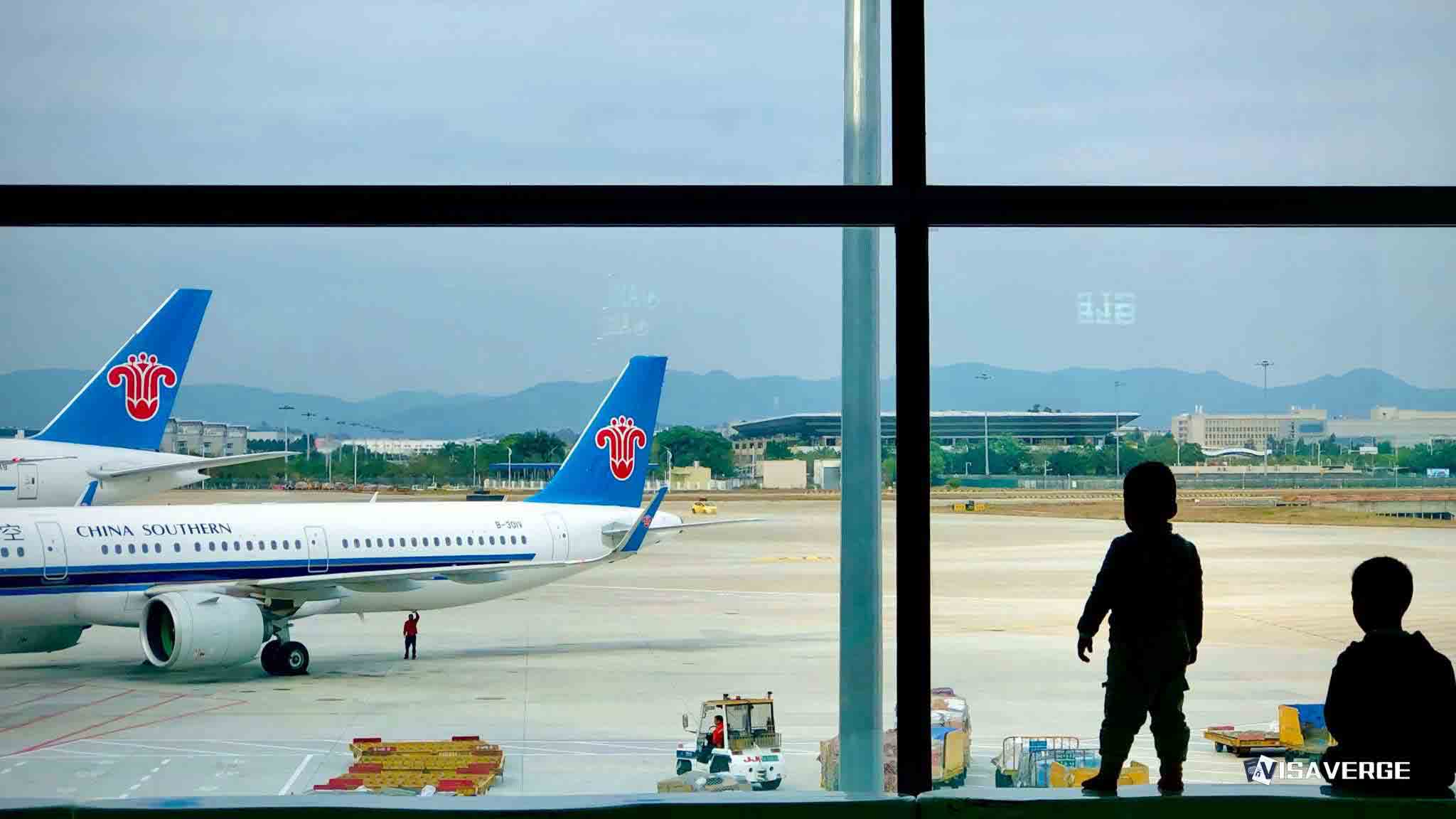
- United Airlines faced thirty-five cancellations at O’Hare on July fourth, twenty twenty-six due to ground stops.
- Newark Liberty airport recorded thirteen cancellations and thirty delays, straining United’s major East Coast hub operations.
- Total nationwide disruptions reached two hundred sixteen cancellations and six hundred seventy-one delays across all airlines.
(CHICAGO, ILLINOIS) — United Airlines travelers faced the heaviest disruption at Chicago O’Hare on July 4, 2026, as FAA ground stops tied to thunderstorms and holiday traffic rippled through the carrier’s network. United reported 35 cancellations at Chicago O’Hare, the highest total among its hubs that day.
The outage came on one of the busiest travel days of the year, when even short FAA slowdowns can push airports into a backlog fast. Passengers connecting through ORD had the hardest time, especially those on tight banked schedules common at United’s largest hub.
Free toolB1/B2 Tourist Visa Stay Calculator online
Newark Liberty also took a hit, with 13 cancellations and 30 delays. The disruption was concentrated at major gateways, including ORD, ATL, EWR, BOS, and JFK, where traffic volume left little room for recovery once the ground stops began.
Nationwide, U.S. airlines logged 216 cancellations and 671 delays on July 4. That left many travelers staring at missed connections, longer lines at customer service, and rebooking queues that moved slowly through the afternoon and evening.
United’s hub structure made the airline especially exposed. O’Hare and Newark serve as major connection points for domestic and long-haul trips, so a delay in one arriving wave often knocks the next wave off schedule. Holiday congestion then makes the problem harder to unwind.
Travelers holding MileagePlus award tickets were not insulated from the mess. Award seats on replacement flights still depend on space, and same-day options can disappear quickly when the network is under strain. Elite status helps with priority rebooking and standby handling, but it does not guarantee an immediate seat on a full holiday flight.
United was not alone in facing pressure. Delta, American, and other large carriers also dealt with weather-related disruption across the same holiday window. The difference at Chicago and Newark was the concentration of delays inside a single hub system, which can spread problems across several cities in a matter of hours.
Recent travel analyses had already flagged O’Hare and Newark as two of the airports most exposed to holiday-period delays for United. July 4 confirmed that risk in real time, with FAA ground stops hitting the carrier’s busiest transfer points while demand remained elevated across the country.
| Airport | July 4 cancellations | July 4 delays | Notes |
|---|---|---|---|
| Chicago O’Hare (ORD) | 35 | Not reported in the available figures | Highest cancellation total among United hubs |
| Newark Liberty (EWR) | 13 | 30 | Major United hub, heavily affected by the slowdown |
| U.S. total | 216 | 671 | Disruption spread across major hubs nationwide |
Chicago O’Hare has long been one of the most delay-prone airports in the United network because of its size and connection-heavy schedule. Newark carries a similar risk profile, especially during peak travel periods when inbound and outbound banks leave little slack for recovery.
The holiday pattern also showed how quickly FAA ground stops can cascade into missed links and overnight disruptions. A flight that left late from one city could arrive after the departure bank had already closed at the next hub, turning a weather delay into a cancellation.
| Hub | Exposure on July 4 | Traveler impact |
|---|---|---|
| Chicago O’Hare | Highest United cancellation total | Most at risk for missed connections and late rebooking |
| Newark Liberty | Heavy cancellations and delays | Longer waits and fewer backup options |
| Other large hubs | Delay and cancellation pressure across the system | Disruption spread beyond one airline |
Passengers with United itineraries through ORD or EWR on holiday weekends face the greatest exposure when storms force FAA restrictions. Checking flight status early, keeping app notifications on, and booking with extra connection time are the simplest ways to avoid being trapped by a short ground stop that turns into a missed trip.