- A faulty retaining pin causes uncommanded engine shutdowns by releasing the cockpit fire-switch button without pilot input.
- The British pilots’ union warns the defect is completely latent, providing crews no warning before an engine disconnects.
- Current safety directives cover A320-family jets, but calls for A350 inclusion grow after a documented mid-air incident.
A British pilots’ union has warned that a silent mechanical defect in certain Airbus cockpit fire-switch panels can cause an uncommanded engine shutdown during flight. Airbus has told operators to inspect the affected assemblies and replace defective parts.
The fault centers on the engine fire shutoff pushbutton mounted on the overhead cockpit panel. A bent and worn retaining pin may stop holding the button in place.
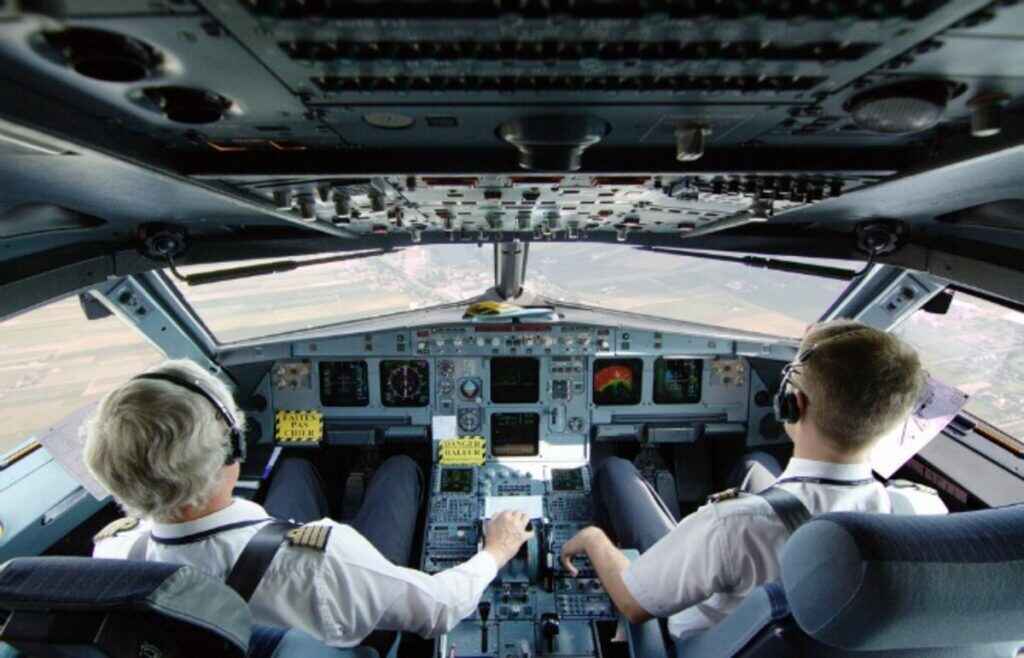
Aircraft vibration can then release the switch. The system may interpret that movement as a deliberate pilot command to isolate the engine.
The British Airline Pilots’ Association, known as BALPA, described the risk as “completely latent.” Crews may receive no specific warning before the switch disengages.
“Because the defect is completely latent. we consider the potential severity to be high to potentially catastrophic — particularly if crews misidentify the problem.”
BALPA’s Airworthiness and Accident Analysis Panel issued that safety notice on August 3-4, 2026. The union said the danger could be especially acute during takeoff or initial climb, when crews have less time to identify the cause of an engine loss.
At least seven in-flight shutdowns have been associated with the defect since 2016. Six involved A320-family aircraft, while one involved an A350.
EASA action covers four A320-family models
The European Union Aviation Safety Agency has limited its mandatory action to A318, A319, A320 and A321 aircraft equipped with the affected Safran panels. The referenced directive, EASA AD 2025-0274R1, took effect on July 14, 2026.
EASA also lists AD 2026-0134, alongside earlier versions such as AD 2025-0274, requiring inspections of the affected assemblies. The compliance deadline runs to November 2027, a timetable BALPA has described as “uncomfortable” given the potential severity of the fault.
The A350 appears in the documented incidents but not in the A320-family directive. BALPA is lobbying EASA to extend the mandatory action to the A350-1000, whose cockpit fire-panel design the union says is virtually identical to the A320neo’s.
| Aircraft | Documented involvement | Current directive scope |
|---|---|---|
| A318 | Covered by the directive | Affected aircraft with Safran panels |
| A319 | Covered by the directive | Affected aircraft with Safran panels |
| A320 | Six of seven reported shutdown cases were in the A320 family | Affected aircraft with Safran panels |
| A321 | Covered by the directive | Affected aircraft with Safran panels |
| A350-1000 | One of seven reported cases involved an A350 | Not covered by the A320-family directive |
EASA officials said the risk is being “effectively managed through maintenance” rather than through a fleet grounding. Airbus has issued operator guidance and begun inspections and replacements for the affected parts.
Two incidents exposed the failure mechanism
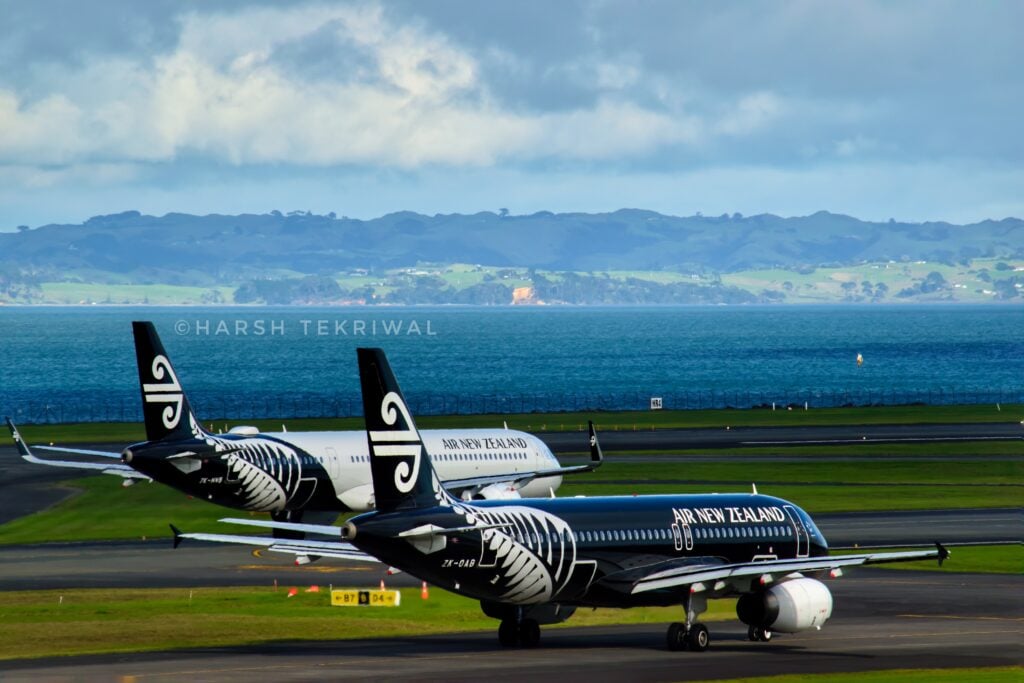
An Air New Zealand A320neo suffered an engine shutdown in December 2024. Flight NZ249, carrying 142 passengers and 6 crew, lost its right-hand engine 15 minutes after leaving Wellington.
Investigators found that a bent retaining pin had dislodged and triggered the fire shutoff. The aircraft declared a Mayday and made an emergency diversion.
A second case involved British Airways Flight BA274 on February 19-20, 2026. The A350-1000, registered as G-XWBR, lost an engine while cruising at 39,000 feet over Halifax, Canada, during a flight from Las Vegas to London Heathrow.
The captain was in the rest bunk. The remaining crew identified the dislodged fire switch and completed an in-flight relight.
The incidents involved different aircraft families. Both raised concerns about a fire switch moving after its locking mechanism deteriorated.
Crews may see only subtle cockpit clues
BALPA has warned that visual indications of a self-activated fire switch can be “subtle,” particularly in a darkened cockpit during night operations. The union has urged pilots to include the position of the fire pushbuttons in their emergency scans.
The panel also warned that the defect may initially produce “confusing or incomplete ECAM [Electronic Centralised Aircraft Monitor] indications.” That can complicate the first diagnosis.
Airbus reminded operators that a fire switch used in response to an actual fire warning or procedure should not be re-engaged. When an engine stops without an obvious fire, crews may consider a possible switch anomaly before following the approved restart procedure.
Modern twin-engine aircraft can fly safely on one engine. An engine loss can still prompt Mayday declarations, diversions and passenger disruption.
Airlines face inspections alongside other engine pressures
British Airways, Virgin Atlantic and easyJet are among the carriers represented by BALPA whose fleets face additional maintenance work. The union’s warning concerns inspections involving hundreds of aircraft.
Airbus has sent Alert Operators Transmissions with technical instructions covering inspection and replacement of the fire-switch modules. The instructions also address the Elevator Aileron Computer, or ELAC.
The fire-switch issue arrives as airlines continue dealing with delays involving Pratt & Whitney GTF engines. That broader engine crisis has added pressure to maintenance programs.
EASA’s inspection approach does not automatically require affected aircraft to remain grounded. The agency has relied on inspections and part replacement, while BALPA is pressing for faster action and broader coverage.
The current compliance deadline is November 2027. Until then, the A350-1000 remains outside the A320-family directive despite one documented shutdown involving that aircraft type.