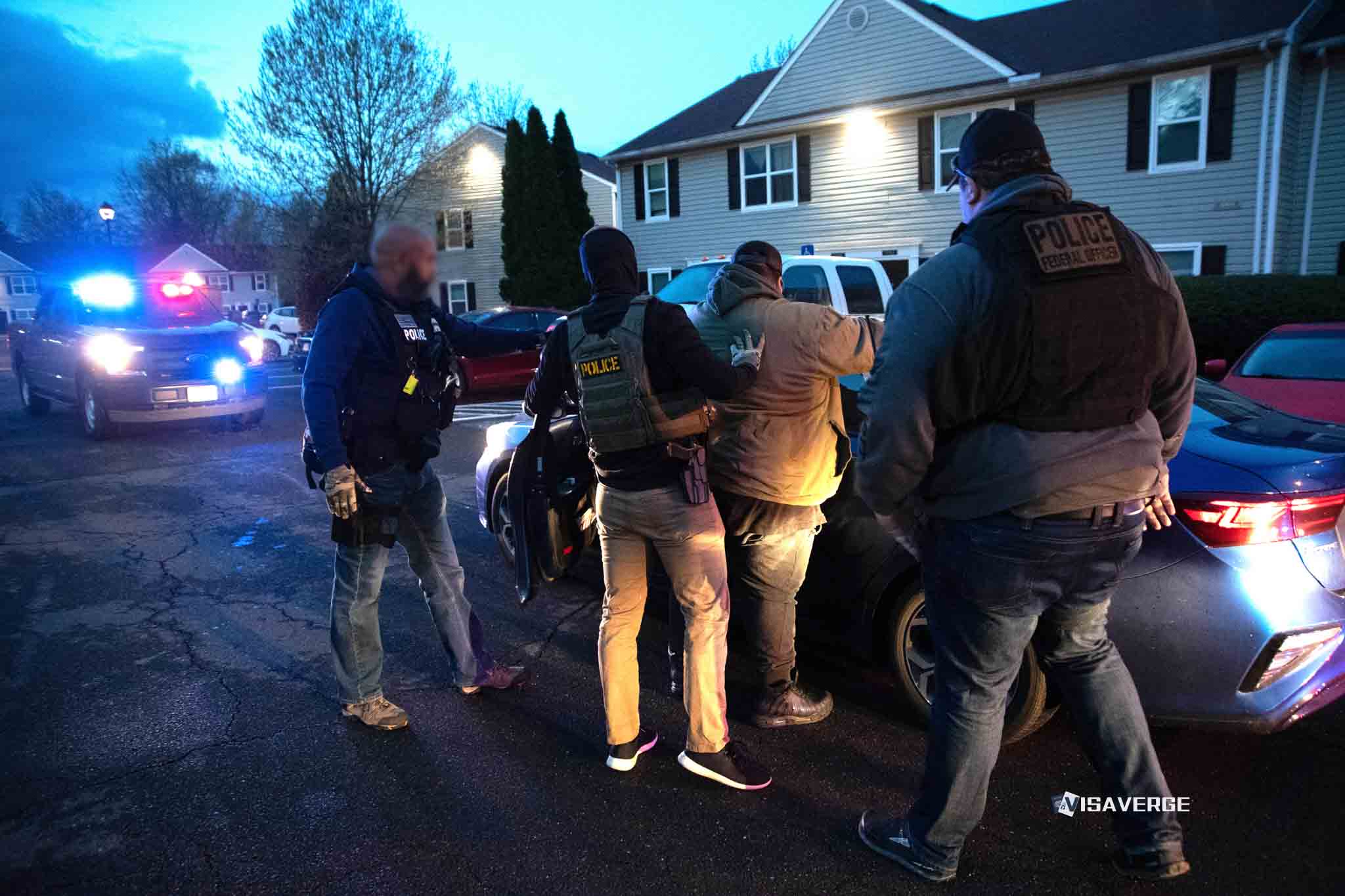
- Liberia has agreed to accept 1,200 deportees from the United States over the next twelve months.
- The first group of twenty arrivals is scheduled for Thursday at the airport in Monrovia.
- The deal includes 124 million dollars in health funding and extended U.S. visa validity for Liberians.
Liberia agreed Tuesday to accept up to 1,200 third-country deportees from the United States over the next year, with the first 20 scheduled to arrive in Monrovia on Thursday, August 20, 2026.
The arrangement expands the Trump administration’s effort to send people to countries where they are not citizens. The incoming group will include nationals from African and Western Hemisphere countries.
Free toolUSCIS Receipt Number Decoder
Liberian Information Minister Jerolinmek Piah said the arrivals would enter as guests and could seek protection or leave the country. He said the government’s role was “entirely humanitarian.”
“The government wants to emphasize that those being brought to Liberia are being received as guests of the Republic. [they] remain free to depart the country when they so desire.”
October 2026 Final Action Dates
India China ROW EB-1 Feb 01, 2023 ▲109d Jul 01, 2023 Current EB-2 Nov 01, 2013 Oct 01, 2021 ▲30d Jan 01, 2025 EB-3 Jan 01, 2014 Jan 08, 2022 ▲7d May 15, 2024 ▼109d F-1 Jan 22, 2020 Jan 22, 2020 Jan 22, 2020 F-2A Sep 22, 2026 ▲31d Sep 22, 2026 ▲31d Sep 22, 2026 ▲31d
Piah said arrivals “may wish to seek asylum” in Liberia or “can leave the country whenever they desire.” The U.S. government will provide support to help manage the program.
The first group is due in Monrovia on Thursday
The agreement permits transfers over a 12-month period. The opening group will contain 20 people, while the total could reach 1,200.
The people covered by the deal are not being sent to their own countries. Many have withholding of removal orders or other legal protections based on the risk of torture or persecution if returned home.
Those protections generally bar removal to the country where the person faces that danger. The third-country arrangement allows the administration to transfer them elsewhere instead.
The group may include people from North America, South America and the Caribbean, as well as African countries. Many are expected to have no citizenship, family or language ties to Liberia.
The deal rests on an asylum agreement signed last year
The transfers operate under an Asylum Cooperative Agreement signed on September 10, 2025. The agreement became public in March 2026.
Under the arrangement, the U.S. committed $124 million for Liberian health services. Washington also extended the validity of B1/B2 visas for Liberian citizens from 12 to 36 months.
Similar third-country arrangements have been established with the Democratic Republic of the Congo, the Central African Republic, Ghana and Sierra Leone. The administration has presented the policy as part of a broader removal campaign.
DHS Secretary Markwayne Mullin described that campaign in an August 13, 2026, department release.
“Every day, the brave men and women of ICE are arresting and deporting illegal aliens from our country. Deporting illegal aliens saves lives. Thanks to President Trump’s leadership, we are making America safe again. DHS is delivering on the American people’s mandate to deport illegal aliens.”
Mullin’s statement came from the Department of Homeland Security’s release, titled “MAKE AMERICA SAFE AGAIN: DHS Deports Criminal Illegal Aliens.”
Rights groups warn about what happens after transfer
Refugees International and Human Rights First have called the agreements “opaque” and argued that governments are treating migrants as “bargaining chips.”
Advocates say some people transferred to third countries are later sent to their home countries by the host government. That could raise questions under international non-refoulement obligations.
They also warn that people may face arbitrary detention or other abuses after leaving U.S. jurisdiction. The concerns are sharper for people who have no established connection to the country receiving them.
Piah did not confirm whether Liberia would prevent later repatriation to the individuals’ countries of origin. He said the arrivals could seek asylum locally or depart.
Washington is pairing removals with financial and travel benefits
The Liberian package combines cooperation on removals with funding for health services and a change affecting business and visitor travel. B1/B2 visa validity for Liberian citizens will run for 36 months instead of 12 months.
The health-services commitment totals $124 million. The arrangement also gives the administration another destination for people whom U.S. authorities cannot return directly to their home countries.
DHS General Counsel James Percival described the broader removal effort in an official department video released in early August 2026.
“It’s closing time. You don’t have to go home but you can’t stay here. The good news is it’s not too late to get a $2,600 check and a free flight home.”
The first transfer will test how the arrangement works in practice. Twenty people are expected in Monrovia on August 20, before any further arrivals under the one-year limit.