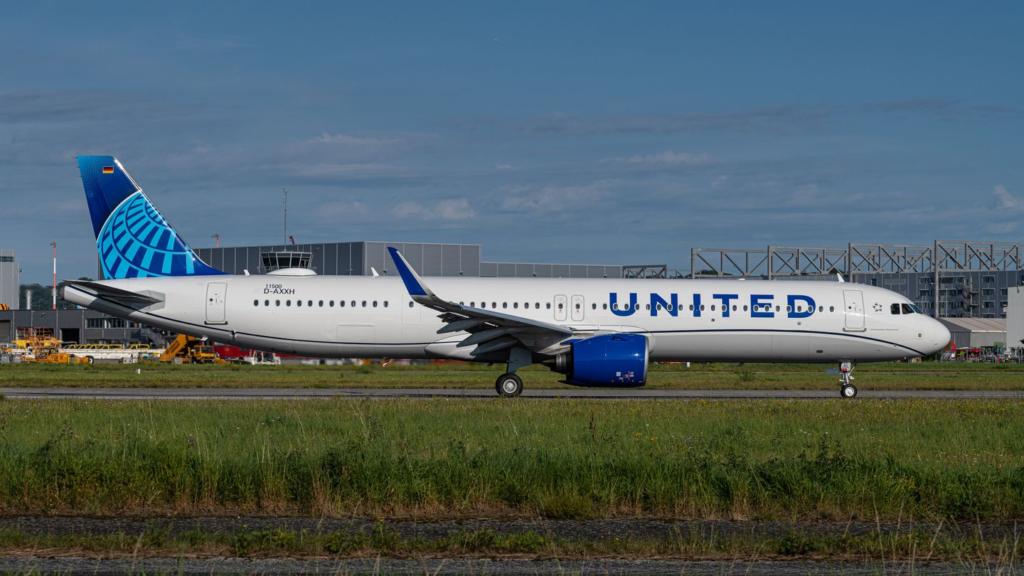
- Airbus says a fuselage coating flaw may affect about five hundred A321neos, but the jets can continue flying.
- About two hundred fifty affected aircraft are already in service, while another two hundred fifty remain in production.
- Airbus says no immediate repair is required and reaffirmed its goal of delivering about eight hundred seventy aircraft in twenty twenty-six.
Airbus said on September 24, 2026, that a fuselage coating flaw may affect about 500 A321neos, but operators can keep the aircraft flying. The company says there is no immediate repair requirement.
About half of the affected jets are already in service. The rest remain in production, giving Airbus a repair task across both operating fleets and its assembly line.
Free toolB1/B2 Tourist Visa Stay Calculator online
The company characterized the problem as a manufacturing matter, not a threat to flight safety. Customers continue to take deliveries without requiring the work first.
Airbus has said the defect’s source is contained and a remedy is available. The longer-range A321XLR is not affected.
Airbus described the finding this way:
“this is a quality issue, not a safety issue.”
The deviation involves anti-corrosion protection on stringers, strengthening components in the lower forward fuselage. Airbus says affected aircraft can continue operating while the company carries out the corrective work.
The defect does not mean that each aircraft must be repaired before its next flight. Airbus told customers there is no immediate requirement to fix the affected jets before continued operation.
The defect covers in-service jets and aircraft still on the line
Roughly 250 of the affected aircraft are already flying, while about 250 are still being built. The issue surfaced when parts were already undergoing rework on the production line.
That places the work in two settings. Airbus must address aircraft already delivered as well as components and jets still moving through production.
The A321XLR, the longer-range version, falls outside the affected group. Airbus has not described the finding as extending beyond the A321neo.
Airbus says the repair leaves stringers assembled
An Airbus spokesperson said the company had isolated the source and developed a remedy. The spokesperson also said newly coated stringers meet requirements.
“The source of the issue has been identified, contained and a remedy is available. All newly coated stringers conform to all requirements.”
Airbus says crews do not need to take apart the stringers to apply the rework. The spokesperson described the aircraft’s status after the work as equivalent to its intended design condition.
“The rework doesn’t require any disassembly of the stringers. Once rework is applied, the aircraft is considered to be back as if at nominal design.”
The company’s remedy therefore addresses the coating without requiring stringer disassembly. Airbus has said the corrective process is available, while distinguishing the repair from any immediate need to stop operating affected aircraft.
Industry sources point to a primer application problem
Industry sources linked the coating deviation to a primer layer that may have been applied incorrectly or left too thin. They described the supplier as Italian and connected to Leonardo’s supply chain.
Airbus’s public statements identified the issue as a coating defect and said its source had been contained. The supplier explanation comes from industry sources, rather than from the company’s description of the remedy.
The coating protects stringers against corrosion. The reported deviation concerns that surface protection on components located in the forward lower fuselage.
Customers are taking deliveries without waiting for rework
Airbus says customers have no immediate obligation to repair affected aircraft before operating them. Customers have continued accepting deliveries without demanding that Airbus complete the work first.
Some deliveries have reportedly proceeded with concessions linked to future maintenance. That arrangement allows deliveries to continue while leaving the rework to be handled later.
The company has not called for grounding the affected jets. Its position is that continued operation is acceptable and that the coating defect does not present an immediate safety risk.
Airbus keeps its 2026 delivery target
Airbus shares fell after the finding became public, as investors reacted to another manufacturing-quality problem at the company. The defect adds pressure to the manufacturer’s production system following earlier quality-control scrutiny across its industrial chain.
Airbus nevertheless reaffirmed its delivery goal of around 870 jets in 2026. The company had handed over 475 aircraft between January and August.
An Airbus spokesperson said the company’s public guidance remained the one set out with its first-half results. “Our full-year guidance was formally stated during our first-half results on 29 July – this remains our current public position.”