The July 27, 2026 deadline for President Donald Trump to seek Supreme Court rehearing of the birthright-citizenship case passed with no petition filed. That leaves the Court’s June 30, 2026 6-3 ruling striking down the executive order as the controlling decision.
- Trump said on July 8, 2026 that he would seek rehearing “IMMEDIATELY” and claimed the decision “will destroy America,” but no rehearing brief appeared on the Court’s docket by the deadline.
- The Supreme Court’s June 30, 2026 ruling held that Trump’s executive order limiting birthright citizenship violated the 14th Amendment.
- The case remains at the center of the administration’s effort to narrow birthright citizenship, with the order still blocked and not in force as of the latest reporting.
- President Trump will petition the Supreme Court to rehear the birthright citizenship case decided in June.
- The court’s six-three ruling invalidated Executive Order 14160, protecting children of undocumented and temporary residents.
- The administration cites new birth tourism evidence from Texas despite the rarity of Supreme Court rehearings.
(UNITED STATES) — President Donald Trump said on July 8, 2026, that he will petition the U.S. Supreme Court to rehear Trump v. Barbara, No. 25-365, after the court struck down his executive order aimed at ending automatic citizenship for some children born in the United States.
Free toolSubstantial Presence Test CalculatorTrump’s announcement came eight days after the June 30, 2026, ruling that invalidated the administration’s attempt to narrow birthright citizenship for children born to undocumented parents and parents with temporary immigration status.
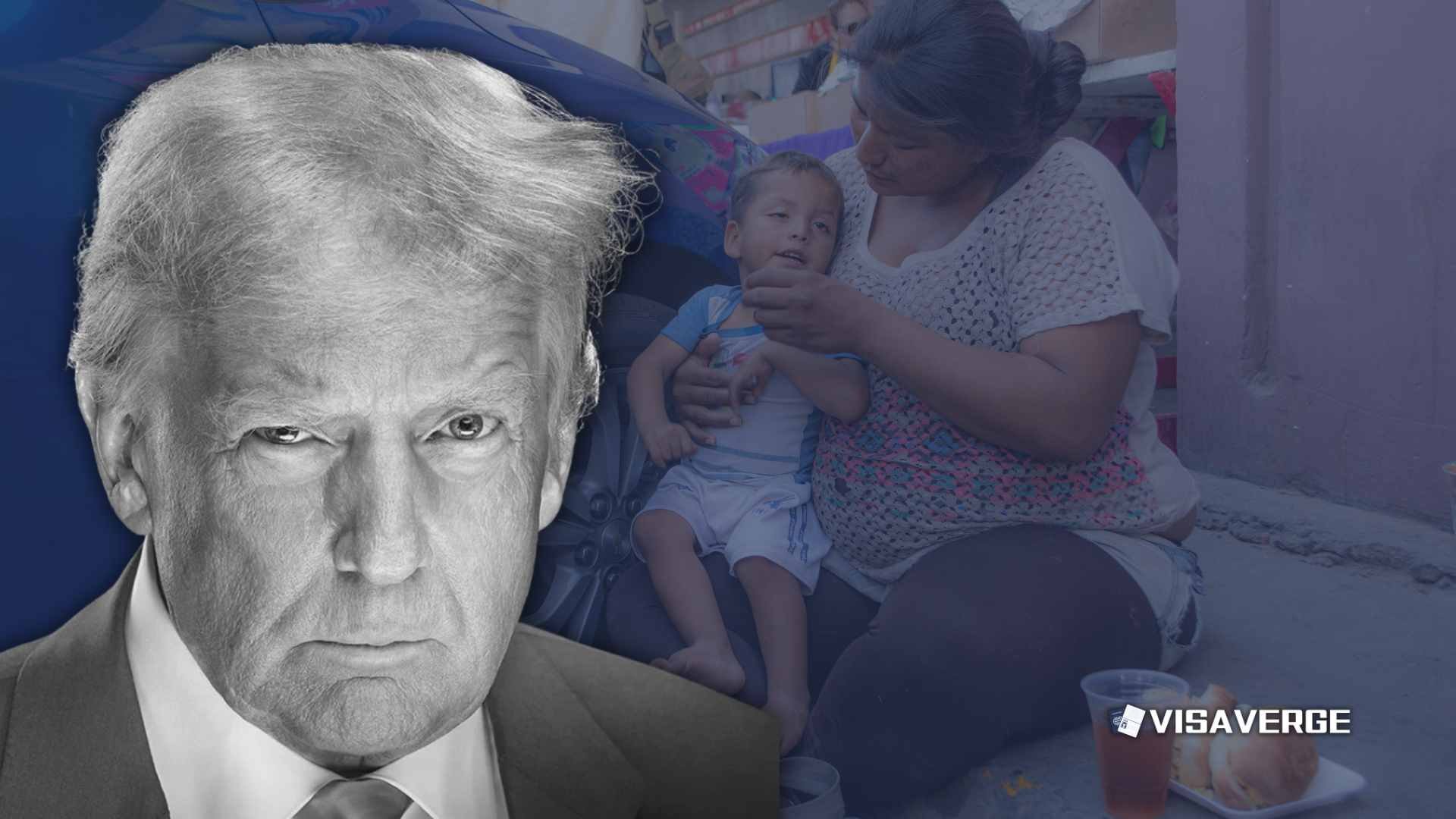
The rehearing request would keep alive one of Trump’s most far-reaching immigration fights and reopen a case the Supreme Court decided 6-3. Chief Justice John Roberts wrote the majority opinion holding that the Fourteenth Amendment’s Citizenship Clause guarantees citizenship to children born on U.S. soil regardless of parental status.
Executive Order and Implementation Plan
That ruling blocked Executive Order 14160, which Trump signed on January 20, 2025. The order sought to reinterpret the phrase “subject to the jurisdiction thereof” so it would not cover children born in the United States to undocumented parents or to temporary visa holders, including people on F-1, H-1B and B-1/B-2 visas.
The administration had already laid the groundwork for enforcing that policy. USCIS published Implementation Plan IP-2025-0001 on July 25, 2025, under the title “Protecting the Meaning and Value of American Citizenship,” outlining how the agency would deny citizenship documentation to some U.S.-born children. That plan remains on hold after the court’s ruling.
Administration’s Hardline Stance
Senior administration officials had signaled a hardline position even before Trump announced the rehearing bid. In a June 25, 2026, statement after separate Supreme Court victories on asylum and Temporary Protected Status, DHS General Counsel James Percival said, “These three rulings are all victories for the rule of law and common sense. Under the leadership of President Trump and Secretary Mullin, DHS will continue to use every lawful avenue to secure our borders and remove those who violate our laws.”
DHS Secretary Markwayne Mullin had used similar language after his confirmation on March 31, 2026. “American citizenship is a privilege, and it must be earned honestly. DHS will not stand idly by while our immigration system is gamed,” Mullin said.
Birth Tourism Claims
Trump has tied his rehearing push to what he called new evidence from the southern border. He cited a July 2026 report about billboards in Texas advertising “birth packages” to mothers in Mexico, specifically billboards from Mission Regional Medical Center.
Trump described that material as a “dangerous cottage industry” and “shocking new evidence” of birth tourism. The argument appears aimed at persuading the justices to revisit a case they had already decided days earlier.
Rehearings at the Supreme Court are rare. Legal experts have noted that the court last granted rehearing after a decision in an argued case in 1965, a benchmark that underscores how unusual Trump’s request would be if the justices agreed to take a second look.
Broader Legal Implications
The case also reaches far beyond one executive order. A reversal of the court’s June 30, 2026, decision would challenge more than 125 years of law flowing from United States v. Wong Kim Ark, the 1898 decision that has long anchored modern interpretations of birthright citizenship.
The administration has argued that an originalist reading of the Fourteenth Amendment supports a narrower rule, one limited to people whose ties to the United States fit the amendment’s original public meaning. In that view, children of temporary visitors and people present without legal status do not automatically fall within the citizenship guarantee.
That position runs into the Supreme Court’s fresh ruling in Trump v. Barbara, where Roberts and the five other justices in the majority rejected the administration’s reading. The decision left the order without force and kept existing citizenship documentation practices in place.
Current Status and Impact on Families
Children born in the United States still receive Social Security numbers and birth certificates reflecting U.S. citizenship while the ruling stands. USCIS guidance that had instructed officers to flag some birth certificates for heightened scrutiny has also been formally enjoined.
Even so, the rehearing request injects new uncertainty into families already watching the case closely. Indian and other Asian immigrant households face particular exposure because long visa backlogs keep many parents in temporary status for years, even as they build careers and raise children in the United States.
Children born to parents on H-1B and L-1 visas were among those directly targeted by Executive Order 14160. That put the case at the center of concerns among high-skilled immigrant families whose children were born in the United States but whose own immigration status remained temporary because permanent residence was out of reach.
Political and Legal Stakes
Trump’s decision to press the Supreme Court again extends a legal and political battle that has become one of the clearest tests of how far his administration can go in rewriting immigration policy through executive action. It also places the justices back under pressure in a dispute that joins Trump, the Supreme Court and birthright citizenship in one of the most closely watched constitutional fights of his second term.
The administration has not yet issued a formal USCIS or DHS newsroom release devoted specifically to the July 8, 2026, rehearing request, though prior statements from DHS and the still-frozen USCIS plan point to continued support for the effort. Official material related to the agencies and the case appears on the USCIS newsroom, DHS news releases, the Supreme Court docket and White House presidential actions.