- A federal judge ordered USCIS to resume processing immigration applications that were frozen based on the applicants’ nationalities.
- The ruling targets indefinite administrative holds rather than the agency’s authority to deny or approve individual cases.
- Affected applicants include those from countries like Venezuela, Iran, and Nigeria who faced delays in work permits and green cards.
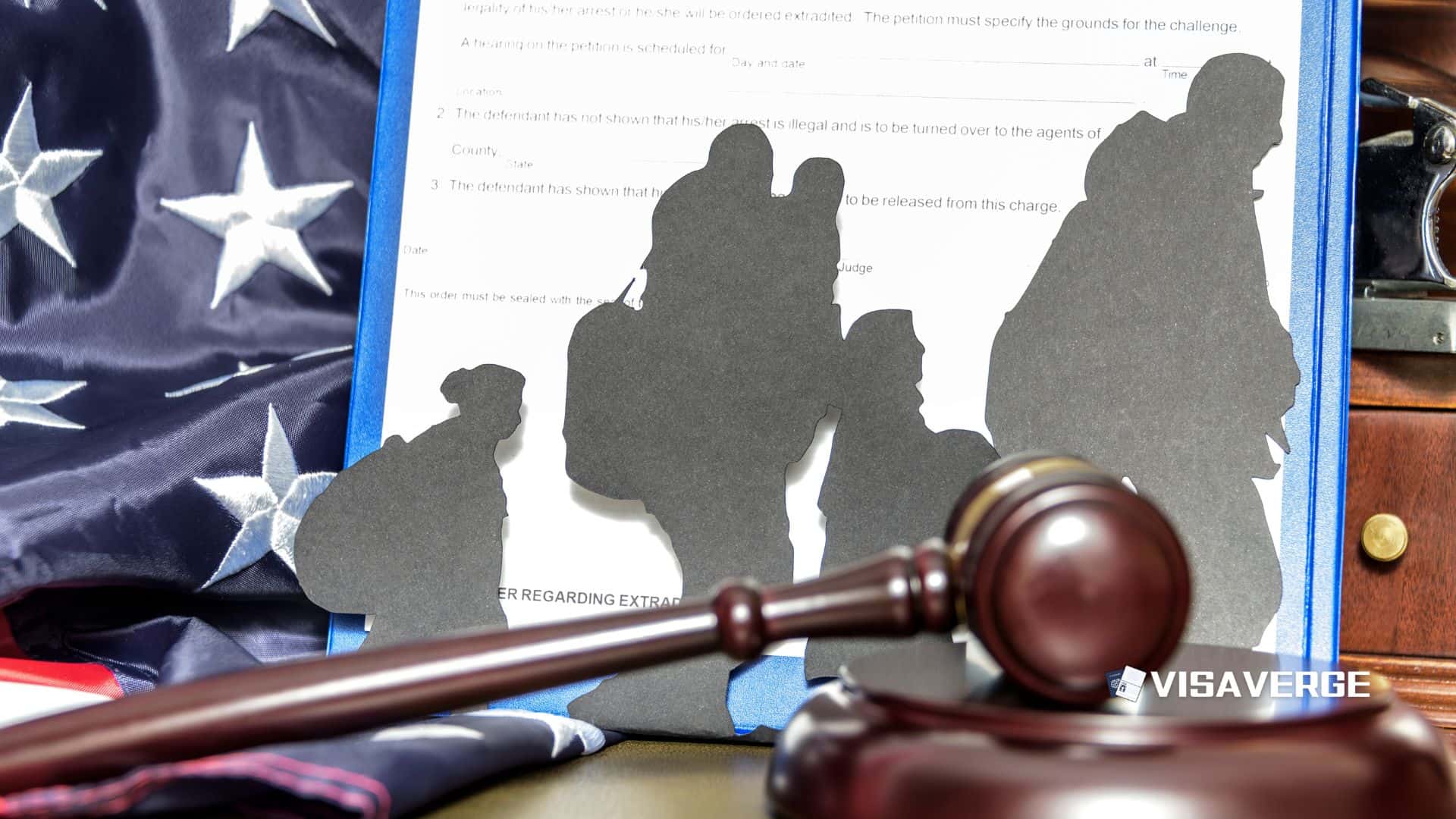
(OHIO) — U.S. District Judge Algenon L. Marbley granted preliminary relief to 25 foreign nationals, ordering USCIS to resume processing green card, work permit and other immigration benefit applications that plaintiffs said had been frozen under nationality-linked policies tied to the Trump administration’s travel restrictions.
The case in the U.S. District Court for the Southern District of Ohio focused on people already living in the United States, not visa applicants waiting abroad. Many had previously been authorized to work, and their challenge centered on whether USCIS could leave benefit requests on hold because of the applicants’ nationalities.
Free toolI-94 Expiration Calculator Online
Marbley found the challenged policies appeared to pause final USCIS adjudication indefinitely for foreign nationals from certain countries and to treat nationality as a negative factor. His order requires the agency to move those cases forward under immigration law rather than leave them suspended.
That relief stops short of approval. USCIS still retains authority to approve or deny an application, issue a Request for Evidence, schedule an interview or take other steps required in a normal adjudication.
Applicants with frozen cases have faced consequences that extend well beyond paperwork. A stalled work permit can interrupt employment, a delayed adjustment application can hold up a green card, and a pending naturalization or asylum-related benefit can leave families without stable status for months or years.
Driver’s licence renewals, travel planning and household finances can turn on whether USCIS issues a decision. The Ohio ruling attacks the use of an indefinite administrative hold, not the agency’s power to scrutinize eligibility.
Broader Legal Battle
Marbley’s order also fits into a broader court fight over immigration benefit freezes. On June 5, 2026, Chief U.S. District Judge John McConnell ruled in Rhode Island that USCIS policies had unlawfully stopped people from 39 countries from receiving decisions on applications for asylum, work permits, green cards and citizenship.
McConnell found those policies left applicants in “indeterminate legal limbo” even after they followed the legal process. USCIS later acknowledged a court order on the hold policies in the Dorcas International Institute of Rhode Island case, with final judgment entered on June 11, 2026.
Together, the Rhode Island and Ohio cases mark the same boundary. Courts have accepted that immigration agencies can conduct vetting and security review, but they have rejected the use of nationality-based policies to freeze lawful benefit applications without a final decision.
Affected Applicants
The Ohio case matters most to applicants whose cases stalled because of travel-ban or high-risk-country designations. The affected categories can include adjustment of status applications filed inside the United States, Employment Authorization Documents, asylum-related benefits, naturalization and other requests that USCIS placed on hold under those policies.
Plaintiffs in Ohio came from countries including Burma, Canada, Iran, Nigeria, Syria, Tanzania and Venezuela. Their nationalities helped define the dispute because the court examined whether USCIS had linked adjudication delays to country-based restriction policies.
Not every delayed case falls within that frame. Backlogs caused by visa bulletin retrogression, ordinary USCIS workload, missing documents, employer-side issues or security checks unrelated to the challenged policies stand on different legal ground.
That distinction matters for immigrants reading the order as a broad green card ruling. It is not a shortcut around the normal system, and it does not erase the legal standards that govern adjustment, employment authorization or citizenship.
USCIS can still deny a case if an applicant does not qualify. The court barred the agency from freezing adjudication based on nationality-linked assumptions; it did not rewrite the eligibility rules.
Implications for Indian Applicants
Indian applicants are likely to read the decision through the lens of the employment-based green card backlog, but India was not the main focus of the travel-ban-linked hold policies described in these cases. The ruling does not move priority dates, create new immigrant visa numbers or speed the visa bulletin.
It still carries weight for Indian H-1B workers, H-4 spouses and employment-based applicants because it reinforces a narrower principle. USCIS must adjudicate cases under the law and cannot rely on broad internal hold policies to keep them frozen without legal justification.
That leaves much of the employment backlog untouched. A delayed case tied to retrogression or standard queue times does not become a faster case because the Ohio court ordered USCIS to resume nationality-linked adjudications.
How to Determine Eligibility
Applicants trying to gauge whether the ruling affects them need to pin down the reason for the delay. A case that sits pending for a long period is not automatically part of the Ohio or Rhode Island litigation.
Case records, processing times, hold notices, interview notices and requests for evidence can help show whether USCIS paused a file for an ordinary reason or under one of the challenged policies. Where the delay appears tied to nationality or travel-ban restrictions, lawyers may try to invoke the new rulings in a mandamus action, an agency inquiry or ongoing litigation.
Employer Impact
Employers also have a direct stake in those decisions. When a work permit stays frozen, staffing plans, onboarding schedules and project continuity can unravel, especially where a worker’s continued employment depends on an approved Employment Authorization Document.
The Ohio order addresses that practical pressure by forcing movement, not by promising a favorable outcome. In immigration terms, action alone can change the course of a household or a workplace, because a decision opens the next legal step while an administrative freeze shuts all of them down.
Government Authority and Limits
The government still holds wide authority in immigration adjudication. It can require interviews, check records, demand supporting evidence and reject applications that fail to meet statutory standards.
Courts in both states drew the line at non-adjudication. USCIS may scrutinize a case, but it must decide it.
That principle explains why the ruling reached beyond a small set of plaintiffs. The court did not order blanket immigration relief, yet it rejected a system in which people who had already filed applications from inside the United States could lose access to a green card, a work permit or citizenship processing because their nationality placed their cases in a holding pattern with no endpoint.
Marbley’s order leaves USCIS with the same core duty that applicants thought they had triggered when they filed: review the case, apply the law and issue a decision. For immigrants whose files had gone still, that is the relief the court provided.